Showing posts with label 17th Century. Show all posts

Tuesday, March 17, 2026

Let's Bust a Recap : Merry Wives of Windsor

And we're back with some more Shakespeare, and look at me go, posting my recap within a month of reading the play! Merry Wives of Windsor has been my favorite play by the Bard in many a year. It was a true comedy, and even though a lot of critics say it's Shakespeare's worst play, I loved it. What can I say? I'm a simple girl, and I like what I like. The Merry Wives had me grinning from ear to ear. It's full of scheming, trickery, and women getting the best of a bunch of silly men, and I was here for every word of it.

We open on a bunch of men talking about a bunch of stuff and, boiling it all down to what's actually important, we learn that 1) Page has a daughter named Anne whom he's ready to marry off to a guy named Slender, and 2) that there's some guy named Falstaff running around who's a lowdown, good-for-nothing. 

Then we meet a Welsh parson who is determined to help Slender woo and win Anne. And let me just tell you, everyone else seems to care more about Slender marrying Anne than Slender himself cares. At one point, when he's supposed to be wooing her, Anne straight up asks him if he even likes her, and he's just like, "Yeah, you're as good as any other woman, I guess." And when she presses him on if he even wants to marry her, he continues with, "I actually don't really care, but your dad and my uncle think it's a good idea so why not?" He's hilariously unconcerned about his future marital bliss. 

But back to the Welsh parson. We find out that Anne has another suitor, a one Doctor Caius, and he is not happy that the parson is trying to help Slender court his ladylove and he's ready to fight him over it. So he challenges him to a duel. 

The parson! Not Slender, who is his actual rival for Anne's hand in marriage. This is basically just Shakespeare's device to get these two guys with funny accents on the stage together for more comedy. (The doctor is French.) We also learn that Doctor Caius is Anne's mother's choice for a husband for her daughter. 

Are you confused yet? Anne's dad wants her to marry Slender (who couldn't care less what woman he ends up with), her mom wants her to marry the French doctor (who very passionately wants to marry Anne), and Anne herself wants to marry some guy named Fenton (who blew through a fortune so neither of the parents like him which, honestly, seems justified). 

While all this is going on, the lowdown, good-for-nothing Falstaff arrives in town, broke as a joke, and ready to seduce the titular merry wives, Mistress Page and Mistress Ford, to get his filthy paws on their husbands' money. So he decides to send them pretty much identical love letters to try to get in their pants. He then tells a couple of his underlings to go deliver the letters but they're all, "We're not your do-boys, loser" even though, as far as I can tell, that's exactly what they've been up to this point. I guess they're sick of Falstaff though so they go and tell Page and Ford exactly what Falstaff is up to. 

Page laughs it off, but Ford gets insanely jealous and comes up with a whole big plan to disguise himself and befriend Falstaff so he can keep tabs on the whole situation. Oh and this plan involves him paying Falstaff to seduce his wife so that then Ford himself will be able to seduce her too?? It's Shakespeare, guys, what did you expect?

Little does Falstaff know, Mrs. Page and Mrs. Ford are besties so, of course, they immediately show each other these outrageous letters and, after they get over the audacity of this clown to send them the same letter, they realize they are going to have a lot of fun messing with Falstaff. 

So Mrs. Ford sends Falstaff a letter telling him to come to her house while her husband is away and we're off to the races. 

Falstaff brags to Ford (who he thinks is some guy named "Brook") how easy it was to seduce Mrs. Ford and tells him he's about to go to her house right now. Ford, naturally, is in a total rage over this and gives Falstaff a short head start but then heads for home himself to catch his wife in the act. 

They're all playing right into the merry wives' hands. 

So Falstaff shows up at the Fords' home but before he can really get anywhere with Mrs. Ford, Mrs. Page runs in yelling, "Your husband is coming, your husband is coming!" The women stuff Falstaff into the dirty laundry and have the servants carry him out right under Ford's nose and dump him in the river where he nearly drowns. 

Chalk one up for the merry wives. 

The wives at this point realize that their husbands are obviously wise to Falstaff's intentions and decide to have even more fun with this. 

Falstaff, humiliated, swears off Mrs. Ford and Mrs. Page, but a quick letter with some sweet nothings that the wives' cooked up has him right back in the game and he's immediately bragging to Brook (aka Ford) that he was just about to get it on with Mrs. Ford when her husband showed up and he escaped in the laundry basket. To which Ford is fuming over his wife's deceitfulness and loudly castigating Page for being such a naive idiot for not suspecting his wife of questionable behavior since women plainly can't be trusted. 

The second time Falstaff trots off to the Fords' house, the merry wives dress him up as a fat old lady that Ford hates and has forbidden to come in his house so that when Ford shows up to once again catch his wife cheating, he beats Falstaff black and blue thinking he's the fat witch that was banned from the house.  

Brilliant. Chalk another one up for the merry wives. 

At this point, they let their husbands in on the joke. Page gets a good laugh, and Ford is properly cowed, apologizes to his wife, and proclaims his unflinching faith in her from then on. Then they all, along with various other characters that I haven't given much attention to in this recap, come up with one final plan to humiliate Falstaff. 

Mrs. Ford writes him one last letter asking him to dress up as Herne the hunter with big antlers growing out of his head and meet her by a tree at midnight. Then they dress up all the kids in town as fairies and instruct them to pinch Falstaff and burn him with torches when he shows up. 

Diabolical.

Meanwhile, Page has instructed Slender to steal away with Anne (who will be dressed in white) during all the confusion and marry her. But Mrs. Page has also instructed the French doctor to do the same thing (but she says Anne will be dressed in green). And Anne and Fenton have made their own plan to run away during the frenzy and elope. (I'm not sure what color Anne actually wore and that bothers me a little.)

So after the plan has been carried out and the mayhem dies down, Slender shows back up saying he ended up with some boy dressed in white and the doctor says the same thing about a boy dressed in green, and then Anne and Fenton arrive all glowing and triumphant. Everyone has a good laugh, the Pages' congratulate their daughter for marrying the man she actually loves, and even Falstaff takes the joke on the chin and they all go off to have a meal together. 

I mean, is that not funny? As far as I'm concerned, that's a good time at the theater, and I would go to a live production of Merry Wives of Windsor any day of the week. The critics can say whatever they want; I thought this play was hysterical. 

Tuesday, February 10, 2026

Let's Bust a Recap : Coriolanus

It's February which means it's time for some Shakespeare, but before I pick up Merry Wives of Windsor which is the comedy on the docket for 2026, I've got to get Coriolanus done and dusted. So today, let's talk about one of old Billy the Bard's last tragedies and then hopefully we'll be back in a few weeks to talk about his Merry Wives. 
Coriolanus is basically about this guy Caius Marcius who's just kindof this mid Roman. He has money and he thinks the plebeians are a total waste of space, but he's also not really in a position of power either. He's hotheaded and bloodthirsty and a complete snob. 

So the Volscians are trying to overthrow Rome led by Tullus Aufidius (whom Marcius deems a worthy adversary by the way, because why even fight if it's not going to be a good fight) and Marcius leads a troop of soldiers into the city of Corioles and completely wrecks it. The Romans basically hoist him on their shoulders and take him back to Rome singing Hail the Conquering Hero and Rome names him Coriolanus for his total devastation of this city. So from now on, I'll refer to him as "Coriolanus". 

Meanwhile, I should mention that his mom Volumnia, who has this very creepy reverse-Oedipal thing going on, has been sitting back at home with Coriolanus' wife and kid waxing on about how she hopes the battle is bloody and that her son is victorious but, you know, with some wounds to make it more dramatic and hot. It's weird. His wife Virgilia is like, "I mean, I hope he wins too, but we want him to be okay, right?" To which Volumnia is all, "The bloodier the better." Like I said, weird.

So Coriolanus is back and being honored by all the powerful people and his mom is all, "Here's your chance to move up politically." But Coriolanus hates this idea because it involves putting himself on display and basically begging for votes from the plebes. Who, as I mentioned, he considers to be a waste of space. But he's a momma's boy so he does what his mother tells him and we have a whole scene of him showing off his battle scars (literally) to the commoners and trying not to absolutely blow his top while his friend Menenius (the only person in the whole play who is actually a reasonable and likable human being) is trying to get him to keep it together and not to lose it on these citizens. 

He ends up getting the people's support—almost not—but before he can even take his place as a consul, these two other guys, Brutus and Sicinius who have hated him from the beginning, stir the people up into a riot against him. Honestly, I can't really blame the people because Coriolanus is such a stuck-up jerk—definitely not Prom King material—but why Brutus and Sicinius care so much is a little beyond me. Jealous losers.

At this point, Coriolanus finally loses his barely controlled temper and not only does he rip the Romans a new one, he goes off to such an extent that he gets himself banished. He comes back with the very mature, "NO, I BANISH ROME FROM MY PRESENCE." Good one, bro. 

So what does he do? He goes to Tullus Aufidius (his mortal enemy, remember?) and says he wants to wreck Rome now and will T.A. help him do it? Because that seems like a reasonable response and nothing could possibly go wrong with this plan, right?

T.A. says sure, let's go right now. 

So Coriolanus is now marching against Rome and the Romans are in a panic because for all his faults, we've already established that Coriolanus can kick some serious butt in a fight. So all his friends are going to him trying to talk him out of this madness. But obviously, he's not hearing any of it. So the Romans are like, "Get his mom." 

I mean, good move. 

So Volumnia goes to her son, taking Virgilia and Coriolanus' son with her, and they have this whole back and forth where Coriolanus is basically all, "There is nothing you can say that will keep me from burning Rome to the ground." And even his kid is like, "If you do this, my entire goal in life will be to grow up and fight you myself." Which Coriolanus doesn't really seem to care about, but his mom finally talks him out of it (momma's boy, remember?) and Coriolanus succeeds in making peace between the Romans and the Volscians. 

So now the Romans and the Volscians are loving him and old T.A. is not happy about it. Coriolanus returns to the Volscian capital and obviously there's a big to-do, but T.A.'s buddies aren't having any of it and publicly assassinate Coriolanus. 

I mean, he kindof had it coming. I know this is supposed to be a tragedy but are we sad about this?

Once Coriolanus is dead, T.A. all of a sudden gets a conscience and is all, "This is sad. I'm sorry. Let's give him a proper send-off." And they all pick up his body and carry him out. And that's the end. 

lol

Coriolanus was a very engaging play and I read it pretty quickly, but it was also a little confusing because I wasn't sure if I was supposed to like Coriolanus or not. As I said, no one in the play was remotely sufferable except for Menenius so whenever Menenius was giving a reasonable defense of Coriolanus, I was like, "okay, maybe he's not the worst guy ever" but then as soon as Coriolanus himself showed up I was like, "No I definitely hate that guy." So basically I'm a plebeian. Ha! What I'm coming to realize about Shakespeare (and maybe I've said this before) is that the only difference between his tragedies and his comedies are that everyone dies in the tragedies. Sometimes his comedies are very sad, and a lot of the time his tragedies are hilarious, but the difference is just whether or not people die. So when I pick up Shakespeare, I'm never sure what I'm going to get. And that's fun. 

Monday, September 9, 2024

Let's Bust a Recap : Timon of Athens

After pretty much skipping July and August here on ye olde blog, am I jumping back into it with a Shakespearean recap?! You bet your sweet petunias I am, and this will be an easy one because Timon of Athens was a short, straightforward play so let's just knock this one out and hopefully get back in a rhythm around here. 
We open on a lavish banquet and some artists talking about gifts they will be giving to our titular Timon. Timon is like, the most generous guy in all of Athens and we quickly learn that he will spare no expense to show all his friends how much they mean to him. He's doling out jewelry and horses and gold left and right and everyone is singing his praises. 

Except for his steward, Flavius, who is stressing out major, and a cynical philosopher named Apemantus who acts like it is his full time job to be a professional party pooper. 

Well, naturally, all Timon's creditors decide it's time to collect and his bills all come due at once. Which is bad news because he is beyond broke and there is no way out of the hole he has dug himself. He quickly turns on Flavius, berating him for not handling things better and letting him know what a mess he was in.

To which Flavius is all, "My guy, you have got to be kidding me, there is no talking to you."

And then Timon is like, "Okay, no worries, I'll just ask my dear friends to help me out, they'll do anything for me."

(We can all see right where this is going, right?)

Timon's servants approach his friends, asking them to loan Timon some money. First up: Lucullus.

Lucullus is all excited to see one of Timon's servants rolling up because he's expecting a gift which would typically be par for the course. But when he realizes Timon is hitting him up for something, he tries to bribe the servant to say he never actually talked to Lucullus. The servant, who actually loves Timon, tells Lucullus what he can do with his money and leaves. 

Next up: Lucius (which, yes, is a very similar name to Lucullus, whyyyy?)

Lucius is talking to some random guys about how great Timon is and they're all, "Oh yeah, I heard he's pretty hard up for money right now." Lucius: "Surely not Timon." Random guys: "Oh for sure, and his other friends have straight up refused to help him out." Lucius: "They are wrong for that, I would never turn my back on Timon." At which exact moment, one of Timon's servants ask Lucius for help and Lucius—in front of the guys he was just telling he would lend Timon money in a heartbeat—looks straight in the servant's face and says, "Oh I wish I could but I was actually just about to ask Timon for a loan myself and please tell him I would if I could but I can't so I won't." 

The nerve.

Now we're gonna go try Sempronius. This one's my favorite. 

When Timon's servant approaches Sempronius, Sempronius is all, "Why's he asking me? He should have tried his other friends who are richer than me. They definitely owe him big time and they've got the means to help him out." To which the servant is like, "We asked and they all rejected us." To which Sempronius looks right back at them and says, "What? Timon came to me last? If he had come to me first I definitely would have helped him but since he doesn't think better of me than to come to me first, I won't be bothered with him at all." 

Are you kidding me?

So the servants come back to Timon and inform him that his so-called "friends" are all low-down, good-for-nothings. Timon rages at this and then tells Flavius to go invite all these guys back to his house for another banquet. To which Flavius is like, "Uhhh, do you not understand what's going on? You're B-R-O-K-E." But Timon's like, "Don't worry about the expense, just get those losers over here."

And these guys, after all flippantly dismissing Timon's pleas for help, have the audacity to roll back up to his crib for another party thinking everything's all fine and probably they're going to come in to some more gifts because what? This was all a joke? 

In the meantime, one of Timon's friends, a general named Alcibiades, is meeting with the Senate who is banishing him from Athens. He's obviously a bit upset about this and after some back and forth, vows to take his revenge on Athens.

But back to Timon's party.

His "friends" all show up, ready for a good time. Timon brings out covered dishes for everyone and when they are all ready to dig in, has them uncovered to show bowls of lukewarm water and nothing else. To which his "friends" are all, "What the heck, man?" And Timon is like, "I hope you all rot in hell!" throws the water in their faces, and storms out.

Flavius and the other servants, who are the only level-headed, decent people in this entire play, then have a meeting and agree to split everything they have between them equally and go in peace while Flavius vows to find Timon whatever it takes and loyally care for him no matter what.

Timon, meanwhile, has set up camp in a cave outside Athens and is living on roots which, in digging up, he has discovered a literal gold mine

Like, he's sitting on a pile of actual gold.

But he hates all of humanity now and he's just out here, digging in the dirt, railing against the world. 

Alcibiades shows up with a couple of loose women and we get a colorful exchange wherein Timon tells Alcibiades to drop dead and tells the whores they're full of STDs. 

I kid you not.

When Alcibiades tells Timon of his plan to get revenge on all of Athens, Timon gives him a bunch of gold and tells him to level the city, and tells the women to go infect everyone with their venereal diseases. 

Good stuff.

So Alcibiades and his ladies leave with their gold and then Apemantus shows up and wants to know why Timon is trying to copy him and be the world's worst party pooper. So they just go back and forth for a while about how much they hate everything. 

Okay...?

Then a bunch of other randos come out looking for Timon and all this gold he's rumored to have and we get some more scathing commentary from Timon each time someone shows up.

But then Flavius finally finds him, and even though Timon at first continues his whole mad-at-the-world routine, he realizes Flavius is an honest-to-goodness good guy and gives him a bunch of the gold. 

Then the Senators who banished Alcibiades show up asking Timon to pretty please go talk Alcibiades out of wrecking Athens. To which Timon is like, "Go hang yourselves."

And then Timon just....dies in the wilderness. 

Alcibiades shows up ready to burn down Athens and the Senators literally beg him to only kill the people who deserve it. Then a soldier shows up saying he found Timon's grave and they read Timon's pathetic epitaph and Alcibiades agrees to only dole out justice to the people who deserve it: the end. 

So...there's that. Once you get into it, Timon of Athens is an easy play to read, but the ending is pretty lackluster. There's a lot of debate surrounding the authorship of this one. Some think Timon was Shakespeare's last play and that he never completed it. A lot of people think the Bard coauthored the play with Thomas Middleton. We'll probably never know for sure, but overall, Timon of Athens, despite the dull ending, ranks higher for me than some of Shakespeare's other work. It was a fun one, and I'd recommend it. 

I think we're down to just four comedies and four tragedies left! On deck for 2025: Two Gentlemen of Verona and Coriolanus. 

Monday, February 19, 2024

Let's Bust a Recap : The Tempest

February has come and gone and come again and that means I'm a full year overdue for everyone's favorite playwright, Willy Shakes. And consequently, that means it is also way past time for a new favorite blog post from yours truly. Because if there's any consistent feedback I've gotten since starting this blog, it's that you people are here for the Bard. So let me just apologize here and now for completely skipping the Shakespeare posts in 2023. Let's see if I can take a page from Prospero's book and conjure you up a good one today.

We open on a gnarly storm with a ship floundering at sea carrying Alonso the king of Naples and a bunch of his nobles. The ship is coming apart fast and the king and his son are literally begging God to spare them while the duke, Antonio, is busy cursing the ship's captain and crew for bringing them all to their deaths. As if they can control the weather. Or want to die anymore than anyone else on this ship. 

Like, seriously, calm down Antonio.

But as it turns out, this isn't any ordinary storm. The next scene takes us to a nearby island where Antonio's brother Prospero has been living for the last twelve years with his daughter Miranda. As it turns out, that creep Antonio usurped his brother's position as Duke of Milan and had the king banish him. Prospero is, naturally, a powerful sorcerer and has conjured up this storm to take revenge on all his enemies. He has enslaved the island's only inhabitant, Caliban, and also a spirit called Ariel to do his bidding. So, I mean really, Prospero isn't the greatest guy either. Maybe Antonio wasn't that far off-base in having him banished. Poor Miranda, though, am I right? Sis is just caught in the crosshairs of a battle of toxic masculinity. Bless her.

Anyway, the ship wrecks on the island according to plan, and, using his magic, Prospero splits up the survivors into groups on the island to carry out his vengeful plans. Oh and the captain and crew are put into a magical sleep until the end of the play because we can't be bothered with them. We have enough characters to keep track of as it is. 

First up, we have Ferdinand, the king's son who is stranded by himself so that Prospero can pick him up and manipulate him into an engagement with his fifteen year old daughter Miranda all the while lecturing them both about the value of chastity. Pretty rich coming from him. 

Then we have the court jester and the majordomo who run into Caliban and offer us our "comic relief" in the play by bumbling around the island together plotting their own little rebellion against Prospero. Like that's going to work out.

Next we have the group of lords including the traitorous king (Alonso), Prospero's backstabbing brother (Antonio), the king's brother (Sebastian), Gonzalo (an old counsellor who's just doing the best he can out here), and a couple of other lords who I didn't really care about. Basically, Antonio convinces Sebastian that they should try to kill Alonso so that Sebastian can become king. What good this is going to do them seeing as they are stranded on a desert island is anyone's guess, but the general idea is: everyone is plotting evil against everyone else. Except for poor old Gonzalo and the two young lovers Ferdinand and Miranda. 

Ariel comes and torments Alonso, Antonio, and Sebastian until they feel so guilty for their crimes against Prospero and each other that they all run off to wander around until we need them again in the play.

Act IV is basically Prospero instructing the island spirits to put on a masque celebrating the betrothal of Ferdinand and Miranda—while simultaneously continuing the lecture about staying chaste until the actual wedding—but it gets cut off when Prospero remembers that there are three dopes running around the island plotting to kill him. So there's that.

Prospero orders Ariel to bring the nobles to him so we can have our big showdown. Ariel, by the way, has been begging Prospero the whole play to set him free and Prospero once again promises that once Ariel does everything he wants him to do, he will finally set him free. (I had my doubts that Ariel would ever be free of Prospero, but don't worry: he actually is free by the end of the play.) So Ariel sets off to do Prospero's bidding. In the meantime, Caliban, Trinculo, and Stephano are chased into the swamp by goblins. 

Ariel shows back up with the nobles and Prospero promptly forgives them. What?! What have we even been doing here this whole time? They basically restore Prospero to his rightful position as Duke of Milan. Ariel fetches everyone else and Caliban basically tucks tail and promises to be good, Prospero sends Trinculo and Stephano away in shame, Ariel is charged with blessing them with good weather for the return trip home, and they all leave. Ariel is finally free of Prospero, and Miranda and Ferdinand go on planning their happily ever after. Prospero asks us, the audience, to free him by our applause and the play is over. 

The Tempest is probably one of the last plays Shakespeare wrote and it's kindof a mess, but it was fun nonetheless. I read it in a day. It's an easy one to read, but it wouldn't be the first comedy I'd direct you to if you're going to read Shakespeare. It falls in the class with some of his other late plays which don't fit neatly into either the comic or tragic categories so it just feels like there is a lot going on the whole time. If it were up to me, I'd take Miranda and Ferdinand out of it entirely and let all those crazy guys die on the island with their plotting and scheming. But that's Shakespeare for you. 

Next up is The Merchant of Venice which I'll probably read this weekend, and I promise I won't wait another year to post a recap of it!

Tuesday, October 11, 2022

Let's Bust a Recap : Antony and Cleopatra

Oh boy, time for more Shakespeare. This year's tragedy was Antony and Cleopatra, and I think next year we're going to hit either our re-read of Julius Caesar or Romeo and Juliet because I've had a tough time with the last two tragedies I've read, and I need next year's to be a winner. But we'll circle back to this at the end of today's post. 

So Antony and Cleopatra...where to begin? We open our play to learn that Antony has got it bad for Cleopatra and has neglected all his responsibilities to be at her beck and call 24/7. Like, he's off sleeping with Cleopatra in Alexandria and letting Rome go to pot and not caring two figs that his wife Fulvia died after rebelling against Octavius. 

But Octavius is all, "Enough of that. You need to get it together and come help me put down some pirates that are wreaking havoc around here." Naturally, Cleopatra doesn't want her boy-toy to leave her, and we get a lot of angsty back and forth between her and Antony about him leaving. 

But he does, in fact, leave.

He meets up with Octavius and Lepidus (the two other guys in charge of Rome), and they agree to set aside their differences to deal with the pirates. While everyone's feeling good about each other, Octavius' general Agrippa suggests Antony should marry Octavius' sister to keep everybody friendly. 

This is obviously a terrible idea, but of course, they do it because Antony has no qualms about being monogamous or anything ridiculous like that. Enobarbus (Antony's right hand man) is the only one who sees the absolute trainwreck that is about to ensue because he knows there's no way Antony is giving up what he has with Cleopatra, and he famously details Cleopatra's irresistible charms saying:

        "Age cannot wither her, nor custom stale
        Her infinite variety: other women cloy
        The appetites they feed, but she makes hungry
        Where most she satisfies."

Then we have a scene with a soothsayer who warns Antony that he will for sure lose if he ever tries to fight Octavius which is important because foreshadowing

Meanwhile, back in Egypt, Cleopatra finds out about Antony's marriage to Octavia and she throws a royal hissy fit wherein all her lackeys assure her that she is gorgeous and Octavia is garbage. Which calms her down. Not in time to save the messenger from some serious abuse, but who cares about him, right?

Then we have a big confusing mess wherein Antony, Octavius, and Lepidus (the three guys in charge of Rome, remember?) end up not fighting the pirates and making a deal with Pompey (one of the pirates) that he can keep his land as long as he flips on the other pirates and also he has to send tributes to them. To which the other pirates are all, "Bro, why don't you just wreck these guys and take over Rome?" But Pompey's all, "Nah, that wouldn't be cool." And then there's this big drunken party, but then Octavius and Lepidus (without Antony's knowledge or approval) attack Pompey anyway. 

So why did we even just go through all that?

Antony heads back to Alexandria and crowns himself and Cleopatra as rulers of Egypt and his share of Rome and also complains to Octavius that he owes Antony more land from his recent war with Pompey. Oh, and he's not happy that Octavius kicked Lepidus out of the triumvirate and threw him in jail.
 
You see what's happening, right? Too many cooks in the kitchen.

Octavius is like, "You go ahead and be king of Egypt, but that's it, kiddo." To which Antony is like, "It's go time, son."

So they're gearing up for a showdown, and Antony's people are like, "You will lose at sea; fight on land." But Antony's all, "Octavius dared me to fight at sea, and I'm no sissy." And Cleopatra chimes in with, "My whole navy is yours."

But then they go to battle and Cleopatra runs away with her fleet of ships and Antony follows her leaving all his men behind to get slaughtered. Which he's a little embarrassed about, but hey, the kisses of Cleopatra are worth it.

Yikes, bro.

Octavius ends up sending a messenger to Cleopatra asking her to give up Antony, and she starts FLIRTING WITH THE MESSENGER which, naturally, Antony walks in on. He rages for about two seconds and then forgives her and promises to fight another battle for her, this time on land.

At this point, Enobarbus who is pretty much the only guy that's been unreservedly #TeamAntony this whole play is finally like, "I'm out." And heads over to Octavius' side. But Antony just gathers all Enobarbus' stuff and sends it to him with a "No hard feelings, my man." Which kills Enobarbus because he's so ashamed of his own disloyalty. Literally. He dies.

Antony loses the battle. (Foreshadowing, remember?) And then he has a major temper tantrum and swears off Cleopatra because this is all obviously her fault and only hers.

Cleopatra decides that the way to win Antony back is to send a message to him that she killed herself, dying with his name on her lips. So she goes and locks herself up in her tower and waits for him to come rushing back to her.

Bad move, sis.

When Antony gets the message, he decides his life isn't worth living anymore and he begs his boy Eros to kill him. But Eros won't do it, and instead kills himself. Which Antony thinks is just the most honorable and brave thing he's ever seen so he tries to kill himself too. 

Except he's an idiot and only manages to mortally wound himself. 

So he's sitting there bleeding out when he finds out Cleopatra isn't even dead. They hoist him up to her in her little tower and he dies in her arms.

Is it over? Not yet.

Cleopatra has now been placed under a Roman guard since Egypt has been defeated by Octavius and she tries to kill herself, but the guard gets the dagger away from her in time. Octavius shows up and is all, "No worries, we're going to treat you right." But one of Octavius' own men is like, "Nah, sis, he is going to parade you around like a caged animal." 

So then we get a lot of Cleopatra being bitter, envisioning her humiliating life under the rule of Octavius. And then she pulls a poisonous asp out of her basket and kills herself by having it bite her. Her two servants die too. Octavius finds them all there and feels kinda bad. But not really all that bad because now he's free to become the first Roman emperor aka take over the world. So he gives her a nice funeral. The end. 

I mean, holy moly. I think we all know that Shakespeare is the king of dysfunctional relationships, but Antony and Cleopatra take it to the next level. They are equally screwed up, and it's wild. This play was difficult to get through just because there's sooo much jumping around. All Shakespeare's plays were obviously meant to be seen on the stage, but this one in particular needs to be seen acted out, not just read in my living room with me trying to keep track of where everyone is and who's loyal to who. Antony and Cleopatra has one of Shakespeare's biggest casts and keeping everyone in line gets a little tricky. I was constantly flipping back to the cast list to figure out who was who.

That being said, this one was way better than Troilus and Cressida and I would recommend giving it a go with the caveat that it would be best read in as few sittings as possible so you're not lost every time you come back to it. Which is really true of all Shakespeare's plays if we're being honest. 

Anyway, circling back to the beginning of this post, I think next year I'll be reading Romeo and Juliet. My ultimate goal is to read Shakespeare's entire body of work. I read Romeo and Juliet and Julius Caesar in high school and thoroughly enjoyed them both, but when I undertook to read all of Shakespeare, I decided that I would re-read those as an adult as part of this undertaking. I've been saving them for when I need a win, and I think the time has come. We're officially down to six comedies and six tragedies, so let's just keep this train rollin'! 

Monday, April 4, 2022

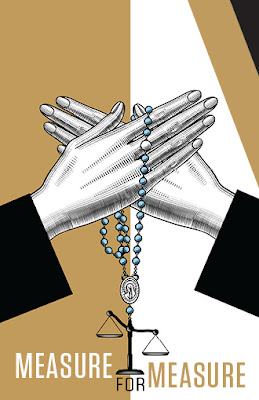
Let's Bust a Recap : Measure for Measure

Well, it's high time for some more Shakespeare around here and this year's choice for a comedy was Measure for Measure though this turned out to be another of Shakespeare's "problem plays" meaning it read more tragic than comedic. As I got deeper and deeper into the madness, I felt like Measure for Measure was a definite tragedy on par with Othello, but I guess since no one dies in the end, the First Folio people gave it the comedy stamp and so it remains to this day.

We open upon Duke Vincentio of Vienna cutting out and leaving the kingdom in the self-righteous iron fists of Angelo. Apparently, Vincentio has let things go to pot and Angelo has taken it upon himself to restore order starting with arresting Claudio and sentencing him to death for getting his girlfriend pregnant. 

Only Claudio is actually a pretty upstanding guy and everyone is outraged that he's on death row. Vienna is one big party town and unlike most of the philandering men around the block, Claudio is a one-woman man and the only reason Juliet isn't already his wife is because of a legal technicality. Like, basically they're just waiting on the paperwork to clear. 

When Claudio's friend Lucio finds out what's happened, he rushes off to find Claudio's sister Isabella who is in a convent on the brink of becoming a full-fledged nun. He begs her to go to Angelo and get her brother off the hook. Why Isabella is the only qualified candidate for this job, I'm still not sure, but away she goes to try to talk sense into Angelo.

She and Angelo get into it, and evidently, Isabella is so super-fine that Angelo can barely contain himself and by the end of their debate, he tells Isabella that he'll let Claudio off and lasso her the moon and anything else she wants if she'll just sleep with him one time. 

You see what's happening here, right? He's got Claudio going to the chopping block for the very crime that he's all hot and heavy to commit with Isabella. 

Isabella tells him exactly what he can do to himself and threatens to out him to the entire city; Angelo responds by totally gaslighting her. Because who's going to believe this little girl over Mr. Law-and-Order?

What a scumbag.

Isabella heads straight to her brother in jail and is all, "My dude, say your prayers and man up to meet your Maker because I would rather die myself than give up my innocence." To which Claudio is all, "No doubt, I would kill that guy myself if I wasn't locked up." But after two more seconds changes his tune to, "Would it really be the worst thing?" And Isabella is all, "Get ahold of yourself!"

Meanwhile, some random friar that's been skulking around town and hanging out in the jail overhears everything and takes Isabella aside for a chat. But is it really a random friar? Of course not. It's Duke Vincentio in disguise because he never had any business to attend to out of town. He just wanted to shake off the yoke of responsibility for a while and let Angelo mete out some justice of biblical proportions while he watches undercover, I guess. 

So he pulls Isabella aside and tells her that she should go back to Angelo and agree to do the nasty with him as long as he consents to meet her in the dead of night and keep his mouth shut the whole time. To which Isabella replies, "Does anyone even know what a conscience is?" And then Friar Duke is all, "No, no; we'll send this chick Mariana who's in love with Angelo." And Isabella is all, "Seriously? I wouldn't send any other woman to degrade herself in this way either." But then Friar Duke explains that Mariana is actually Angelo's fiancée and he owes it to her to marry her but has declined to fulfill his commitment ever since her dowry was lost at sea. So Isabella's like, "Oh, I guess it's fine then."

What?!

So Mariana goes off and has her little incognito fling with Angelo.

But then Angelo sends a message to the prison ordering Claudio's execution to commence immediately.

MEGA-SCUMBAG.

When Friar Duke gets word of this, he then concocts a plan to execute some other poor schmuck who looks like Claudio and send his head to Angelo instead. Which they do. And then he tells Isabella (who thinks her brother was just beheaded) and Mariana (who just entrapped Angelo) to go plead their case to the Duke (aka HIMSELF) who's arriving back in town any minute. 

He then does a quick wardrobe change and makes his grand entrance into Vienna. So now we've got a nice little audience for Isabella and Mariana to rat out Sir Scumbag. They air their grievances and Angelo is all, "They're both crazy." And Duke Vincentio is like, "Unless you can present this friar, you're both liars."

At which point of the play I am absolutely raging

The duke ducks back out and changes back into his friar disguise so he can come back in and verify everything the girls said. To which Angelo is still like, "Why should anyone believe you?" And then Duke Vincentio pulls of his mask and is all, "Gotcha, sucker."

You'd think that right about now we'd string Angelo up the nearest pole, right?

You'd be wrong. Because he gets to live and be married to Mariana, Claudio shows up (to Isabella's profound gratitude) and gets to live happily ever after with Juliet, and Duke Vincentio ups and proposes marriage to Isabella.

No. NO. NO. No.

First of all, I'm so over Shakespeare's mindless, thirsty women who still want the most despicable men even after those men spit in their very faces. Second of all, Angelo should have burned at the stake. He is so gross.

Isabella does not answer Duke Vincentio's marriage proposal. There's a scripted silence which a lot of people interpret to mean she accepts him, but for the sake of my sanity, I have to believe she turns up her nose, marches her little behind back to the convent, and becomes a nun for the rest of her days. SHE HAS TO, RIGHT?

The only truly comedic elements of this play were the little exchanges between Lucio and the duke wherein Lucio is unwittingly bashing the duke to his face while he's disguised as the friar, and then dogs on the friar to the duke not realizing they're the same person—that's funny. Duke Vincentio ultimately "punishes" him by sentencing him to marry some prostitute he knocked up—ummm, not quite as funny. 

Y'all. I just can't. Like I said at the beginning, this one was a tragedy for me. It made me more mad than Othello, and I could still spit tacks over that abominable ending. Angelo is the worst, Duke Vincentio not much better, and Mariana is on a level with Helena of women who could do better and ought to know it. Geez.

Personally, I'd call this one of Shakespeare's more compelling plays, but don't read it if you're not ready to rail against the universe for a little while. Hopefully next year's comedy will furnish a few more laughs. 

Monday, August 30, 2021

Let's Bust a Recap : Troilus and Cressida

It's August and you know what that means: time for a Shakespearean tragedy! This year it was Troilus and Cressida. I thought King Lear had the best bit of name-calling I've read in any of Shakespeare's plays, but he outdid himself in Troilus and Cressida. We couldn't get through a page of this play without some epic putdowns, and I'm always here for that.
In Troilus and Cressida, we basically have two separate stories going on: one which involves the title characters' love story (which you'd think would be the bigger plot line...given the title), and one which involves the war between the Greeks and the Trojans—specifically, a lot of drama between Hector, Ajax, and Achilles (actually the bigger plot of the play). So let's get into it.

We open with a prologue, a soldier basically setting the stage for us. The Greeks and the Trojans are at war because Menelaus' no-good, philandering wife Helen is sleeping with Paris. So basically they've been fighting for years because the Greeks are trying to get Helen back. She must be one hot dame. 

Then we happen upon a conversation between Troilus and Pandarus in which Troilus is whingeing on about how in love he is with Pandarus' foxy niece Cressida, and Pandarus is snappy because he's fed up with Troilus' thankless bellyaching. But that doesn't stop Pandarus from being totally #TeamTroilus in the very next scene as he and Cressida are watching all the Trojan lords parade by on their return from the latest battle. After Pandarus leaves, we the audience get it from Cressida herself that she's definitely into Troilus but she's playing hard to get because—and I quote—"Things won are done".

Next we hop over to the Grecian side and sit in on a powwow between Agamemnon and his commanders who are trying to figure out how to light a fire under Achilles who is their best warrior but is refusing to fight. He's upset the entire balance of power in the Greek camp, and it's really ticking the top brass off. Hector (the Trojan heavyweight) has issued a challenge to the Greeks vowing to fight in one-on-one combat their best guy (presumably Achilles), but that puts the Greeks in a tough spot. For one thing, as already mentioned, Achilles can't be bothered. For another, even if they could get Achilles to accept the challenge, if he loses to Hector, it would really put a damper on Greek morale. They come up with a plan to rig a lottery in which Ajax would be chosen to fight Hector. If Ajax loses, they can save face by saying that Achilles would have won, and in the meantime, they can ruffle Achilles' feathers by passing him over.  Win-win. 

Back in the Trojan camp, King Priam and his sons are debating whether or not this whole war is even worth it anymore and maybe they should just send Helen back to her husband and be done with the whole bloody mess. Troilus pipes up saying their entire honor is on the line and the fight must go on. Paris is obviously with Troilus on this (no shock there, he's the one knocking boots with Helen) but why Troilus is so hot about this, I still don't know. It's a point he presses until Hector and everyone else give in. 

Agamemnon decides to go see if Achilles is warming up at all, but Achilles blows him off which naturally tries the last bit of patience Agamemnon has and he determines to stick with the original plan of sending Ajax out to battle Hector.

That pretty much sums up the first two acts. Still with me?

In Act 3, Pandarus finally gets Troilus and Cressida in the same room and pretty much tells them to just kiss already. Which they do once he leaves them alone. Little Miss Hard-to-Get gives it up awfully fast when Troilus whispers a few sweet nothings in her ear and they're vowing to basically be the greatest lovers in the history of the world when Pandarus comes back. 

But over in the Greek encampment, Cressida's pimp father is cutting a deal with Agamemnon to release a Trojan commander they've captured in exchange for his daughter since all the Greeks are super aware of how smokin' hot she is and he knows what a prize she'd be for them. What?! Obviously, Agamemnon thinks this is a great plan and sends Diomedes to go get her.

Also in the Greek camp, everyone has snubbed Achilles and started singing Ajax' praises which finally starts to get under Achilles' skin and he goes to Ulysses to find out what's going on. Ulysses tells Achilles he's yesterday's news and everyone thinks Ajax is the hero now and maybe if he'd quit messing around and fight already, people might respect him again. Which Achilles takes to heart.

So Diomedes goes to get Cressida, and all the Trojans are talking about how Troilus is going to take it real hard. Which he kinda does, but he also kinda doesn't. I guess he got what he wanted from her, because when it's time to go, he's all, "Sorry 'bout ya, sis, but this is the way things are. Stay true to me though, even when you're over there with all those hot and horny Greek guys." And Cressida's all, "Troilus forever."

When Diomedes shows up in the Greek camp with Cressida, there's this awkward scene where all the commanders insist on kissing her....and then call her easy behind her back. 

Then it's time for the much-hyped duel between Hector and Ajax. And it's a wash. Turns out, they're cousins and Hector can't kill his own kin so they end up hugging it out. Super lame.

Then there's a scene where Achilles is bragging about how he's going to wreck Hector, but then he gets a letter from his girlfriend telling him not to fight and he's all, "Aw man, I can't fight now."

Then Diomedes slips off to go see Cressida and Troilus follows him to see what's up. Diomedes is putting his best game out there and Cressida is into it. As Troilus watches in agony, Cressida—after a lot of flirty back and forth—gives in and and promises herself to Diomedes. Troilus can't believe it and vows to find Diomedes on the battlefield and kill him.

Then everyone's getting ready for battle and Hector's wife and sister and dad and anyone nearby are begging him not to fight because they're sure he's going to die and Hector just laughs them off. Troilus comes in and says he's ready to rage on the battlefield today, and off they all go to fight. 

Then...everything falls apart. There's a bunch of fighting. Something about Hector killing a guy for his fancy armor, and Troilus yelling at Diomedes about stealing his horse, and Achilles setting the Myrmidons on Hector to stab him to death while he's trying on his fancy new armor, and everyone finds out Hector died, and Troilus is still vowing to get revenge and then it's just over.

Seriously. That's the end. 

This play was just weird and it's the first Shakespeare play I've read that had absolutely zero closure. It seemed like old Willy just ran out of gas and stopped because he didn't care anymore. Which, you know, whatever. That's cool. But if you're trying to hit the highlights with the Bard, this is one you can definitely skip. I enjoyed it for what it was, and I'm always glad to check another Shakespeare off my list on my quest to reading them all, but this one just wasn't great. Would not read again, would not recommend. Unless you're looking for some spicy insults to shout at other drivers on the road. Then this might be the play for you. 

I think I'm down to six tragedies and seven comedies left. (Plus the histories and all the poetry.) I might try to squeeze in two comedies next year to even that up a bit. Any suggestions for what they might be?

And BONUS: when you're trying to read your Shakespeare but the puppies just want to snuggle.

I'm not mad at 'em.

Wednesday, September 9, 2020

Let's Bust a Recap : Cymbeline

Time for some more Shakespeare! And apparently I'm only blogging every other month this year. Seems par for the course with 2020. 

For the past five years or so, I've been reading a Shakespearean comedy in February and a tragedy in August. This year's pick for August was Cymbeline, and even though it is classified as a tragedy in the First Folio it's definitely not one and modern critics often classify it as a romance or even a comedy. I think it solidly lands in the "romance" category, and it was a pleasant change of pace to read a play where the people you hated actually died and the people you liked (or at least you didn't completely despise) finally got their happily ever after. 

We open to find two unnamed gentlemen setting the stage for us which is basically this: King Cymbeline's daughter Imogen has essentially flipped him the bird by marrying the love of her life (one Posthumus Leonatus—bless his heart—that the king raised and loved as a son, by the way) instead of acquiescing to the king's plans for her to marry Cloten (a total loser who happens to be the king's stepson). So naturally Cymbeline banishes Posthumus from Britain and tells his daughter she can go to H-E-double-hockeysticks for all he cares about her feelings. 

Oh and also Cymbeline has two sons who were kidnapped as small children because why not?

Once the two gentlemen have given us this little history of our main characters, the queen and Imogen and Posthumus enter and we realize Imogen is about to say her farewells to Posthumus. The queen is all, "I'm not your typical wicked stepmother; let's be pals" and Imogen is all, "I can't live without you; my dad's the worst for banishing you" and Posthumus is all, "I'll always be true; write me constantly and wear this bracelet forever." 

Posthumus takes himself off to Rome where he immediately makes himself obnoxious by bragging about his gorgeous, faithful bride to anyone who will listen. He catches the attention of one Iachimo who bets him 10,000 pieces of gold that he can bed Imogen no problem at which point Posthumus is like, "Go for it, bro."

Meanwhile back home in Britain, we find out that the queen actually is your typical wicked stepmother and is planning to kill Imogen to secure her son's right to the throne. She hits up the local doc to hook her up with some poison, but the doctor (and everyone else) can see right through her and sets her up with some brew that will for sure knock you out but definitely won't kill you and goes on about his business. The queen then passes along the potion to Pisanio (the loyal servant of Posthumus who has stayed in Britain to attend Imogen) hyping it as the best Tylenol ever and feeling pretty confident that both Pisanio and Imogen will take it and die.

By this time, Iachimo has shown up in Britain ready to get jiggy with Imogen and carrying a letter from Posthumus introducing him as this great guy. Just so, you know, Imogen has no suspicions about his intentions. He starts coming on to Imogen like it's his job (which, I mean, I guess it kindof is since he's got skin in the game), but Imogen is all, "Kick rocks, scumbag." Iachimo starts backpedaling faster than the speed of light and goes off monologuing about lucky Posthumus for bagging such a worthy chick and how amazing Imogen is for proving everything and more that Posthumus ever said about her. At which point, Imogen is like, "Cool, bro, you're alright" and Iachimo is like, "Would you mind safeguarding a trunk of my crap?" and Imogen's like, "What are friends for?" 

Um, what?! And that was all Act I.

Later that night, Imogen's asleep in her private chamber with Iachimo's trunk nearby for safety when out of the trunk comes Iachimo himself because he is not about to lose 10,000 pieces of gold over this dame. He leers over her like the major creep he is (noting a distinct mole in a place that only a lover should know about) and steals her precious bracelet right off her arm, then climbs back into the trunk for the rest of the night. 

Gross.

Outside Imogen's bedchamber, Cloten is pulling a John Cusack in Say Anything when the king and queen walk up. Cloten's complaining that Imogen isn't giving him the time of day and Cymbeline is like, "Give it time, son. You'll get her eventually." 

Seriously?? Worst. Dad. Ever.

Imogen finally deigns to come out of her room and Cloten is like, "I really, really love you so like, can we just get together already?" to which Imogen replies, "I actually hate you and you're not even good enough to lick Posthumus' shoes." 

Back in Rome, Iachimo has produced enough "evidence" to convince Posthumus that Imogen is not all that he thought she was, and he sends off a letter to Pisanio ordering him to kill that whore ASAP.

Seems harsh, man. But let's get back to Britain.

Out of nowhere, an ambassador from Rome named Caius Lucius shows up and is all, "Hey, you owe us your annual tribute" and Cymbeline is all, "You ain't gettin' a dime outta me" and Caius Lucius is like, "We will fight you" to which Cymbeline responds, "Bring it."

By this time, Pisanio has gotten the letter from Posthumus along with a letter he is to give to Imogen telling her that Posthumus wants her to come to him at Milford for a little lovers' getaway. 

Because why ask Imogen—the woman he loves, the woman he's known his entire life—for her side of the story? Instead, let's let her think everything is business as usual and make my servant do my dirty work. Seems logical. Real mature, Posthumus.

Pisanio and Imogen head off on their little trip, but halfway there, Pisanio is like, "We need to talk." He tells Imogen about the contents of his letter and that Posthumus is setting her up for her death. But Pisanio (the real MVP of this play) is not about to shed Imogen's perfectly innocent blood and instead concocts a plan for Imogen to disguise herself as a man and run away.

Because would this even be Shakespeare if there wasn't a little cross-dressing involved?

Pisanio heads back to Britain where Cymbeline, the queen, and Cloten are all in a dither because Imogen has run away. Cloten demands that Pisanio bring him some of Posthumus' old clothes because he's had enough of the cold shoulder; he's going to dress up like Posthumus, go find Imogen, and have his way with her whatever it takes. He doesn't really need Posthumus' clothes for this plan, but Cloten has a weird clothing fetish all throughout the play.

In the meantime, Imogen has been wandering around a forest, dressed like a boy, and stumbles into the cave where her two long-lost brothers have been living with their kidnapper (who they believe to be their father) their whole lives.

How convenient.

They all love each other immediately (even though none of them have the slightest idea who they are) and they decide the new guy needs some food pronto because he's looking ready to pass out from hunger. So Arviragus stays with Imogen (who's going by "Fidele"), and Guiderius goes out to hunt. 

While he's out hunting, he comes across Cloten wandering around the forest looking for Imogen. In typical Cloten fashion, he manages to insult this complete stranger to such a degree that Guiderius swiftly cuts off his head.

Belarius (the kidnapper) recognizes Cloten and is like, "We're all gonna die." But Guiderius is like, "Whatever, I'd do it again, that guy was a tool."

Back in the cave, Imogen decided to take the Tylenol that Pisanio gave her before they parted ways. (Remember, this was the potion that the queen got from the doctor that's supposed to be deadly, but isn't actually.) So upon the return of Guiderius and Belarius, Arviragus is carrying Imogen out thinking she's dead as a doornail. The three of them lay Imogen next to Cloten's headless body and sing a dirge in honor of Imogen (which is actually one of the most beautiful pieces I've read by Shakespeare) and then go off to fight for Britain in the mounting war against Rome. 

A little while later, Imogen wakes up and sees a headless body dressed in Posthumus' clothes lying next to her. Obviously, she gets a little upset. Caius Lucius and some other Romans ride up to this scene and she agrees to go along with them as their servant boy. (She's still dressed as a boy and going by the name Fidele.)

Then there's some fighting, and Posthumus ends up rescuing Cymbeline, and then Posthumus has a weird dream, and Britain ends up beating Rome, and everyone goes back to the king's palace so we can sort out this mess.

First of all, the doctor reports that the queen died in a mad fit and before dying she confessed to the doctor and her ladies in waiting that she only married the king so she could get her son the throne. To which Cymbeline basically says, "Well, she was hot so....WORTH IT." 

Iachimo (who is there with Caius Lucius and Imogen and some other Romans) suddenly grows a conscience and confesses his whole drama with Imogen and Posthumus at which point Posthumus is like, "You lied?! And I ordered the death of my wife because of you???" But then Imogen comes forward and is all, "No harm, no foul. I'm here. We're good."

And then Belarius steps up to the mic and is like, "I know you banished me, but look, here are your two sons that I kidnapped and raised and took care of, and I fought for you pretty valiantly in this skirmish with the Romans so let's all be friends." 

And then a soothsayer comes forward and spouts off a bunch of stuff, and Cymbeline decides that even though Britain beat Rome, he's had a change of heart and they'll pay the tribute after all.

And they all live happily ever after.

I mean, wow. If I could change anything: Iachimo would get what was coming to him, and Posthumus would at least have gotten a good combing down from Imogen, but all in all I loved it.

This play was definitely involved. While I was reading this, I couldn't help but get the feeling that Shakespeare just took all his favorite parts from all the plays he had ever written and kindof mashed them up into this one and said, "Here you go, world." Cymbeline is one of the last plays he wrote just a few years before he died. I really did enjoy it though, and I thought that everything was pretty important to the story whereas with some of Shakespeare's work, there are side stories happening that I don't really care about. Maybe not Shakespeare's greatest work of all time, but definitely one I'd still recommend for a good time. 

Have you read Cymbeline or seen it performed? As usual, feel free to nominate your favorites for next year's book list. I'm thinking Troilus and Cressida for my tragedy, but I'm not sure about my comedy yet. Merry Wives of Windsor? The Comedy of Errors? What would you recommend?

Monday, March 16, 2020

Let's Bust a Recap : King Lear

Well, it's been several months since I read King Lear, but we're going to scrounge around in the old memory bank and see what we can come up with for a quick recap on what many regard as Shakespeare's supreme achievement. George Bernard Shaw said, "No man will ever write a better tragedy than Lear", and actors since the early 1600s have been willing to sell their kidneys in order to get a role in this iconic tragedy.

We open on an elderly King Lear pitting his daughters against each other in a gladiatorial-type contest for the biggest chunk of his kingdom. He's ready to retire and he'll pass on his daughters' inheritance to them if they love him enough to tell him exactly what he wants to hear. 

Goneril and Regan (the two oldest) are only too happy to wax eloquent on the topic of their love for the old man and are, in turn, granted their share of the inheritance. Cordelia, however, will not be reduced to meaningless flattery. She keeps it short, sweet, and to the point and is rewarded with her father's hot temper and prompt banishment. Lear divides Cordelia's share of the inheritance between her two older sisters and summons Cordelia's two marriage prospects to let them know about her "treachery" while also banishing Kent for calling him out on his outrageously unfair treatment of his one honest daughter. Cordelia's suitors arrive and the Duke of Burgundy splits faster than a banana when he hears the latest family drama. (I mean, really, who can blame the guy?) But the King of France is impressed with Cordelia's conduct (and appalled by Lear's) and says he'll marry her anyway. 

In the meantime, we learn that the Earl of Gloucester has two sons; one legitimate (Edgar) and one bastard (Edmund). As is easily surmised, there's no end of family turmoil there and Edmund is plotting to screw over Edgar in an attempt to set himself up as the heir to their father's estate. 

King Lear has decided to divide his time between Goneril and Regan and let his loving daughters care for him in his old age, but Goneril is over it before the sun even sets. She immediately sets out to completely incapacitate her father who throws a temper tantrum and says she'll be sorry and he's going to her sister's house where he'll get the respect he deserves. 

As if. 

Lear's fool gives him the what-for regarding his stupidity in giving over his kingdom to his two ruthless daughters and predicts that Regan ain't got time for daddy either. (He's not wrong.)

Meanwhile, Kent, the most loyal and righteous subject ever to walk the face of the earth, comes back in disguise to offer his personal service to the king who just banished him and to look out for Lear's interests in this whole convoluted mess. (Seriously, this guy is an actual angel.)

So Kent ends up riding ahead of Lear to bring the message of Lear's impending arrival to his daughter Regan who puts him in stocks for his trouble. When Lear arrives, he's outraged at the treatment of his servant but finds Regan just as dismissive of him as Goneril was (surprise, surprise). He has a royal conniption and rages outside into a storm to rant against his ungrateful daughters. He comes across Edgar disguised as a madman wandering around babbling after being thrown out by his father after Edmund faked an attack of his person by Edgar. Kent manages to find them both and lead them into the nearby shelter of a cave.

Now that Edmund has gotten Edgar banished, he proceeds to set up his father to Regan and Goneril who decide to gouge out Gloucester's eyes. To add insult to injury, Regan ends up telling Gloucester that Edmund betrayed him and sets him out to wander, too. Edgar finds his blinded father who doesn't recognize his voice and begs Edgar to lead him to a cliff he can fling himself off of. Edgar leads him around, has him jump, and then convinces him he miraculously survived a great fall. (Why we go through this whole charade is beyond me, but that's what happens.)

Back in the kingdom, Goneril and Regan have both decided they have to have Edmund which, I guess, is okay for Regan since she's recently been widowed, but Goneril is still married to Albany who has finally grown a spine (earlier in the play she basically told him he was cute but dumb and to stay out of her way) and denounced his disgusting wife. Goneril writes a letter to Edmund basically telling him to off her husband so they can be together but Regan is not having one bit of that; she's obviously the better match for Edmund since she's actually available.

Out in the wild, Kent leads the embarrassed and half-mad Lear to Cordelia and the French army where Cordelia manages to calm her father (seeing as she's the only one of his daughters who actually does love him).

Regan realizes that if she's going to get Edmund to pick her over Goneril, she better send someone to kill Gloucester to cover all her bases. Edgar defends his father and kills the assassin who also happens to be the messenger carrying Goneril's letter to Edmund (the one where she's conspiring with him to kill her husband).

Regan convinces her brother-in-law Albany to join forces with her to stand against the French army being led by Cordelia and Lear, and Albany agrees on the condition that Lear and Cordelia are not to be harmed in the conflict. Meanwhile, Edmund is plotting the deaths of Albany, Lear, and Cordelia while trying to figure out what to do about Goneril and Regan seeing as he's made promises to both of them.

Somewhere in here Edgar shows up and hands over Goneril's treacherous letter to her husband Albany. (Like I said, it's been months since I read this one. The details of this are foggy.)

The battle ensues, the British (Goneril, Regan, & Co.) are victorious over the French (Cordelia & Lear) and Edmund issues an order in Goneril's and Regan's names to execute Cordelia and Lear.

The British leaders gather for their post-war meeting and Regan declares she will marry Edmund. Too late though because Goneril was a step ahead and had already poisoned her sister to get her out of the way. (Lord help the sister who comes between her and her man, right?) Albany exposes Edmund as a traitor and demands a trial by combat while Regan goes offstage to die. Edgar shows up in head to toe armor and challenges Edmund to a duel. No one knows who he is but he manages to fatally wound Edmund who finally grows a conscience and confesses to ordering the deaths of Lear and Cordelia. Goneril perceives that things are probably not going to go well for her and runs away to kill herself. Albany sends men to countermand Edmund's death warrant; again too late. Lear shows up carrying Cordelia's corpse in his arms after having killed the executioner to survive.

Albany urges Lear to take back his throne, but after everything he's been through, he dies (just like Gloucester who we found out from Edgar died from the shock when Edgar revealed himself to his father).

So basically, Albany, Edgar, and Kent are left standing and Kent promptly throws up the deuces and leaves the country. He served his king and he is done. So Albany and Edgar are left in charge of the country and just kindof sadly march off.

The end.

In sum: King Lear sets his three daughters on a course to their untimely ends and then dies himself from the pain of it all. Woof. Talk about a tragedy. This was, by far, the most depressing thing I've read by Shakespeare yet, though I will say that this play contained the best bit of name-calling I've ever read and Kent is possibly my favorite Shakespearean character ever. This is definitely not one you should skip. I'd say King Lear is a must-read for lit-lovers everywhere.

Now that I've caught up on my Shakespearean recaps, Cymbeline is on deck for my 2020 reading. I've heard that some critics consider this one a comedy even though it's listed as a tragedy so hopefully it won't be such a downer like King Lear.

Have you read King Lear or any of its famous retellings? 

Tuesday, March 10, 2020

Let's Bust a Recap : All's Well that Ends Well

All's well that ends well? What a joke. In this lesser-known comedy by Shakespeare, we meet two of his most unlikeable characters to date: Bertram and Helena. 

If you're new around here, let me begin by saying that in most of my recaps, I try my best to be careful not to give away any major plot points or spoilers—even though I'm usually talking about classic literature that's been around for ages. But when it comes to Shakespeare, I give you my unfiltered take on the whole play. If you're on your own quest to read the entire works of Shakespeare (which is one of my personal goals in life) and you've made it this far with little knowledge of what his plays are actually about (which I've managed to do) and want to keep it that way (you have my full support): steer clear.

Now, let's get down to it. 

At the beginning of All's Well that Ends Well, we meet Bertram, his mother and her orphaned ward Helena at the funeral of Bertram's dad. After a cheerful conversation about his father's demise and the King's similar illness, Bertram is off to take his dad's place in the ailing King's court. We then discover that Helena's got it bad for Bertram but is extremely aware that he would never even think about swiping right on her Tinder page.

What's a girl to do? 

She takes herself off to the King's court right behind Bertram to offer up her healing services to the King in exchange for her choice of a husband from all the men in the King's domain. She's so confident she can heal the King that she pledges her own life if he fails to get better. (Can you smell the desperation?) The King finally figures, hey, it's worth a shot; I've already got a foot in the grave anyway and takes her up on her offer. 

The King is healed! (And can I get a bottle of this mystery potion of Helena's for my medicine cabinet?)

Obviously, Helena picks Bertram to be her husband. He then proceeds to publicly denigrate her and says he would rather eat worms than ever marry her low-born behind. To her face, y'all. 

The King tells Bertram to pony up and marry her or he will make his life miserable so Bertram changes his tune real quick. And Helena takes him. 

As soon as the wedding is over, Bertram sends Helena packing back to his mom's house and tells her the day he consummates their marriage will be a cold one in Hell and she can consider him her husband when she's pregnant with his child which will be a hot never as far as he's concerned then takes off to Italy to party it up and sleep with any pretty young thing that catches his eye.

Mama Bertram did not raise her son to be the pus that feeds on pond scum and promptly disowns him, claiming Helena as her daughter and declaring her son could only wish for a woman as good as Helena. (Because we ladies gotta stick together, ya dig? Although if I was Ma B, I would have told Helena to pull it together and scrape up some self-respect.)

Helena's not done with Bertram though. The heart wants what it wants, I guess. She claws her own way to Italy and finds Bertram's latest obsession, a sweet virgin named Diana who is smart enough to see through Bertram's crap and hasn't given him the time of day. Helena convinces Diana to trick Bertram into giving her his family heirloom ring in exchange for her promise to meet up with him for a little midnight hanky-panky. (At which point in the play, I started to get some serious Tamar and Judah vibes.) Bertram falls for Diana's schtick hook, line, and sinker, and they trade rings. Bertram finally gets his little fantasy rendezvous with Diana (or so he thinks) and leaves her in the dust but continues to wear her ring as a little souvenir of his favorite Italian conquest. 

Insert: there's a whole side story going on about Bertram's loser friend Parolles but I don't even deem it worth mentioning so there's that. 

In the meantime, Helena's been busy faking her own death and has everyone back in France mourning her loss. Bertram returns home thinking he's free of the ball and chain so what can the King do to him, right? In fact, why not try to go ahead and set up an advantageous marriage with a Lord's daughter? The King recognizes Helena's ring on Bertram's finger and wants to know what in the blazes is going on, but Bertram feeds him a line of garbage and manages to convince him to set him up with a respectable woman.

Diana shows up to out Bertram's despicable philandering (at which point his advantageous marriage arrangement is done for), and he in turn calls her a common whore (real classy). She sets the scene perfectly so that the King, Mama Bertram, and the entire court of France have no doubt that if she produces the Bertram family heirloom ring, she's telling the truth and Bertram will be exposed for the ridiculous, womanizing liar we all know he is.

BOMBSHELL: Helena shows up pregnant with the heirloom ring and announces that she fulfilled Bertram's challenge to be his baby mama so now he has to be her husband for realz. (In case you somehow missed it, she and Diana pulled the old switcheroo on Bertram in the nighttime.)

So Bertram swears his love to Helena and all's well that ends well. 

Really? Problematic at best. I mean, Helena's about the worst female protagonist I've ever heard of. You can do better, sweetie. 

Not my favorite from Shakespeare and little wonder this was never really one of his popular plays, but I did find it to be more compelling and a lot more readable than As You Like It. However, I'm still sticking with Much Ado About Nothing or The Taming of the Shrew as my top two Shakespearean comedy recommendations. 

What's your recommendation for my next Shakespearean comedy?