Showing posts with label history. Show all posts

Friday, November 21, 2025

Let's Bust a Recap : The Devil in the White City

Hello there! I think we can all agree that there is no longer any rhyme or reason to this blog. 

Do I have eight or nine other recaps sitting in drafts? Yes.

Are some of those recaps for books I read last year? Also yes.

Am I recapping the book I most recently finished reading? Another resounding yes.

Obviously, there is no order here, no posting schedule, and certainly no goals—stated or unspoken—of getting caught up in any particular timeframe. It just is what it is and that's all it'll ever be. So if you've stuck around, thank you for your loyalty and I hope you enjoy what I have to say whenever I randomly pop in to say it. 

The Devil in the White City is the tenth book I've completed from my original 2025 book list which, may I remind you, consisted of only twenty titles. I have a flickering hope of finishing three or four more from that list by the end of the year. We'll see what happens. 

But to get to the actual recap: The Devil in the White City is Erik Larson's 2003 historical non-fiction book which interweaves the stories of Daniel Burnham, the chief architect of the 1893 World's Columbian Exposition (aka the World's Fair), and H. H. Holmes, a cunning serial killer who lured his victims to his "Murder Castle" in Chicago, many while the World's Fair was going on from May to October of 1893. 

Larson has been lauded for the novelistic style he brings to writing his factual subject matter, and The Devil in the White City is easily his most famous book. So many people have recommended it to me, and I've been meaning to read it for ages. I bought a copy back in 2018 and, as you can see in the photograph, I've even been collecting Larson's other books since then. I knew I wanted to read The Devil in the White City first, and I actually put it on my book list a couple years ago, but just didn't get to it. I was determined to finally read it this year, and my sister-in-law agreed to buddy read it with me which is sometimes just the kick in the pants I need to get started. 

So what did I think? Larson's writing is very good and he definitely does have a talent for bringing what could be dry material to life. His coverage of what it took for Chicago and Burnham specifically to bring the World's Fair to fruition was actually fascinating. What Burnham managed to accomplish in just two years' time despite the physical (devastating windstorms, fires, Chicago's challenging soil) and financial (the Panic of 1893!) hardships he faced is nothing short of miraculous. Larson's handling of Dr. H. H. Holmes and his elaborate "Murder Castle" was deeply unsettling and extremely compelling. I particularly enjoyed the saga of George Ferris and his architecturally "impossible" Wheel. I love when a book I'm reading connects and contextualizes things outside of itself for me that I wasn't expecting and in The Devil in the White City, I felt like my own personal little Easter eggs were popping up throughout the book. Like how Olmstead, the landscape architect of the World's Fair was simultaneously working on the Biltmore, or how Walt Disney's father Elias was enamored with the World Fair and visited several times. Larson also details how Holmes managed to dispose of several of his victims by having their skeletons articulated and selling them which wasn't suspicious because of how widely accepted grave robbing was at the time. Medical schools in particular were so desperate for cadavers that they didn't ask questions about where bodies came from and would even send envoys with armed guards to rob graves. Unapologetically! This gave me a deeper appreciation for Robert Louis Stevenson's short story "The Body Snatcher" which I read last year. 

But for all that, I felt like I was reading two separate books. I don't think Larson successfully ties his subject matter together, and when I got close to the end of the book and he threw in even more subplots like the assassination of Chicago's extraordinarily popular mayor, and a bit about Theodore Dreiser, it felt very disorienting to me. Don't get me wrong, it was all very interesting and it definitely hasn't put me off Larson as an author, but it wasn't cohesive and I'm a little surprised at just how mainstream The Devil in the White City has become. It will be very interesting as I continue to read Larson's books if The Devil in the White City will stand out for me as his best. My mom has read this one and also Dead Wake, his book about the sinking of the Lusitania, and she has said that Dead Wake is far and away the better of the two. That's probably the one I'll read next, but I'm also very curious to compare The Devil in the White City to his 2006 offering entitled Thunderstruck in which he employs the same device of interweaving two historical events. 

For a history buff like me, The Devil in the White City was a good read, but at this point, I wouldn't recommend Erik Larson over say, Laura Hillenbrand or David McCullough. We'll see how I feel once I have a few more of his books under my belt. 

Have you read any Erik Larson? If you've read any of his other books, did you think they were better than The Devil in the White City?

Monday, June 9, 2025

Let's Bust a Recap : The Nightingale

The Nightingale was not on my list for 2025, but it's been sitting on my shelf for years. I've lost count of the people in my real life who have personally recommended this book to me, not to mention the hordes on the internet who have raved about it since it came out. It's been a contender for my book list for the last three years at least, but it's never quite made the final cut. And then at the end of February, I happened to catch one of my Goodreads friends unboxing her copy of the brand new 10th anniversary edition on one of her social media accounts. 
What?! The Nightingale is already ten years old? That can't be! But sure enough, a quick Google search revealed to me that this internationally best-selling book was published in February of 2015 and after doing a little recall of my own, I've had a copy sitting on my shelf for at least seven of those ten years. I did not think twice: I went straight to my shelf, pulled down my copy, and sat down to start reading. I must have had at least eight other books in progress, but I was immediately swept away into WWII occupied France.

"If I have learned anything in this long life of mine, it is this: 
In love we find out who we want to be; in war we find out who we are."

This is the opening line of Kristin Hannah's powerful novel of two sisters and the very different choices they make during the course of Word War II. Vianne, married with a small daughter, is living a quiet, comfortable life in a small village before her husband is conscripted and eventually taken as a prisoner of war. Her younger sister Isabelle has been in and out of finishing schools, and as the Germans occupy France, her father sends her to Vianne in the country, but Isabelle is hungry to take an active role in the resistance movement. Fiery Isabelle can't understand her sister's quiet seeming acceptance of their new reality, especially when a German officer is billeted in Vianne's home. As the sisters' paths diverge, we follow each of them along their impossible journeys to cope with the war and watch them grapple with how to make sense of and live with integrity in the midst of such inconceivable evil. While their decisions take them in very different directions, both display heroic bravery in the heartbreaking circumstances they find themselves in.

And wow. What a story. I couldn't put The Nightingale down, and neither could my mom, and then neither could my dad. Hannah based the Isabelle character on a Belgian woman named Andrée de Jongh and the Vianne character on countless French women who put themselves in harm's way to save others. Her thorough research lent an authenticity to her story that broke my heart several times over. My parents and I discussed at length the impossible situations people found themselves in during the war and how they coped with it all. It boggles my mind to this day the depravity that humankind is capable of and how so many people during the war couldn't believe the things that were happening were even possible, much less that those things would happen to them. 

The content of this story is hard to stomach—at one point I was actually hyperventilating I was so upset, and my dad called me after he finished admitting that it made him cry—but the book is so well-written and the story so compelling that it isn't any wonder The Nightingale turned Kristin Hannah into a household name despite the fact she's been putting out a new novel every year or two since 1991. I fully understand why my friends have all been pestering me to read her work. As it happens, I've collected four of her other books since the massive success of The Nightingale, but The Nightingale is the first I've read. Upon finishing the book, my mom immediately borrowed Winter Garden and read that one too. 

After we had all finished it, I asked my parents which they would choose if they had to recommend either The Nightingale or All the Light We Cannot See (another novel set in occupied France during WWII). My mom couldn't decide, but my dad immediately said The Nightingale. Safe to say, we all would recommend both of these books without question. As the saying goes, "those who cannot remember the past are condemned to repeat it" and books like these help us remember. 

Have you read any of Kristin Hannah's books? Which one should I read next?

Monday, June 2, 2025

Let's Bust a Recap : Franklin Pierce

Hello there! It's June which means 2025 is nearly halfway over, and if we don't start busting out some of these recaps soon, I fear this blog may never recover. Including this slim biography on our 14th president, I have no less than twelve books sitting in my book cart waiting for recaps before I can re-shelve them and move on with my life so let's get cracking, shall we?

Even though I was determined to get to Pierce last year and even started reading this paltry biography in September, I didn't get past the first chapter and ended up having to start completely over a couple weeks ago. That means I didn't make any progress on my goal of reading through the U.S. presidents last year. Oy. But we dust ourselves off and keep trying. I was determined to finish Franklin Pierce by the end of May and I just barely eked it out Saturday evening. 

Which also means that I'm sitting here ignoring the eleven other books (five of them from last year) that have been waiting for recaps longer and filling you in on my most recently completed reading endeavor before I forget everything I just learned about Franklin Pierce. Which wasn't much. Even though after reading Eisenhower's tiny biography on Zachary Taylor I determined to avoid The American Presidents series from here on out, I unfortunately could not find an affordable option for Peter Wallner's two-volume series on Pierce and had to settle for Michael F. Holt's scant rendering of our 14th president instead. 

While this is technically a cradle-to-grave biography of Franklin Pierce (which meets my criteria for this particular life goal), it was more an argument for Holt's thesis that without a strong opposition, a political party is doomed to fracture internally and become its own worst enemy. For the majority of this 154-page biography, I didn't get much insight into Franklin Pierce at all and felt that Holt focused too much on the entire political landscape of the time rather than on the specific man he was tasked with writing about. The final chapter of the book covering Pierce's life after his presidency was by far the most interesting and illuminating. 

Franklin Pierce was born in 1804 to American Revolutionary war hero and two-time New Hampshire governor Benjamin Pierce. After getting an education in the law at Bowdoin College in Maine and Northampton Law School in Massachusetts, he quickly ascended in local and state politics before moving on to the U.S. House of Representatives and finally the Senate. He then retired from politics and after a brief (and embarrassing) stint as a colonel in the Mexican-American War, he left the national scene altogether for nearly ten years, practicing law back home in New Hampshire.

Then during the 1852 Democratic National Convention, Pierce's name came up as a dark horse contender when no one could agree on one of the bigger name candidates. Ultimately, Pierce and Alabama's William R. King were chosen to run for president and vice president on the Democratic ticket. Even though Pierce's name had been sunken in political obscurity for the last ten years prior to the 1852 presidential election, he easily won running on a platform committed to upholding the Compromise of 1850 signed into law during Fillmore's presidency. His running-mate King ended up dying shortly after they were sworn in meaning Pierce served his one presidential term with no acting VP (which, let's be honest, isn't really that big of a deal since American vice presidents really don't do all that much). He is our country's only president from New Hampshire to date.

As for his presidency: it was a disaster. Franklin Pierce was a likable guy and he liked to be liked which isn't a particularly helpful trait when it comes to making tough decisions or taking a hardline stance on issues of national importance. His main objective as top dog of the land was maintaining party unity which was pretty much impossible at this point in our nation's history. You would think that by this point, the American political landscape would have split along sectional divides: the Northern anti-slavery contingent against the Southern states' rights contingent. But in 1852, we still had the Democrats spanning all settled states and their main opposition the Whigs spanning all settled states (with a lot of smaller parties sprinkled throughout with their own pet platforms). In trying to hold all the factions of Dems together, Pierce effectively pissed everyone off and started that sectional split all the major politicians of the day were so desperately trying to avoid in the name of keeping the country unified. Pierce used his presidential patronage to divide jobs up evenly among all the aforementioned Democratic factions which blew up in his face. He threw his weight behind the Kansas-Nebraska Act which effectually repealed the Missouri Compromise, earning him the accusation of being a slavery-loving doughface. By the time his term came to an end, he really hadn't accomplished much of anything and in his final annual message to Congress he bitterly contended that it wasn't his fault the country was such a mess. He was not renominated by his party, and he spent his remaining twelve years on earth traveling with his wife abroad, farming in New England, and spending time with friends. 

As for his personal life, he married Jane Means Appleton in 1834 and by all appearances, loved her and took care of her until her death in 1863. She was a frail, sickly woman often suffering with bouts of tuberculosis. They had three sons together but none of them survived past childhood, their third son being killed in a train accident—in the seat behind them!—at the age of of eleven. Jane hated politics and spent most of her time as First Lady living as an isolated recluse. As I mentioned, Frank Pierce was a highly likable person and his friends and family and even his presidential cabinet seemed to genuinely love and respect him, and he earned the lifelong loyalty of those whom he was close to. Some of his dearest friends included American author Nathaniel Hawthorne and Confederate president Jefferson Davis. All in all, I think Pierce was a good guy who just wasn't cut out for politics and certainly served his political career during an impossible time in American politics. He struggled with alcoholism all his life and finally succumbed to cirrhosis of the liver in 1869 at the age of 64. 

As we move one step closer to the man who is arguably America's most famous president, Abraham Lincoln, I found it interesting that Pierce tried to remain neutral and stay out of the press about Lincoln's administration but ended up publicly airing his criticisms when Lincoln trampled the civil rights of Democrat Clarence Vallandigham. Many in the North branded Pierce a traitor to the Union and a mob stormed his home when he didn't raise the flag in a gesture of mourning after Lincoln's death. I'm approaching the most heated and politically charged time in my nation's history in my personal read-through of the American presidents, and it's getting tense. 

Next up is James Buchanan who is considered by literally everyone to be our nation's very worst president, bar none. I'm sincerely hoping to read his biography by the end of the year, but we'll see what happens. 

Monday, September 30, 2024

Let's Bust a Recap : The Wright Brothers at Kitty Hawk

For some reason I thought for sure I had already recapped this, but I definitely didn't and that's a shame because this was a great little biography. So we're recapping it now!

Back on the very last day of May, my little sister's F-22 class graduated at Langley, and naturally my entire family showed out to witness it. I've said it before and I'll say it again: Sarah is the coolest person in our family and in all of creation for that matter (ask any of us, we'll all say the same thing). So here come the Osbornes from all over the country and you know your girl had a stack of books with her for the trip, but did I think to bring one single book that would be appropriate for me to read aloud to my niece and nephews? I surely did not. Did that stop us from reading a book together? Do you know me at all? Fortunately for all of us, my sister had this little Scholastic biography of the Wright brothers at her house, so we immediately set out to learn all about the birth of aviation which was totally on brand for the weekend anyway. 

Donald J. Sobol is better known for his Encylopedia Brown series, but he also wrote a number of non-fiction books on topics ranging from the US Civil War to investing. This little gem was published in 1961 and details the Wright brothers' endeavors to invent, build, and fly the world's first successful airplane. They succeeded on December 17, 1903 when they made the first controlled, sustained flight of an engine-powered, heavier-than-air aircraft at Kitty Hawk, North Carolina. 

Orville and Wilbur were two out of Milton and Susan Wright's seven children and it was their work in their Dayton, Ohio bicycle shop that led to their determination to build an engine-powered flying machine. Neither of them received high school diplomas, but they are the fathers of flight. It was truly amazing reading about their process, and since Cody and I were able to visit the Wright Brothers National Memorial a couple years ago, it was easy for me to envision the events being described in the book. Sobol did an admirable job of distilling a lot of technical information into a book that kids (and a grown-up like me who is not a math-lover) can enjoy and learn from. My niece and nephews were as interested in the content as I was and when we weren't able to quite finish the book at my sister's house, I was able to get it from our local library and we finished it shortly after getting back home. 

I wish the Wright brothers could see how far we've come since their wobbly 1-man, 852-feet, 59-second flight back in 1903. Could they ever have imagined in their wildest dreams the badass jet my sister flies now? (Pardon my language, but there's just no other word that will do. It's a Raptor, for crying out loud!) Do you think they would believe that just 66 short years later we put a man on the moon? Or that every single day, people all over the world board giant airplanes to get places like it's just another day? Human ingenuity is truly a marvel, and it's so inspiring to read about the best and brightest among us. Orville and Wilbur Wright's achievements in aviation undeniably changed the world, and I'm glad I got to read this book with my niece and nephews. I hope they realize through stories like this one that they really can do anything they set their minds to. 

What stories inspire you?

Monday, March 4, 2024

Let's Bust a Recap : Riding Freedom

I recently pulled this middle grade book out of a Little Free Library in my brother's neighborhood in LA. (I also went to The Last Bookstore and ended up having to ship all the books I bought back home to myself because I couldn't fit them in my luggage, but that's neither here nor there.) While most of the books I acquired on my trip will probably sit on my shelves for a while before I get around to reading them, this one I brought home specifically to read out loud with my niece and nephews so I found myself reading it this past weekend a mere week after I added it to my library. 

And it was so good. When we finished the last chapter, I looked up at my niece and exclaimed out loud, "That was such a good book!" 

First of all, Pam Muñoz Ryan dedicated her excellent book "To Women of Substance" and proceeded to name six such women. If you've been around any length of time, you know a good dedication will get me and this one did. The subject of her 1998 fictional biography is Charlotte "Charley" Darkey Parkhurst who lived from 1812 to 1879 and is thought to be the first woman to cast a vote in a presidential election in the United States—a whopping 52 years before women were afforded the right to vote in federal elections in this country. Running away from the boys orphanage she was raised in when she was about twelve years old, Charlotte spent the rest of her life posing as a male in order to live independently and became one of the finest stagecoach drivers on the West Coast during the Gold Rush era of our country, despite losing the sight in one of her eyes after a horse kicked her. She managed to keep her female identity a secret her whole life and was only found out when her neighbors came to lay out her body for her burial. 

I really appreciated Pam Muñoz Ryan's note in the back of the book explaining the facts we actually know about Parkhurst and what she added to flesh out her short novel. I was so pleasantly surprised by this book and enjoyed getting to learn about this little known historical figure who led such a mysterious and interesting life. My niece and nephew loved it too, especially looking at the illustrations by Brian Selznick that are sprinkled throughout the book. I grabbed this book thinking my niece would be interested in the horse storyline and ended up being fascinated myself by One-Eyed Charley and her brave life. I would have actually liked it to be longer, but given how little we actually know about Parkhurst, I think Muñoz Ryan did a wonderful job keeping it factual and to the point. I had so much fun reading this aloud with my niece and nephews, but would honestly recommend it whether you're reading it with kids or not. Great story, great piece of history. 

Has a good book ever opened your eyes to a little known piece of history you wouldn't have learned about otherwise? 

Wednesday, September 27, 2023

Let's Bust a Recap : Millard Fillmore

Hey, hey: time for another presidential biography and we're on unlucky #13, Millard Fillmore. 

Unlucky, you say? Yes. Yes, I do because Millard Fillmore: Biography of a President by Robert J. Rayback is in the running for the worst presidential biography I've read to date, and that includes Cheney's and Unger's horrifically biased bios on Madison and Monroe. Unfortunately, my dislike for this biography on Fillmore has less to do with the actual authorial content and more to do with the physical published book, but we'll get to that later. First let's talk about Millard Fillmore himself. 

Millard Fillmore was born January 7, 1800 (exactly 200 years to the day before my youngest sister-in-law). His parents were poor tenant farmers in upstate New York, and Millard was the second of their eight children. Fillmore was the very picture of a self-made man. Despite being born into extreme poverty, he worked diligently to get an education and eventually became a prominent lawyer in Buffalo, New York which is where he ultimately settled. He got engaged to Abigail Powers in 1819, but didn't actually marry her until 1826 after he finally was in a place in life to support a family. They had two children, a boy and a girl.

Fillmore was passionate about local and state politics and by far the most interesting part of his career dealt with his time at the local and state levels. His heart was obviously in New York even as he served in the highest office of the land, and after reading about him and Martin Van Buren, I've decided that New York politicians are their own special brand. He did also serve in the House of Representatives before being selected as Zachary Taylor's vice presidential candidate and then succeeding Taylor in the presidency upon Taylor's untimely death about a year and a half into his presidential term leaving Fillmore the two and a half years left to serve out his time as president. 

The defining event of Fillmore's presidency was easily the Compromise of 1850, and in particular Fillmore's defense of the Fugitive Slave Act within the Compromise. While Fillmore himself was against slavery, his understanding of the Constitution led him to believe that the federal government was precluded from taking an active role in ending the institution. His utmost desire was to preserve the Union and he considered that his foremost responsibility in carrying out the presidency. While it's easy to Monday morning quarterback this time in our nation's history and criticize the public men who didn't take a more active role in trying to end slavery, particularly the presidents immediately leading up to the Civil War, I think we have to take a harder look at the choices these men were faced with and realize it's a little more nuanced than, "Slavery is evil so every president that served while slavery was still a reality in our country must have been evil, too." Fillmore was the last president to achieve any sort of sectional peace with his presidency and while I wouldn't say that made him a good or effective president, it is something

Fillmore was the most Whig politician that actually got to serve as president, certainly more so than Harrison, Tyler, or Taylor, and after his presidency, the dying Whig party finally dissolved. Despite all their efforts to get Fillmore reelected in the 1852 presidential race, they failed. Fillmore did not particularly want to run again, but was very concerned about the preservation of the party and also about the potential for sectional discord if certain other candidates pressed their positions. Fillmore's time in national politics was most marked by his never-ending power struggle with New York boss Thurlow Weed and Weed's yes-man William Seward. Honestly, reading about their constant back-and-forth was exhausting, and their rivalry reminded me of every disgusting reality of politics. It's just always been bad, y'all. 

Fillmore was anxious about what to do after the presidency, publicly bemoaning the fact that retired presidents didn't get any kind of livable pension, and puzzling over what would be a fitting profession for an ex-president. He had settled on returning to his law profession in Buffalo, but the sudden death of his wife less than a month after he left office was a massive blow to him. Then a year later in 1854, his 22 year old daughter also suddenly died. He ended up running for president again in 1856, but when he lost to Buchanan, he considered his run in politics officially over. He then conveniently married an extremely wealthy widow in 1858, and the two of them became Buffalo celebrities hosting everyone who was anyone visiting upstate New York. 

Fillmore was the first president to live through the Civil War and for several years afterward. Shortly after the war began, he organized the "Union Continentals", a company in the home guard. While he still advocated the preservation of the Union, he was critical of Abraham Lincoln's leadership. 

One final and somewhat random thought on Millard Fillmore: he was considered by the ladies to be an extremely attractive man. Take a second to scroll back up and look at his picture. Do you see it?

All in all, Millard Fillmore wasn't a complete bore to read about, but he was poorly served by this 1959 Rayback biography. For one thing, Rayback just tried way too hard. Fillmore is consistently ranked by historians as one of our very worst presidents and Rayback's praise of him and attempt to save his reputation came off a bit desperate at times. He padded the biography with a lot of extraneous information that didn't add much to the portrait of Fillmore. On top of that, this book was littered with typos, errors, and editing that made it difficult to read. The use of footnotes as opposed to endnotes was distracting and aesthetically unappealing. And my biggest personal pet peeve: the 23rd chapter was labeled as chapter 25 in the table of contents AND at the head of the actual chapter. Who missed that?! I'll be the first to admit that my reading of this biography suffered from big gaps of time where I left it untouched, but ultimately, it just is not one of the better presidential biographies I've read. Millard Fillmore would be a great candidate for an updated and in-depth biography, but I don't see that happening any time soon.

Next up—and chances are good I'll actually get to him before the year is through—Franklin Pierce. 

Friday, March 31, 2023

Let's Bust a Recap : Zachary Taylor

I've finished President #12, General Zachary Taylor, which means we're over a quarter of the way through our current 46 presidents. If I ever finish this venture, we'll definitely have had more than 46 presidents but let's celebrate the small victories where we can get them. Old Zack was a pretty boring subject so let's just get this over with.

Zachary Taylor was born into a well-off family of Virginia planters in 1784, making him the last president born before the adoption of the Constitution. His family moved out to Kentucky before he was even a year old. He was commissioned as an officer in the U.S. Army in 1808, and in 1810 he married Margaret Mackall Smith who also came from a well-to-do family. They had six children together, but only three of the six outlived their parents. Two of their daughters died in 1820 when malaria swept through the family, and their second daughter Sarah died at the age of 21 only three months after marrying Jefferson Davis. 

Taylor committed his entire adult life to the military, and he was the first president to be elected without ever having held any political office. He had virtually no political experience, and he didn't seem much interested in being president at all. The Whigs chose him as their candidate based solely on their single previous victory running American war hero William Henry Harrison (who, if you'll remember, died after only one month in office), and despite the fact that Taylor was hardly a committed member of the Whig party. Taylor died suddenly after only sixteen months in office which means the only two Whig presidents ever elected both died in office. Coincidence? 

Taylor's presidency was pretty forgettable. The country was embroiled in the conflict of whether or not to admit California, New Mexico, and Utah—all recently acquired in the Mexican-American War—as states or territories, slave or free. While California and New Mexico went ahead and drafted state constitutions for themselves as free states, they became political bargaining chips for the muckety-mucks in Washington to argue over. Despite being a slave-owner, Taylor was against the expansion of slavery, but he pretty much washed his hands of most political involvement and left everything up to Congress. The only thing really accomplished during his sixteen months as president was the Clayton-Bulwer Treaty which, to be honest, wasn't much of an accomplishment as it basically kept the U.S. and Britain from retaining any rights to an Atlantic-Pacific canal which in practicality meant that no canal was built for another 50 years. And when Theodore Roosevelt determined to get that canal built, the treaty of Taylor's presidency ended up being more of a headache than anything for Roosevelt to get around. 

And that's pretty much it. Taylor got sick on July 4, 1850 and died less than a week later. His wife, who was not at all happy that her husband was elected president (like, she prayed every night during the election that he would lose) and who lived on the second floor of the White House as a virtual recluse while her daughter filled the role of hostess, died two years later. They lived a pretty non-eventful, comfortable life. All their properties did well, and they never struggled with financial hardship. 

This slim biography of Zachary Taylor by John S. D. Eisenhower was published in 2008 as part of The American Presidents series, and while it covered Taylor's life from beginning to end, it was sparse and sorely lacking in detail. That may be due in part to the fact that much of Taylor's personal papers and correspondence were destroyed in the Civil War when the Yankees burned his son's Louisiana home to the ground, but I learned more about Taylor's home life and children from a quick Wikipedia search than I did from reading this entire biography of him. Eisenhower only mentions family events in passing, and I wasn't sure how many children Taylor had or even that he had a son until the final pages of the biography when it was casually mentioned that Taylor instructed his son to buy a certain property shortly before his death. Eisenhower really hones in on Old Rough and Ready's military exploits which weren't anything to write home about anyway, and having just finished up an excellent biography of Polk recently which covered the Mexican-American War pretty thoroughly, I didn't learn much from this one. Scholars like to speculate on how a two-term Taylor presidency would have affected American history in regards to the Civil War, but I'm not as confident as they are that Taylor would have even been re-elected. His victory over Lewis Cass was hardly a sweep. While my trusted presidential biography source and authority Stephen Floyd says the definitive bio on Taylor by Jack Bauer isn't much better, I can't help thinking I maybe should have invested the time in it rather than this paltry offering.

Oh well. On to the next!

Wednesday, January 18, 2023

Let's Bust a Recap : Polk

Well, we're still trudging along on this journey to read a biography of each American president. And I'm in what is arguably the black hole of the office: the stretch between #7 Andrew Jackson and #16 Abraham Lincoln. Those eight presidents are largely regarded as some of the worst and most ineffective presidents we've had. Except for #11, Mr. James K. Polk. Though his name has fallen into obscurity, he was not only the most effective out of that group of eight, he's also one of our greatest presidents of all time. And that's not just me talking: historians consistently rank him at #8 or #9 overall.

James Knox Polk was born in 1795 in North Carolina, the first of ten children in a family of farmers. By the time he was 10 years old, his family had moved to Tennessee where James grew up. He attended UNC and after graduating with honors in 1818, he returned to Nashville to study law under his mentor Felix Grundy. He had a short career in law before becoming more heavily involved in state politics. He served in the Tennessee state legislature before being elected to represent his state in Congress in the House of Representatives where he served seven terms, including two terms as Speaker of the House. He then returned home to Tennessee to serve as the state governor where he led a largely ineffectual term. He then fell out of the political limelight, losing the following two elections for governor. 

So how did he ever end up as president? As it turns out, one of Polk's closest friends and mentors was Andrew Jackson, the ever popular 7th president of the United States. At the Democratic Convention of 1844, Martin van Buren was back as the front runner for the Democratic nomination after having lost the last election to William Henry Harrison. However, the question of annexing Texas was the hot topic of the day and Martin van Buren came down on the other side of the question as Jackson: namely, he was against annexing Texas, and Jackson was for it. Polk showed up at the convention ready to throw in his hat for the vice presidential nomination, and ended up walking away the Democratic candidate for the top job in the country instead. After barely eking out a narrow victory over three-time loser Henry Clay, James K. Polk was sworn in as the United States' 11th president. 

Polk set out with four objectives in mind: resolve the joint occupation of Oregon, acquire California, reduce the tariff, and establish an independent treasury. He accomplished all four of these objectives within his four-year term and then resolutely refused to run for president again, a promise he had made when he received the nomination. He was the first president that chose of his own will not to run again, and he seemed relieved to leave the presidency behind. He was a workaholic and a micromanager and he threw his entire life into his work. Unfortunately, it took a harsh toll and he died a mere 103 days after leaving office. 

As for his personal life, it seems that not very much is really known. He suffered from ill health pretty much his entire life, starting when he was a teenager. He actually had to have an unmedicated surgery to have urinary stones removed when he was just 16 which likely caused his sterility later in life. He married Sarah Childress on January 1, 1824 and they were rarely separated during the course of their marriage. They seemed to truly love one another, and after her husband died at the age of 53, Sarah remained a widow the rest of her 42 years. 

This biography of Polk's life by Walter R. Borneman was published in 2008, and I thought it was a pretty good one. Borneman does a great job of setting Polk's life in context with his contemporaries, and I felt that while Polk was the main subject of this biography, I was getting little mini-biographies of a lot of his political contemporaries. Sometimes, that information seemed like Borneman was trying to fill out his book, but ultimately it helped me as the reader understand Polk's life and decisions. It was interesting to me as I build toward the Civil War to see names like Jefferson Davis, Robert E. Lee, and P.G.T. Beauregard dropped into a presidential biography for the first time as all these young men served in Polk's somewhat controversial Mexican-American War. I didn't care for Borneman's tendency to use nicknames for most of the men he was writing about, but that's just a personal preference, I guess. I also wish he would have spent a little more time on Sarah who seemed to be an interesting character in her own right and is considered the greatest First Lady between Dolley Madison and Edith Wilson. 

All things considered, I went into this biography of Polk not really knowing what to expect (remember, he kindof fell out of politics for a minute there), and I've walked away from it now placing Polk in my top three presidents so far alongside Jackson and Washington. He did what he set out to do, and he loved his wife. He practically doubled the size of our country, and he extended the reach of America from sea to shining sea. He was a man who stuck to his guns, and I admire the heck out of that. I even sort of admire his tendency to micromanage and throw his all into his work. That's the kind of dedication I want to see serving our country, especially in that highest political office. If you, like I was, are unfamiliar with James K. Polk, I'd recommend reading this biography on him. He was an exceptional politician. 

Monday, August 22, 2022

Let's Bust a Recap : President Without a Party

And we march on through the United States presidents. John Tyler was our nation's tenth president (so we've finally hit the double digits—yay!) and the first vice president to assume the presidency after the death of the elected president, in this case William Henry Harrison who served as president a mere thirty-one days after his inauguration before succumbing to illness.

So, let's get into it, shall we? Despite being considered by most historians as a largely ineffectual president, I found Tyler fascinating and enjoyed learning more about him. 

I'm not sure if I've mentioned this on the blog or not, but before choosing what presidential biographies to read, I always consult Stephen Floyd's excellent blog in which he has chronicled his own (much more intensive) venture of reading through the American presidents. If you have even the smallest interest in reading a presidential biography of any of our nation's presidents, I cannot recommend his site enough in helping you choose what to read. And in the case of John Tyler, Stephen says Christopher J. Leahy's 2020 offering stands alone so Leahy's book is what I read.   

John Tyler was born in 1790 into one of the prominent First Families of Virginia and grew up under a father who was heavily involved in state politics. Owing in large part to the early death of his mother who died when he was only seven years old, he was profoundly influenced by his father and followed in his footsteps to become a lawyer and enter politics at a very young age. 

Throughout the course of his career, Tyler served in the Virginia legislature, the U.S. House of Representatives and the Senate, the governorship of Virginia (like his father), the office of vice president (briefly), and finally as president of the United States. Between posts he practiced law, and after his term as president ended he settled down on his plantation and took his role as planter very seriously. During the War of 1812, he organized a militia company which he commanded with the rank of captain, but they never saw any action and he dissolved the company after two months. For the rest of his career, his political enemies mockingly called him "Captain Tyler" any time they wanted to insult him. 

Because Harrison was the first president to die in office and because the Constitution was maddeningly vague on the point of presidential succession, Tyler set pretty much all the precedents for assuming the presidency after the death of the elected president, and he did it decisively and aggressively. His precedent was finally confirmed in the form of the 25th Amendment in 1967—over 100 years after Tyler's death! I found this bit of history endlessly fascinating so indulge me for a moment while I hash it out with you guys. Tyler was kindof a throwaway choice by the Whig party to fill the slot as vice president on William Henry Harrison's ticket. While "Tippecanoe and Tyler too" is probably the most popular and memorable campaign slogan in history, no one expected Tyler to do anything as vice president or to go any further in politics after Harrison's time as president ended. From what I can tell, Tyler himself had no grand aspirations to become president. He didn't have the support to win that office on his own. Why the Whigs chose him is really a mystery to me, especially given the fact that Harrison was the oldest man elected president at a time when personal health and longevity weren't great given what was known in medicine. I have to wonder if Henry Clay didn't think he could somehow get himself into the role of president if William Henry Harrison died in office. 

Obviously, it didn't work out for Henry Clay, and because of Tyler's somewhat tenuous connection to the Whig party in the first place, his ascension to the presidency immediately after Harrison's death was pretty much the worst-case scenario for all involved. And because Harrison died so shortly after being sworn in himself, Tyler practically served an entire presidential term. Unfortunately, just about everything at the federal level turned into a political gridlock as Clay and Tyler duked it out in an epic power struggle for nearly all of Tyler's presidency, resulting in Tyler being formally read out of the Whig party a mere five months into his presidency. So Tyler ended up with the double ignominy of being an "accidental president" and being the only president without a party. Crazy, right?

But let's not end it there. He's actually a triple threat in infamy as he was also the only "traitor president"—the only man who served in our nation's highest office to actually renounce the Union at the onset of the Civil War. 

Despite all this, I kinda liked John Tyler. He was a strong states' rights advocate and a man of principle, and he stuck to his guns no matter what. The reason he got kicked out of the Whig party is because, ultimately, he wouldn't let Clay and the rest of the Whigs bully him into signing their pet proposals into law. He was a friend to the executive prerogative of veto, and you know what? I'm here for him. He considered the annexation of Texas the crowning achievement of his presidency, even though he signed it into law mere days before Polk took office. And let's just give it to him, because he worked on it for years, okay? 

On the personal front, buckle up because he was also our nation's most fertile president fathering fifteen children. He and his first wife Letitia had eight (possibly nine) children together, and seven of their children grew to adulthood. Letitia died while he was serving as president, and he got married only two years later—while still serving as president—to the beautiful young Julia Gardiner, thirty years his junior and, age-wise, smack dab in the middle of the lineup of his own children. Which is a little gross if you ask me, but they really seemed to love each other. They wasted no time and had seven children together. Tragically, in the midst of his second fatherhood, he lost three of his adult daughters in a pretty short span of time, two dying due to complications in childbirth and the third from an infection. While he was a devoted father, he was largely absent in all of his children's lives: the first time around owing to his political career; the second time because of his death. At the time of his death, Julia's oldest child was only fifteen and her youngest, not even two. 

One other fun fact about Tyler that I just have to include because hello! this whole blog is about books and reading is that in the middle of his presidency in 1842, he hosted a massive party at the White House to honor two famous guests: celebrated American author Washington Irving, and none other than Charles Dickens himself. What?! 

As for the biography itself, President Without a Party: The Life of John Tyler by Christopher J. Leahy is well-written and (I think) extremely interesting. While at times I did feel like Leahy got a little long-winded and could've been a little more concise, overall I thought he did an exceptional job. I appreciated how he took the time to sum up large sections of his writing with a simple question to boil down the topic he covered to his main point. It's not the best presidential biography I've read to date, but it's a long way from the worst. I would definitely recommend it if you have any interest in the life of John Tyler. 

I've still got two more presidential biographies on my list for 2022, and while it may be a bit of a stretch at this point in the year, I'm still hopeful of getting through them both before the year is through. If you had to choose one president to read a biography about, who would it be?

Monday, October 18, 2021

Let's Bust a Recap : Old Tippecanoe

Oh you guys. I've finally finished Old Tippecanoe by Freeman Cleaves, and let me just tell you: it was not the best of times. While I can't in good conscience say this is the worst presidential biography I've read (Lynne Cheney's biography on Madison and Harlow Giles Unger's biography on Monroe were pretty awful), this one was just not good. My expectations for presidential bios have been completely upended so far this year. I was dreading Martin Van Buren and then it turned out to be a pretty easy read, and I was looking forward to Old Tippecanoe and it turned out to be a slog. 

Old Tippecanoe: William Henry Harrison and His Time by Freeman Cleaves was originally published in 1939 and is the oldest presidential biography I've read to date by a solid 45 years (which may have something to do with how hard it was for me to stay interested?). There really aren't very many options for a full-scale biography of our nation's ninth president so I was kindof stuck with this one. 

William Henry Harrison was born into Virginia aristocracy (his father was one of the signers of the Declaration of Independence), but after his father died when he was only eighteen leaving him nothing as the youngest of seven children, he decided to go out west looking for excitement and an opportunity to make his way in the world. And make his way he did. 

Before turning twenty, Harrison was already an officer in the army and a student of Indian affairs. By twenty-five, he had been appointed Secretary of the Northwest Territory, and by thirty he was governor of the Indiana territory. Much of what he was doing during this time was negotiating land cessions with the native tribes in the territory and trying to keep the peace between the settlers and Indians. He became a general during the War of 1812 and served a vital role during the conflict. He was a great motivator and won the respect of everyone who served with or under him. After being continuously undermined by Secretary of War John Armstrong, he retired from military service and eventually ended up going to Washington D.C. to serve in Congress mainly to clear his own name and fight for veterans' rights. He did a very brief stint as the U.S. minister to Colombia and then ended up running for president in 1836 against Van Buren (he lost) and again in 1840 (when he won). He was our nation's ninth president for a mere thirty-one days before succumbing to illness (probably pneumonia) and dying, making him the first president to die in office and the shortest-serving president in U.S. history. 

In his personal life, William Henry Harrison at the age of twenty-two eloped with Anna Tuthill Symmes after her father refused to give him permission to marry her. He ended up winning the respect of his father-in-law, and he seemed to have a good relationship with his wife. They had ten children together, nine of which grew to adulthood. Cleaves did a deplorable job of developing Harrison's personal life in this biography which was a real bummer for me. In fact, he abruptly ended his sketch of Harrison's life at his funeral. If not for a little internet research, I would never have known what became of his wife (she outlived him by twenty-three years) and I'm still left wondering if she ever even saw him again after he left home in February of 1841 to take his oath as president with the plan that she would follow in May when the weather was a bit more mild. 

William Henry Harrison seemed like a really likable man, and someone that I probably would have greatly respected. He was faithful to his wife, his first duty seemed to be to his family and he took his role as provider very seriously, he lived by a moral code, and stood by his plain values. He never got caught up in politicking and the door of his farm at North Bend was always open. He claimed he would only serve one term as president and it would have been very interesting to see what he would have done with his presidency had he lived longer. Being born in 1773, he was the last U.S. president born a British subject before the United States claimed its independence, and being 68 at the time of his inauguration, he held the distinction of being the oldest person to assume the presidency until Ronald Reagan was inaugurated at the age of 69. I wish Cleaves had done a better job of bringing him to life instead of documenting dry facts and going off on tangents about other people around Harrison. He did a terrible job of contextualizing Harrison's life, and to be very frank, the whole section around the War of 1812—arguably the most pivotal time of Harrison's life—was boring. I did learn much more about Secretary of War Armstrong. Given what I'd read about him up to this point, particularly in Madison's and Monroe's biographies, I had the idea that he was just incompetent, but Cleaves shared more in-depth detail about Armstrong since he had a lot of direct dealings with General Harrison during the war and not only was he incompetent, he was downright despicable. 

Another fun fact I learned while reading this biography is that Henry Clay was famous for his "handsome blooded jackasses and bulls" and a picture of his prize donkey—Magnum Bonum—has a place in the Library of Congress today. What does this have to do with the life of William Henry Harrison? Absolutely nothing except that Harrison asked for Clay's advice on a prematurely impotent jackass in a letter one time. But I thought it was a hilarious anecdote, particularly because I am 100% positive that Cleaves included this entirely unironically and with no intention of humor. (Also, if this doesn't give you an idea of how dry, factual, and random this biography was, I'm not sure what else to tell you.)

All in all, this biography was pretty disappointing and I wouldn't recommend it. William Henry Harrison led an interesting and exciting life and Cleaves did him no justice with this portrait. I was hoping to fit Tyler's biography in this year, too, but Old Tippecanoe took me a lot longer than anticipated and I'm not sure I'll get to Tyler before year's end. 

What was the last book to really let you down?

Monday, May 24, 2021

Let's Bust a Recap : Martin Van Buren & the American Political System

Let me tell you something: coming off a fantastic biography of Andrew Jackson I was not looking forward to this book on Martin Van Buren. In fact, I put this 1984 biography by Donald B. Cole in the "book you're secretly afraid of" category of The Unread Shelf's 2021 Unread Book Bingo because I was afraid it would take me all year to read this once I finally started it and I would completely lose momentum in my quest to read through all the presidents.

But it wasn't bad. It took me approximately two weeks to read, and the writing was not as dense and difficult as I was expecting. I'm not exactly sure why I was expecting it to be so challenging, but something about a presidential biography written in the '80s about an arguably boring president just seemed insurmountable to me. The actual book even looks dull and academic, right? 

Martin Van Buren was born during the Revolutionary War and died during the Civil War. He and his contemporaries really made up the second generation of American politics, and let me tell you: Martin Van Buren's life was politics. Born to Dutch parents in Kinderhook, NY and growing up in his father's tavern with several siblings and lots of strangers who were in and out of the tavern as guests, Van Buren developed a bit of an inferiority complex that he had to contend with for the rest of his life. Besides a basic education at the village schoolhouse, Van Buren did not receive any higher or formal education. He apprenticed himself to, what he considered, a much superior family of lawyers and ended up having a very successful law practice. He's the first president I've read about who didn't ever seem to have any financial difficulties and that enabled him to focus on politics as much as he wanted...which was a lot. By the time he was 18, he was already very interested and involved in local politics and that continued for the rest of his life. 

I wasn't excited to read about Van Buren because from what I had read about him in the last two presidential biographies of John Quincy Adams and Andrew Jackson, it seemed like he was just a political wheeler and dealer and there wasn't much else to say about him. 

And you know what? I was right. Even though Van Buren was a well-liked man and didn't really have any personal enemies, he was a political schemer and lots of his political opponents couldn't stand the way he worked the system. He was really the first president who believed and advocated a two-party system whereas the presidents who came before, particularly the founding fathers, thought partisan politics were beneath them, even dangerous. Van Buren was the true forerunner of the political system we have in place now, producing the model for our two-party system with caucuses and national conventions to choose candidates and all of that boring political crap. (Can you tell how not impressed I was with him?)

Throughout his life, he made his way through state politics, rising to national politics as a senator from New York, briefly became governor of New York which he quickly cast aside to accept the role of vice president under Andrew Jackson for Jackson's second term. At the end of his vice presidency, he resigned (a political maneuver—not a true resignation) and served as minister to England for a short time before coming back to the U.S. to run for president. He served one term as our nation's eighth president but lost in his attempt to be reelected, to popular war hero William Henry Harrison. Despite all his successful political maneuvering and a lifetime of effective strategizing, in his presidency he got stuck on the issue of the independent treasury and really didn't accomplish much. In his retirement at Lindenwald back in Kinderhook where he was born, Van Buren lived the life of a gentleman farmer, but after a lifetime of political intrigue, he couldn't abide that for long. He tried to run for president again in 1844 but wasn't ultimately nominated to be his party's candidate. After Polk gained the presidency, Van Buren had a little hissy fit when Polk snubbed Van Buren's choices for key cabinet positions, so in 1848, going against his entire life's work of cultivating a strong two-party system of politics, Van Buren created the Free Soil party and ran for president again. He lost.

Martin Van Buren is a bit of a mystery to me. Despite all his political wheeling and dealing, people liked him and he managed to become very close to people he seemed to be the political and ideological opposite of. As I was reading about him, his strategy of playing his cards close to the vest and not taking a political stand until he could figure out what would best serve his interests was unpalatable to me. But he was one of the closest advisors of Andrew Jackson, a man who very clearly knew what he believed to be right and acted decisively on his ideals no matter who he offended. Van Buren's mind was constantly trying to find the political edge and ideology was a minor factor for him. During his career, he was for slavery, against slavery, for federal involvement, against federal involvement depending on what he thought would bring him the most votes. And that's just one example. He was always trying to work the angles and that just doesn't broker any of my respect. 

As for his personal life, he married relatively young and was faithful to his wife who gave him five sons although his fourth son died in infancy. After their fifth son was born, his wife passed away and Van Buren never remarried. I wish Cole would have focused more in this biography on the relationship Van Buren had with his sons. It seemed like they got shuffled around to family members to be raised and Van Buren largely lived the life of a carefree bachelor, but several times throughout the book, Cole made reference to Van Buren's familial responsibilities, and when his sons were adults, Van Buren very obviously had close and healthy relationships with all of them. I would have liked to read more about his relationships with them. 

Martin Van Buren outlived not only his wife, but two of his sons and died at the healthy old age of 79. He really seemed to enjoy his life and people liked to be around him. He never made any enemies and was never bitter, even in his political defeats. I liked him, but I didn't like him. What an interesting guy. 

Like I mentioned before, this biography was actually much easier to read than I anticipated, and if you, for some strange reason, are looking for a biography of Martin Van Buren to read or are on a similar quest to read through all the U.S. presidents, I have no problem recommending this one. I mean, his life was not exciting and while the subject matter was a bit dry at times, I thought Cole did an excellent job of putting together a biography that was thorough without browbeating the life out of you with all the politics. As it turns out, I had no reason to be afraid of this book. 

On to Old Tippecanoe! 

Monday, March 1, 2021

Let's Bust a Recap : Unbroken

Unbroken by Laura Hillenbrand and The Hiding Place by Corrie ten Boom are the two books I will recommend to any person at any time. I re-read Unbroken in January for my Sister Book Club which worked out perfectly because I've specifically been wanting to re-read it just to write a recap for this very blog since it is my Go-To Book to recommend to people. 

I first read Unbroken right before the movie adaptation came out in 2014. I think every person in my family passed the book around and then we all went to see the movie together a few weeks later. Since that time, I have recommended this book to every single person who has ever asked me for a book recommendation.

As you can see from the cover of the book, Unbroken is a World War II story of survival, resilience, and redemption. In it, Laura Hillenbrand thoroughly chronicles the life of Louis Silvie Zamperini who was a distance runner in the 1936 Olympics held in Berlin, a bombardier in the B-24 Liberators in the Pacific Theater in WWII, and a POW in Japan after being stranded at sea on an inflatable raft for 46 days. After returning home from the war—which in and of itself was a true miracle—he experienced a personal regeneration after hearing Billy Graham speak at a revival meeting. He devoted the rest of his life to forgiving his captors, evangelism, and at-risk youth.

While Zamperini himself was a remarkable person, Hillenbrand's writing brings his story to life in an engaging and compelling narrative that feels more like a novel than it does a biography. Unbroken has won heaps of awards and been adapted into two movies. Since its original publication at the end of 2010, it has sold well over four million copies. It spent more than four years on The New York Times bestseller list. I've never really been interested in Seabiscuit the racehorse, but I've been curious about Hillenbrand's book on Seabiscuit ever since reading Unbroken just because I was so impressed with her writing. 

While reading about Zamperini's time as a POW and the subsequent consequences he endured because of the atrocities he was subjected to in Japan is difficult, I have to reiterate what I said last week in my recap of Anne Frank's diary: these stories are so important for us to remember. This is a book I will keep recommending to anyone who asks because, not only is it an incredible story, it really happened and it happened during a time in history that touched every corner of our world. My grandfather served in WWII and I have known many men and women who lived through those dark times, but we have reached a point where the current generation of young people may never meet someone who lived during WWII and the next generation definitely won't. Books like Unbroken and The Hiding Place and Night and The Diary of Anne Frank are critical for them. 

Am I making myself clear? Is this thing on? I know I'm not the most eloquent writer in the world but what I'm saying is:
READ THIS BOOK

That is all. 
Have you read Unbroken or any other true story of WWII that impacted you? What are your Go-To Book recommendations?

Monday, February 22, 2021

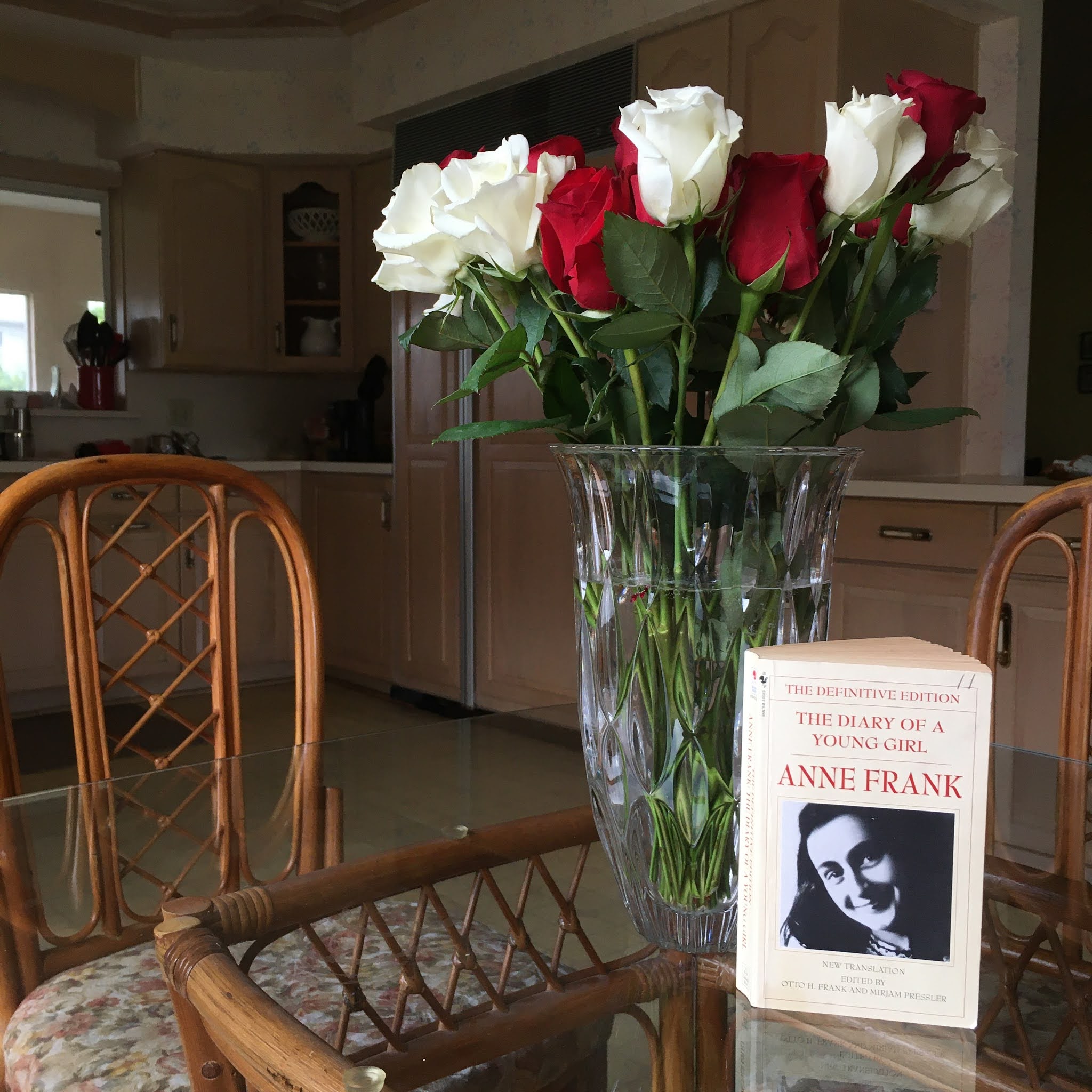
Let's Bust a Recap : The Diary of a Young Girl

"Writing in a diary is a really strange experience for someone like me. Not only because I've never written anything before, but also because it seems to me that later on neither I nor anyone else will be interested in the musings of a thirteen-year-old schoolgirl."

Dear Anne, if only you knew. Your little diary has now been published in more than 70 languages and been read by tens of millions of people all over the world. 

Gifted this little red checked diary on her 13th birthday in the summer of 1942, Anne Frank began to document her life and her innermost thoughts. Less than a month later, her whole family went into hiding because of the Nazi persecution of the Jews. Anne continued to write in her diary faithfully, and after hearing a radio broadcast from the Dutch minster of education, art and science in March of 1944 calling for "ordinary documents" such as letters and diaries to help preserve this unique time in history, she mused over the possibility of publishing her diary someday after the war was over. Little did she know she would never live to see that day.
Anne Frank lived in the Secret Annex with her father, mother, and sister, as well as her father's business partner and his wife and son, and eventually a dentist named Fritz Pfeffer, from July 6, 1942 until August 1944 when they were discovered and deported to Nazi concentration camps. Of the eight, only Anne's father Otto Frank survived the war. Anne died in Bergen-Belsen at the age of 15, probably only weeks before the camp was liberated by British troops on April 15, 1945. If that doesn't absolutely break your heart, I'm not sure what would. 

If only Anne could see the impact her diary has had on the world. It has become the best known and most widely read document of the Holocaust, and Anne is seen as the symbol of the one million Jewish children who were murdered during that horrific time in history. Her diary went on to be adapted into a play which won the Pulitzer Prize, a 1959 film which won three Academy Awards, and it is pretty much a standard reading requirement in many schools all over the world. 

I remember reading excerpts from Anne's diary when I was in school and seeing the film as well, but I never read her diary from cover to cover until last year. I took it for granted that everyone knew who Anne Frank was, but as I carried her diary around with me for several months last year while I was reading it, I encountered more than one person who had never heard of her. That is a travesty because we cannot forget what happened during World War II. It may sound pithy but "those who fail to learn from history are doomed to repeat it."  If the old adage is true, we can't allow Anne's story to fade from our memories. 

Being so familiar with Anne Frank's story before going into my complete reading of her diary made it even more heartbreaking. I remember starting it on the first day of September thinking I would fly through it easily that month. However, as I read a few entries each day, I kept turning to other books, not wanting to come to that abrupt ending, and I didn't finish the book until almost halfway into December. As I got closer and closer to the final pages, my dread grew. Dragging it out did not preserve me from bawling my everloving eyes out when I read the words: 

ANNE'S DIARY ENDS HERE.

This girl, cut down just as her life was beginning, said in one of her very last entries:
It's difficult in times like these: ideals, dreams and cherished hopes rise within us, only to be crushed by grim reality. It's a wonder I haven't abandoned all my ideals, they seem so absurd and impractical. Yet I cling to them because I still believe, in spite of everything, that people are truly good at heart. It's utterly impossible for me to build my life on a foundation of chaos, suffering and death. I see the world being slowly transformed into a wilderness, I hear the approaching thunder that, one day, will destroy us too, I feel the suffering of millions. And yet, when I look up at the sky, I somehow feel that everything will change for the better, that this cruelty too will end, that peace and tranquility will return once more."
 I mean, honestly.

The thing that struck me the most profoundly was how thirteen Anne was. All her little vanities and heartbreaks. Her squabbles with her mother and her hurt feelings over being so misunderstood. Her curiosity about the world and her wonder at her own changing body. I identified so easily with that thirteen year old girl. I couldn't help but giggle at her perception of her romantic conquests or roll my eyes at her silly complaints or sigh in solidarity over her blossoming ideas about life. Then she'd casually slip in a line of how she longed to feel the sunshine on her face and I'd feel my heart squeeze in anguish as the fresh realization of whose diary I was reading washed over me again.

I hope Anne's story continues to impact our world until it comes to its end. Her voice, and the millions of voices it represents, can never be silenced. Anne once wrote, "I want to go on living even after my death!"

Oh Anne, you have.

Monday, November 23, 2020

Let's Bust a Recap : Andrew Jackson

Well, Andrew Jackson is my new favorite president. I haven't really been ranking my favorites publicly on the blog since beginning this project, but let me give you a little update. 

Before officially beginning this project of reading through the American presidents in chronological order, I would have claimed Eisenhower as my favorite. Once beginning my literary quest, I decided I would try to put aside my preconceived ideas of the presidents I knew about and approach this goal with fresh eyes. Before getting to this biography of Jackson, my ranking was George Washington as my favorite with John Adams and James Madison tying for the 2nd and 3rd place spots. (We're going to keep my ranking to 1st, 2nd, and 3rd because after that it just gets tedious.) After this biography of Jackson by H.W. Brands, Jackson is now our gold medalist, with George Washington hanging on to silver, and Adams and Madison duking it out for bronze. In future, I'll let you know if anyone gets knocked off the stand. Because I'm sure this is what you all care about and why you come here to read my recaps, right? 

Going into this biography, I was a bit apprehensive as the last biography I read by Brands took me over two years to finish. And considering that the biography I read on John Quincy Adams earlier this year took me over five months to complete from start to finish, I ended up putting this one off for a bit. But once I started this one, I flew through it in three weeks and probably would have read it in even less time if I hadn't gotten sick right in the middle of reading it. 

Andrew Jackson: His Life and Times was published at the end of 2005 and was written by Henry William Brands, Jr. who has authored 30 books on U.S. history and has been a finalist for the Pulitzer Prize twice. This biography on Jackson was engaging, fluent, and highly readable, and I truly enjoyed it from beginning to end. 

This was due largely in part to the fact that Andrew Jackson is far and away the most colorful and entertaining president I've read about yet. Born in the colonial Carolinas to his recently widowed mother, Jackson's entire life can be summed up in one word: struggle. As a boy during the Revolutionary War, he took a saber to the head after refusing to clean the boots of a commanding British officer. His mother died when he was only 14 leaving him an orphan, and after he ended up on the wild frontier of Tennessee, he apprenticed himself to a lawyer and managed to pass the bar with no real formal education or training. He dabbled in teaching, law, politics, speculation, and numerous other business ventures until he finally realized his true calling as a military leader. Leading the Tennessee militia and eventually becoming the U.S. commanding general of the southwest, he led raids against hostile Indian settlements, autonomously went into Spanish-ruled Florida to protect U.S. borders, and was the hero of New Orleans in the War of 1812. His soldiers viewed him as a father figure and affectionately called him "Old Hickory" and the Indians respected his military prowess and dubbed him "Sharp Knife". It was particularly fun to read about his military exploits as men such as Davy Crockett and Sam Houston served under him. 

When it came to his political career, he couldn't stand his time as a congressman or senator and didn't complete his terms. After having to make decisive life and death decisions in war and being respected as a military commander, it drove him crazy to sit in Washington listening to a topic debated for weeks on end with no real resolution. But he loved his country and when he felt that duty demanded something of him, he rose to the occasion. In the election of 1824 against John Quincy Adams, his widespread popularity made him a desirable candidate for those in Washington who didn't want an Adams presidency and he nearly won the election despite being a latecomer and not initially having thought about being president. By the end of that election however, he was determined to be president and four years later, he rode that wave of popularity easily into the White House. He truly was the first man of the people to be elected and his presidency gave rise to the Democratic Party. 

Some of the big issues Jackson dealt with during his two-term presidency included reform, nullification, the veto of the national bank, Indian removal policy, and the annexation of Texas. While Jackson certainly wasn't perfect and sometimes operated from a mistaken perception, he was never less than sincere and didn't let personal criticism sway him from doing what he believed to be right. Another big shift in reading about our nation's seventh president was that the issues of his presidency were largely domestic after so many years of struggling to create the United States and facing so much international conflict as a result of that. 

In his personal life, Jackson met and married Rachel Donelson Robards in Tennessee under dubious circumstances. Rachel was already married to someone else who was abusive and subject to jealous fits of rage. While Rachel and her first husband were separated and because a divorce was very hard to come by in those days, she and Jackson were living together as husband and wife before it was technically legal for them to do so. This was not uncommon on the frontier, and Jackson and Rachel were eventually married legally but the questionable beginnings of their relationship came back to haunt Jackson during the 1828 election when opponents dragged Rachel through the mud on a national scale causing her so much duress that she died before Jackson's inauguration. Jackson was fiercely devoted to Rachel their entire marriage and nearly didn't go to the White House after her demise. 

Andrew and Rachel for whatever reason didn't have any biological children, and they ended up adopting their nephew and two small Indian boys left orphaned during the many conflicts on the frontier. Even though Andrew was a stern and exacting military commander, he was tender with children and women and wouldn't hear a lady disgraced in his presence. 

I mean, really, I could go on and on. As I mentioned earlier, of course Andrew Jackson wasn't perfect and I don't agree with everything he ever did, but I identified with him more strongly than any other president I've read about so far and when I got to the point of his death in the book, I actually got a little choked up. However much this has to do with the fact that my dad is a native Tennessean and has taken us to the Hermitage, I still appreciated Jackson's politics, and he was the kind of man I can respect and admire. It's very easy to look back at our founders and other early politicians and do a bit of Monday morning quarterbacking from our current place in history, but when you look at the big picture, Jackson was the first president who was the true champion of the people and advocated government by the people—not just the wealthy, landed class but all the people. 

I have to commend Brands one more time on this biography. It was cogent, comprehensive without being exhausting, and the way he contextualized the events of Jackson's life in the bigger picture of what was going on nationally and globally was excellent. A true pleasure to read especially compared to his dense biography of Theodore Roosevelt. Any desire or project of reading through the presidents aside, this is a biography I would recommend on its own merit. It was entertaining and a thorough glimpse of history during the lifetime of Andrew Jackson.

I have another book on Jackson I plan to read this year, but next year it's on to Martin Van Buren and Old Tippecanoe! Have you read any particularly stellar biographies on any of the U.S. presidents? Do you have a favorite president or period of history that you love to read about?