Monday, December 9, 2019

Let's Bust a Recap : Homegoing

Well, so much for getting caught up on the blog in November (or blogging anything at all in November, for that matter). We're already nine days into December and I'm just now writing the first of the four recaps I mentioned needing to write back in October. And I haven't even started drafting any of the posts for the five states we visited during 2019 for our #SeeAll50 project. Oops. Oh well. The Christmas tree is up and I've been listening to all the holiday music so no complaints over here.

Homegoing is Yaa Gyasi's debut novel and was published in 2016. For a first offering from a 28 year old (at the time of publication) author, Homegoing is a wildly ambitious attempt to explore the historical origins and ramifications of slavery throughout seven generations in one family. Beginning in late 18th century Ghana, we meet the first character Effia who, through the scheming of her stepmother, is given to a British slave trader in "marriage" and taken to live with him at the Cape Coast Castle. There she lives in comfort and experiences a mutually fulfilling relationship with her British husband. 

Unbeknownst to Effia, her half-sister Esi whom she has never met and knows nothing about has been captured in the ongoing tribal wars and taken to the dungeons of the very castle Effia is living in to be shipped to America and sold into slavery there. In the following chapters alternating between Effia's and Esi's family lines, we are given glimpses of the family's history from that time all the way up to the present day.

While the subject matter and the style in which Gyasi decided to tell this story was a massive undertaking, I would say that she was successful overall in creating a compelling novel that had some depth to it. I was very impressed by the meticulous research that went into the writing of this novel which informed her writing beautifully without becoming dry or overly detailed which easily could have taken away from the characterization of the people she created. In Effia's family line, she covers the perpetual tribal wars and British colonization of Ghana; while in Esi's line she moves through slavery on American southern plantations, the Great Migration after the Civil War, the convict-lease system in Pratt City, Alabama, and the jazz clubs and dope houses of Harlem. To adequately research one of these periods of time for this novel would be admirable, but Gyasi deftly moves through all of them with skill and compassion. According to Gyasi, one of her biggest goals in writing this book was to put individual names and faces to people who lived during some of these horrific and traumatic times in our history, to remind us that these things were happening to real people, individuals, just like you and me. I think she was largely successful in doing that. 

The book is 14 chapters total, each chapter about a different character. Often I found myself getting frustrated by the lack of development of these characters. It seemed that just as a chapter was getting started, just as I was really starting to feel invested and interested in a particular character, the story stopped and we moved on to the next character, the next generation, in the book. While this was irksome to me as a reader (each character could easily have had his or her story developed into a whole novel while in Homegoing their stories were limited to approximately 20-25 pages apiece), it also made me think about how in many cases (in the book and in actual history), family members who endured slavery were often ripped apart and cut off from their own history. While I have no idea if this was something the author intended (I was unable to find any interviews in which this question was explored by the author), it added another layer of gravity to the book which, while exasperating, was profound. 

This book was not on my list for 2019 and not really on my radar at all. A sweet friend of mine put it in my hands and told me I needed to read it (thank you, Ms. Kathy!), and I'm glad because this one will stay with me for a while. It's probably not a book I will read again, but I'll be interested to see what Yaa Gyasi does in the future and I'd be willing to read another book by her.

Have you read Homegoing? Which character would you pick to get his or her own full-length novel?

Thursday, October 31, 2019

Pumpkin Carving 2019

Happy Halloween!

Can you even believe it's already the end of October? This little corner of the internet has been sadly neglected this month. And not for lack of things to post about. According to the rules of this completely self-imposed chore hobby, I have 4 book recaps waiting to be written and 5 state posts that also need to be logged (for our #SeeAll50 project). Yikes. Perhaps November will be the month that I get all caught up on that (but I wouldn't hold my breath if I were you). 

But forget all that! It's time for our annual pumpkin carving post, and this is the first year that I feel like Cody actually said my pumpkin was the winner and really meant it (instead of giving me an obligatory spousal pity vote). However, I showed my BFF Christina a photo of our finished pumpkins and asked her to pick her favorite without telling her which pumpkin belonged to which carver and she picked Cody's right off the bat. *sigh* You'll have to let me know which one you like the best in the comments below. 
{ready to do this}
{this year the Little Man was ready to get in on the pumpkin carving action}
{check those sweet photo-bombing puppies}
October 30, 2019

Monday, October 7, 2019

Let's Bust a Recap : Humility

This little book on humility by Charles Joseph Mahaney was published in 2005 and is less than 200 pages long making it a very manageable read. It made it onto my 2019 book list when I asked my husband to recommend a few of our top shelf books for my list. (The top shelf of our home library contains the majority of our non-fiction spiritual or theological works organized alphabetically by authors' last names—I have a very long way to go to get through our top shelf books.) He ultimately pulled three books he thought I should prioritize, and I ended up putting them all on my list. Humility: True Greatness is the first one I've tackled this year.

Mahaney divides this book into three parts and gives the following explanation for his structuring of the book in the introduction:
"In the first part we'll learn that, no matter our age or vocation, humility is our greatest friend and pride our greatest enemy. In part two we'll discover that genuine humility requires a radical redefinition of success. We'll learn from Jesus Christ as He teaches His disciples the nature of true greatness, and why this greatness is attainable only through His death on the cross for sinners like you and me. Finally, in part three we'll get very practical. We'll examine how to cultivate humility and weaken pride each and every day."
Humility is certainly a difficult topic to write on. By choosing to do so, you're bound to open yourself up to the criticism that it must take an awfully proud—and therefore unqualified—person to claim to be an authority on the subject of humility, and the author very clearly spelled out his concern about this in the opening pages of the book. I actually found this to be a little off-putting and found myself being hypercritical as I began this book and in reading the first two parts especially. I believe it's important to think critically when reading anything, particularly theological topics I'm seeking to apply in my personal life, but it was humbling for me as a reader to have to put the book down and ask God to forgive my prideful, critical attitude toward Mahaney and to show me what He would have me learn from this book. (Whether this makes the application value of a book on humility vs. pride phenomenal or abysmal would be a great subject of debate.)

While I do think Mahaney inserted himself more than necessary into this book, he handled the topic thoroughly and Biblically and I found this book to be a helpful exhortation overall. The real value of the book, in my opinion, is found in the third section where he delivers practical ways to cultivate humility in our daily lives. He explains each method comprehensively throughout this section and then includes a list at the end of the books containing the practices he just finished detailing—the kind of list you could tape on your bathroom mirror or copy down in your journal to help you implement his suggestions. This list alone was worth the book.

The only thing I would have added is a similar list of all the books Mahaney referenced and recommended throughout his own book. It certainly wouldn't be difficult to go back through and make that list yourself, but it definitely would have paired nicely with his list of suggestions to cultivate humility. 

All in all, I would recommend reading Humility. I know I personally have to battle pride in my own life, and I think it's a sin every human struggles with to some degree. Reading this book was helpful to me in my ongoing quest to put the sin of pride to death in my own life, and I hope it helps you too if you decide to read it.

What's your best tactic to kill pride and cultivate humility?

Wednesday, September 18, 2019

A Word for Wednesday

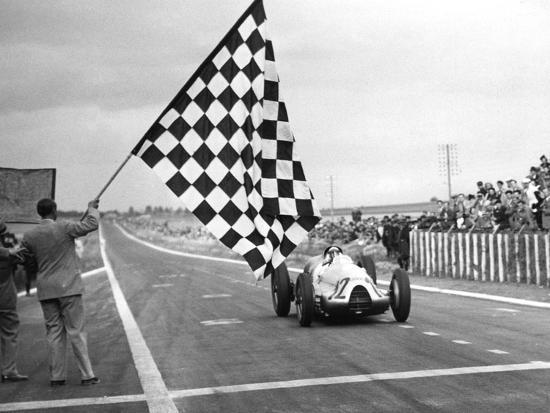
"In racing, they say that your car goes where your eyes go.
The driver who cannot tear his eyes away from the wall as he spins out of control will meet that wall;
 the driver who looks down the track as he feels his tires break free will regain control of his vehicle.
 Your car goes were your eyes go."

~from The Art of Racing in the Rain by Garth Stein~

Wednesday, September 11, 2019

A Word for Wednesday

"This is a rule of racing: No race has ever been won in the first corner; many have been lost there."

~from The Art of Racing in the Rain by Garth Stein~

Wednesday, September 4, 2019

A Word for Wednesday

"If all experienced God in the same way and returned Him an identical worship,
the song of the Church triumphant would have no symphony,
it would be like an orchestra in which all the instruments played the same note.
Aristotle has told us that a city is a unity of unlikes,
and St Paul that a body is a unity of different members.
Heaven is a city, and a Body, because the blessed remain eternally different:
a society, because each has something to tell the others—fresh and ever fresh news of the 'My God' whom each finds in Him whom all praise as 'Our God'."

~from The Problem of Pain by C.S. Lewis~

Wednesday, August 28, 2019

A Word for Wednesday

"The mould in which a key is made would be a strange thing, if you had never seen a key:
and the key itself a strange thing if you had never seen a lock.
Your soul has a curious shape because it is a hollow made to fit
a particular swelling in the infinite contours of the Divine substance,
or a key to unlock one of the doors in the house with many mansions.
For it is not humanity in the abstract that is to be saved,
but you—you, the individual reader, John Stubbs or Janet Smith.
Blessed and fortunate creature, your eyes shall behold Him and not another's.
All that you are, sins apart, is destined, if you will let God have His good way, to utter satisfaction.
The Brocken spectre 'looked to every man like his first love', because she was a cheat.
But God will look to every soul like its first love because He is its first love.
Your place in heaven will seem to be made for you and you alone, because you were made for it—made for it stitch by stitch as a glove is made for a hand."

~from The Problem of Pain by C.S. Lewis~