Showing posts with label book club. Show all posts

Tuesday, April 21, 2026

Let's Bust a Recap : Anxious People

Fredrik Backman exploded onto the scene in 2012 with the publication of his debut novel A Man Called Ove. If you haven't at least heard of it, you're probably not a big reader.  I finally got around to reading it myself ten years later in 2022 and joined the legion of fans Backman has garnered the world over. Despite the fact that I've had two of his other books—Britt-Marie Was Here and My Grandmother Asked Me To Tell You She's Sorry—sitting on my shelf for five years now, I found myself purchasing a copy of Anxious People a few weeks ago and diving right into it when my book club chose it for our April selection. And may I just say: Backman has done it again.

On opening this book, the first thing I read, of course, was Backman's dedication:
This book is dedicated to the voices in my head, the most remarkable of my friends.

And to my wife, who lives with us.  

Are you kidding me? I'm already sold. 

Chapter one opens with a bank robbery and a hostage drama. In his second paragraph, Backman writes, "This story is about a lot of things, but mostly about idiots. So it needs saying from the outset that it's always very easy to declare that other people are idiots, but only if you forget how idiotically difficult being human is. Especially if you have other people you're trying to be a reasonably good human being for." So begins an investigation into this bank robbery turned hostage drama. Father and son Jim and Jack are the two police officers on the case, interviewing the hostages who were all released from the apartment viewing they attended the day before New Years Eve after being held there by an armed bank robber who had just tried to rob a cashless bank across the street. 

A cashless bank.

Backman has this uncanny ability to capture the strange messiness of being human in such a profound and profoundly funny way. His books make you laugh out loud, they make your heart ache, they make you nod your head in agreement thinking "yes, that really is what it's like!" Anxious People in particular is one giant reminder to remember that the people around you are going through their own stuff. Stuff you may never know about. But stuff that compels them to make the choices you've deemed idiotic. And they are idiotic. But the choices we make may seem just as idiotic to the next guy who doesn't know our stuff. 

So be kind.

It's just brilliant. Anxious People came out in 2019 and the English translation by Neil Smith in 2020. While A Man Called Ove is still easily my favorite of the two, I absolutely loved Anxious People. Given the nature of the police investigation and the host of colorful characters, Anxious People feels very scattered in a somewhat disjointed way, and Backman did a great job of keeping me guessing the entire novel. There isn't really a main character to anchor the story so you constantly feel like you're being pulled in different directions from beginning to end. But it just works. 

If you haven't gotten around to reading Fredrik Backman yet, add my voice to the chorus of people recommending you move his books to the top of your TBR. He's becoming a favorite and it will not be another four years before I pick up another one of his books. 

But which one next? Britt-Marie, or My Grandmother Sends Her Regards and Apologises?

Tuesday, March 31, 2026

Let's Bust a Recap : Project Hail Mary

Oh yes. I unapologetically jumped on the bandwagon of people reading this 2021 bestseller in anticipation of the new film adaptation starring Ryan Gosling. I'm not ashamed to admit it. Sci-fi is not my go-to genre and though I was aware of the universal popularity of Andy Weir's books The Martian and Project Hail Mary, I didn't have much interest in reading them, despite the glowing reviews from personal friends and family. 

But when the news dropped last summer that the long-awaited adaptation would be making its way to screens in March this year, I began that internal bookworm debate of to read or not to read. I was immediately interested in seeing the film. We're fans of the Gosling around here and what better date night than an adventure through the galaxies? Ultimately, I decided—and so did my husband—that we would give the book a go, and since I got to select the book for my book club to read in March, I dragged them into it with me, too.

I procured a copy (a saga in and of itself involving long library wait times, hunting unsuccessfully for a secondhand copy, buying the book from a major retailer, then immediately having my hold come through from the library, my husband taking the library book with him on a trip to Winston-Salem where he got snowed in for a week and read it in like a day and telling me we should definitely keep the copy we bought, but then him finding it in the first secondhand bookstore he visited for a fraction of the price we paid the major retailer, so naturally he bought it and I returned the new book) and, along with my brother Reagan, began reading. (Another fun story: Reagan and I ended up finishing the book within minutes of each other. 1:30 AM Eastern Standard for me; 10:30 PM Pacific Standard for him.)

Okay, so here's where we hit a snag in this review. 

What review, Hannah? You've been bombarding us with all your usual nonsense and gotten nowhere!

Right, but see: I went into this book almost completely blind. I didn't know much of anything about it beyond it involving a guy going to space. And it was one of the best reading experiences ever. I am firmly in the camp of readers who would advise you to go into this book without reading a single review, or watching the movie trailer, or even reading the back of the book. This is one of those books you walk away from wishing you could read it for the first time again. 

But where does that leave me, your humble internet book reviewer? I will give you one sentence about the premise, then a few more details about the success of the book, my general thoughts about the adaptation, and we'll leave it at that. Deal? 

A man wakes up from a medically-induced coma, but he can't remember why he was in one, where he is, or even what his own name is. 

*cue the drama*

You guys, it's so good. Definitely read it. In 2021 it debuted on pretty much every big bestseller list for the physical book and the audiobook narrated by Ray Porter, and it jumped back up to the top of all the bestseller lists again last summer when the teaser for the adaptation dropped. Now, I'll be the first person to tell you that Andy Weir's writing isn't anything to phone home about, but the man can spin a yarn, let me tell you. And while this book was chock-full of the science and math, he never took it to the point where my eyes glazed over, which is saying something because I am not a science and math girl. This is a keep-you-on-the-edge-of-your-seat novel, and I was reading it every chance I got. 

As for the movie: we loved it. A very good adaptation, as adaptations go. Naturally, there were some omissions we were disappointed about, and, honestly, the opening wasn't great; but overall it was a very good time at the movies. We saw it in IMAX which was awesome and I'd highly recommend it if you have the chance to see it that way. I do honestly feel like I would not have enjoyed it as much as I did if I hadn't read the book first. This was an adaptation for the book-lovers if ever I've seen one, and while it still would have been a fun date night if we hadn't read the book first, I don't think I'd feel compelled to buy the movie on DVD or watch it again if I hadn't loved the book so thoroughly and had all the information the movie couldn't possibly have included. 

Project Hail Mary has a fan in me. I don't know that I'll ever pick up Andy Weir's other books, but I'm so glad I didn't miss out on this one. 

Amaze. Amaze. Amaze.

Tuesday, February 17, 2026

Let's Bust a Recap : The Borrowed Life of Frederick Fife

The second book chosen for our book club to read this year was this 2024 debut by Australian author Anna Johnston: The Borrowed Life of Frederick Fife. 

And what a gem! I loved this hilarious, heartfelt novel from the first word to the last. Johnston did not miss a single step in her debut, and I've already put her upcoming release on my amazon wishlist and requested that my library buy a copy even though it's not coming out till August. 

In the first chapter, we learn that 82 year old Fred has just been evicted from his home and is taking a walk along the river to find a little snatch of peace while he tries to figure out what he's going to do. In an insane turn of events that involves his uncanny doppelgänger floating away down the river, Fred finds himself being loaded into a van and taken to a nursing home where he's fed the best meal he's had in months and tucked away into a warm bed. Despite his earnest attempts to correct the mistake, Fred can't seem to make anyone believe that he isn't Bernard Greer and decides maybe it won't be so bad to "borrow" this stranger's life since he won't be needing it any more. 

While you might think you'd have to suspend disbelief to such a degree that this story couldn't possibly be enjoyable, I think Johnston actually pulls it off. She does such a wonderful job of spinning a yarn that seems like it could—believe it or not—be plausible despite how absurd it sounds on the surface. Frederick Fife is a kinder, sunnier Ove who, instead of being adopted by the people around him against his will, adopts all the people around him himself to create his new found family. I loved it so much. 

Another surprising element of The Borrowed Life of Frederick Fife that endeared me even more to this sweet novel was that I saw myself in Fred. I mentioned in one of my recent reviews that it's hard to find a novel where the protagonist is childless and content. In The Borrowed Life, Fred and his late wife very much wanted to have children but were unable to grow their family. While this was one of the harder elements of this narrative to read about (and let me just give a trigger warning for miscarriage), I felt such a kinship with this character who kept a sunny outlook and had such a beautiful and fulfilling marriage with his partner. I didn't expect the story I'd see myself in to be that of a lonely male octogenarian, but I'm so glad I found it.

Finally, I have to continue my applause for Johnston's brilliant debut by saying that I didn't see the twists coming. I certainly haven't read every book on the planet, but The Borrowed Life of Frederick Fife felt wholly original and fresh to me, and I stayed up way past my bedtime finishing this one. 

Two enthusiastic thumbs up from this reader, and I'm so looking forward to Anna Johnston's sophomore novel—coming in August!

Tuesday, January 27, 2026

Let's Bust a Recap : The Reason for God

Here we are again, recapping my most recently finished book. Generally speaking, non-fiction doesn't stay with me as long as good fiction does so when I read a book like The Reason for God, I want to recap it right away before I forget everything I thought about it. There are always exceptions to this rule, of course, but those exceptions definitely don't apply to The Reason for God as it's a library book that I wasn't able to mark up and will be returning soon so I won't even have a physical copy to refer to when writing a blog post. This was the first book selected by my book club for 2026—yes, we're trying to resurrect our poor book club—which is why I went off-list so early in the year to check out a library book instead of reading one of the 700+ unread books that live in my house. 

Tim Keller was a very popular pastor and Christian apologist who founded Redeemer Presbyterian Church in New York City back in 1989 which has now grown to a congregation of over 5,000. In his 2008 book The Reason for God, he urges skeptics to wrestle with their doubts about Christianity and encourages believers and non-believers alike to "rise to the level of disagreement rather than simply denouncing one another." In the first half of his book, he attempts to dismantle seven common objections to Christianity. Then he writes an "Intermission" in which he sets the stage for the second half of his book, the second half being his reasons for believing Christianity. He ends with a heartfelt appeal to his readers to examine their own motives for belief or disbelief and offers them practical advice on how to begin a journey of faith for themselves. 

Personally, I thought the first half of the book was pretty weak with chapters three (dismantling the argument that Christianity is a straitjacket) and seven (dismantling the argument that you can't take the Bible literally) being the exceptions. He makes some good points overall, but a lot of his arguments come across like the old playground taunt I know you are but what am I? If I was a skeptic, I have a hard time believing his defense would be particularly moving for me or even really give me much to think about. (But to be fair, I'm not a skeptic so I may be way off the mark.) The second half of the book in which he is giving reasons for Christianity is much stronger, although on the whole his arguments are very repetitive. He quotes other theologians a lot and to good effect...but in a way that makes me want to pick up their books instead of reading his. (Particularly the philosopher Alvin Plantinga whom I had never heard of and am making this my note to self to get my hands on one of his books.) C.S. Lewis has obviously been a huge influence in Keller's life—can't fault him for that; I'm right there with him—but if I was recommending a book to a skeptic of Christianity, I'd just go ahead and give them Lewis rather than Keller. I did really like how Keller referenced popular books, movies, and authors in making some of his points which, I think, makes The Reason for God more accessible to a 21st century audience. 

If you're reading this, I don't want you to think I'm being super critical of Keller's book. This is the first book by Keller I've ever read and after reading it, I'd be open to reading other books by him. This year, I'm reading through a daily devotional of selections from Dr. Martin Lloyd-Jones' writings, and as I was nearing the end of Keller's book, I came to a selection in my devotional on Faith and Reason that helped me pinpoint why exactly Keller's book wasn't resonating with me. Lloyd-Jones states that faith is not a matter of reason. He goes on to explain that "our reason brings us to the point where we realize that reason is not enough, and at that point we have nothing to do but submit ourselves to...faith." While Keller certainly touches on this in The Reason for God, it's not a point that gets hammered home and it's a crucial point to make in writing a book like this one. 

Overall, maybe The Reason for God could be a really helpful book for someone who is honestly looking to engage with the claims made by Christianity but having a hard time swallowing them for one reason or another. It may be helpful for Christians to be able to hold their own positions with greater clarity and greater humility. But it also may not be. I appreciated how respectful Keller was in his writing to both camps and how he encourages thoughtful discussion. I'm glad I read it, and I'm interested to see what type of discussion it will spark in our book club. 

Monday, February 5, 2024

Let's Bust a Recap : Tom Lake

Tom Lake is a brand new release from seasoned author Ann Patchett. It just came out this past August, and it's going to be a tricky one for me to review so let me go ahead and issue a spoiler warning right here and now, because my opinion of this novel turned on one point towards the end of the book, and there's no way for me to write this review without discussing that one sticking point. 

So first of all, one of my longest and truest friends chose this book for our book club after she listened to the audiobook version narrated by Meryl Streep and loved it. I fully expected to love it too, and I did. Until I didn't. And then I really didn't. 

But before I get too far ahead of myself: Tom Lake is set during the spring of 2020, and our main character Lara's three grown daughters have all returned home to their cherry farm in Michigan in the wake of the COVID-19 pandemic and lockdown. As mother and daughters work on harvesting the cherries together, her girls coax her to tell them the story of her summer romance with famous actor Peter Duke when she was in a summer stock production of Thornton Wilder's Our Town at Tom Lake. The entire novel pivots back and forth between Lara's young life and the present day as she relates it to her daughters while they work. 

Here's the thing: I loved Lara telling this story to her daughters. I was living for every scene where the four of them were together. I was in stitches every time one of the girls tried to correct their mother about her own life story. I teared up at Lara's tenderness with them as they tried to make sense of this hard world we live in. As for Lara's story: meh. I could take it or leave it. She made a lot of terrible choices, but we all do. While I didn't agree with the worldview any of the characters seemed to hold, I could enjoy the story because I don't have to agree with everyone else's worldviews or have them agree with mine. 

But then, in a twenty-one chapter book, we came to chapter twenty and the entire novel was completely ruined for me. In this particular chapter, Lara has finished telling her story to her daughters, but she privately reminisces on one other event in her life that she has never shared with anyone—not even her husband—and never intends to share with anyone. Except for us, the unfortunate readers. While the entire chapter was extremely off-putting and—there's really no other way to say it—disgusting, I could have forgiven its inclusion in the book had it not culminated in Lara having an abortion. When I got to this chapter and it ended with this tiny paragraph that all seemed so out of place in this story, I felt duped. I felt like the entire purpose of Tom Lake was for the author to respond to the overturning of Roe v. Wade in the U.S. and I had just read this entire novel to get slapped with the author's political agenda. 

And I was not happy about it. I will say that it led to some really great discussion in our book club, but I cannot recommend this book to anyone unless you're the type of person who can actually skip a chapter of a book with no curiosity. (And if that's you: how?) I realize I just said in this very review that we don't all have to agree on everything, and I stand by that, but for me personally, abortion without any thoughtful exploration or commentary is an absolute dealbreaker and it soured me on Tom Lake and Ann Patchett which is triply unfortunate as I own two of her other books that I haven't gotten around to reading yet. (Bel Canto and The Dutch House, for any interested parties.) I may still read those one day, but if I do I'll go in with a certain amount of wariness I wouldn't have had before reading Tom Lake.  

All said, Tom Lake was a miss for me, and I can't forgive Ann Patchett for chapter twenty. 

Do you have any absolute dealbreakers that will ruin a book for you? 

Wednesday, November 22, 2023

Let's Bust a Recap : A Curse for True Love

Not only did my resolve to stick to my 2023 book list fall apart pretty quickly when a friend lent me a book in September, I completely failed at ignoring my library holds. In fact, in the week leading up to the release of Stephanie Garber's newest book, I was checking my library account online every single day just in case they got it early. And when October 24th rolled around, and it still wasn't ready, I had a real internal struggle over what the line was between waiting patiently like a normal human being or pestering the librarians about why the book wasn't available yet. (Don't even get me started on the Britney Spears memoir; we'll talk about that Friday.)

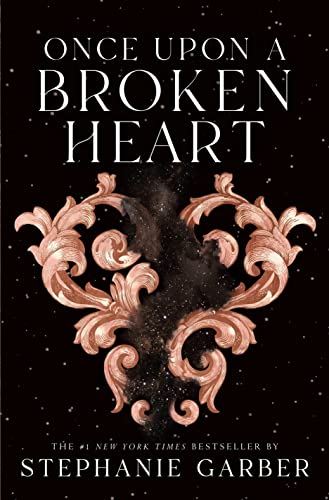
But finally, I was able to get my hands on the conclusion to Stephanie Garber's Once Upon A Broken Heart trilogy. And you know what? Yay for that because it broke me out of a major reading slump I fell into during October. Even though I would still place this book—along with all her others—squarely into the "Trash But I Liked It" category, I was glad to finally get the end of the story. 

What are you even talking about, Hannah? If you're brand new, then you may want to head back to this post from earlier in the year where I detailed my experience of reading Stephanie Garber's Caraval trilogy and the first two books in her Once Upon A Broken Heart trilogy. My book club chose Caraval, and I went way down the rabbit hole reading all the books Stephanie Garber has had published to date. In this much-anticipated end to her Once Upon A Broken Heart trilogy, we get shifting perspectives between Evangeline Fox, her husband Prince Apollo, and Jacks the fated Prince of Hearts. A Curse for True Love picks up literally right where The Ballad of Never After left us, with Evangeline in Apollo's arms right after he erases all her memories. As Evangeline struggles to regain her lost memories, Apollo is determined to end Jacks, but all Jacks cares about is protecting Evangeline from everyone who wants to kill her. And let me tell you: EVERYONE wants to kill her. For vague reasons I can only assume Garber created as an excuse to let Jacks keep coming to her rescue because it was very unclear why she was such a target. Can Evangeline figure out who is good and who is bad? And can she do it before irreparable damage is done?

Of course she can, and you can see where the story is headed from miles away. Unfortunately, Garber's writing has not really improved. But I thought she did some clever things in A Curse for True Love, particularly with Apollo and the Tree of Souls. As expected, Evangeline gets her tidy, Happily Ever After, and Garber teases more stories to come in a ridiculously schmaltzy epilogue. 

Despite the fact that I will never recommend these books to anyone, and I will probably never read them again myself, I enjoyed them for what they were, and A Curse for True Love was an entertaining end to the series. 

Do you have any books that fall into the "Trash But You Like It" category? And are there any librarians out there who can explain to me why it took so long for supposedly preordered books to be available?

Tuesday, November 14, 2023

Let's Bust a Recap : A Woman After God's Own Heart

Well hello there. I know it's been a hot minute since I posted an actual book recap around here, and I'm jumping back in today with this non-fiction read from September. This book has been sitting on my shelf for years. And not just like, more than two years; I'm talking more than ten years. Easily. When I was in high school, a friend and I went through A Young Woman After God's Own Heart with a mentor at our church. That same friend chose this book for our book club to read together this fall. For me, it came in the middle of a real spiritual dry spell. With all the craziness of our lives this summer, my quiet time had become nearly non-existent, and picking up this book at the beginning of September felt like a sweet and much-needed reset for me.

A Woman After God's Own Heart by Elizabeth George was originally published in 1997, and this updated and expanded version was released in 2006. George's goal in writing this book is to share practical, scriptural insights on how any woman in any stage of life can pursue God's priorities in her personal life. While A Woman After God's Own Heart was written for "any woman in any stage of life", one-third of the book is specifically aimed at wives and mothers and I could easily see how a woman who is not in that stage of life but wants to be might not feel very helped by this book. 

That being said: I personally found this book extremely helpful. To be blunt, the beginning and the end of this updated and expanded edition are not great, but the meat of the book when George gets into the nitty-gritty of daily life and her practical advice on how to pursue God's priorities was highly profitable. George's introduction and "Word of Welcome" seemed a little self-congratulatory to me, and the opening chapters came off a bit clichĂ©d and very surface level. But the chapters on serving, following, and loving your husband were a stark reality check for me. Much like when I read Elisabeth Elliot's Let Me Be A Woman a few years back, I immediately felt myself get defensive when I started to read about ways to serve my husband—specifically her practical tips about keeping the house clean and having a meal ready for him after a long day of work. Who am I, June Cleaver?! Have we reverted back to the 1950s?! But as I calmed down and took time to think critically about her advice, I came back to my own firmly-held convictions about my role as a woman and a wife. While the implementation of George's suggestions will not look the same for every woman, the heart of her counsel rings true. It was challenging for me to read her words and wake up to some of the ways I have slacked off in my God-given role, and it was clear how that slacking off had contributed to the dry spell I was in spiritually. 

While George certainly doesn't pussyfoot around with her guidance to pursue God's priorities, she somehow does so gently. Right about the time I started to feel like I was failing on all fronts as I was reading her book, she softly reminds the reader that—to borrow the old Chinese proverb—"a journey of a thousand miles begins with a single step." Throughout her book, George reminds the reader that something is better than nothing. Praying for five minutes today is better than not praying at all. Rather than berate myself for all the ways I could be doing better, I just need to do my best. What a sweet reminder.

Like I mentioned briefly, the end of the book also wasn't great. It felt like a bit of a sales pitch. Talking about the "legacy" of A Woman After God's Own Heart didn't really do much for me, and I don't think the "updated and expanded" version of this book added much to the original work. 

But all-in-all, A Woman After God's Own Heart is a book I can see myself revisiting—at least in part—in the future. It came to me at a time when I really needed it, and it has helped me to reset and resolve to pursue God's priorities as a woman living in 2023. I would recommend this to any woman seeking to follow close after God's heart with the caveat that if you're particularly longing to be a wife and mother, this may not be the book for you right now. While I think this book can be helpful for single women, it may pour salt in the wound of a hope presently deferred. 

Have you read any non-fiction that has been especially helpful to you lately?

Friday, September 29, 2023

Let's Bust a Recap : Ghosted

Reading Ghosted this year seems like a serendipitous work of kismet. I randomly plucked this cutie hot pink spine sporting that iconic little Penguin off the shelf at The Book Shelter this past spring while I was browsing the aisles on a quick trip down to Florida. I'd never even heard of it, but after reading the vague blurb on the back cover and then spotting the plug from Liane Moriarty on the front cover, I was hooked. This book was definitely coming home with me.

A couple months later, the book club and I were browsing the local Friends of the Library on another quick trip I had taken down to Florida, and Sydney ended up buying a copy of Ghosted, partly because she's fascinated by the concept of ghosting and she's admittedly a ghoster herself, and partly because I promised that I'd choose it for book club since it was my turn to pick next. 

Choose it I did, and ended up reading it on my next weekend trip down to Florida in August. (I know, am I ever even in North Carolina? According to this blog post, you'd think not.)

In this 2018 novel by Rosie Walsh, Sarah has fallen head-over-heels in love with Eddie and after a perfect seven days together, he disappears off the face of the earth. Eddie won't return her calls, texts, facebook messages, smoke signals—she literally leaves no stone unturned in trying to contact him. Despite her closest friends trying to convince her that this is a normal occurrence on the dating scene, Sarah is convinced that something terrible is behind this ghosting, and she turns herself inside out trying to figure it out. 

The novel begins after Sarah and Eddie's separation and is interspersed with flashbacks to their perfect week together, along with mysterious letters alluding to a devastating accident nineteen years prior involving Sarah's younger sister Hannah. It's compelling reading and Walsh did a masterful job of composing an absorbing page-turner. I audibly gasped at the shocking twist in the book. Did not see it coming.

Ghosted was a super fun book to read, and a great one to discuss with the book club, but for all that: the ending made me grumpy. I haven't exactly been able to pinpoint why, but at the end of the book I just felt crabby. Perhaps a contributing factor is that Ghosted is at least the fourth book I've read this year that had a side character dealing with infertility. I think I'm a little burnt out on that front in my fiction and the timing of my reading Ghosted just wasn't great. 

But ultimately, it's an entertaining, twisty, unputdownable novel, and if you're looking for something quick to bust you out of a reading slump, this might be just the ticket. 

What's your top recommendation for a slump-busting book?

Thursday, August 17, 2023

Let's Bust a Recap : The Screwtape Letters

Cue the fanfare. With today's post, we have officially cleared 2022 out of the To Be Blogged stack. Life is good.

(All right, fine, in all honesty, there is actually one more book from 2022 hanging out in the stack, but it is being saved for a specific post to come so just let me have my moment!)

The Screwtape Letters turned out to be my second C.S. Lewis read of 2022. Right about now I could feed you some line about how after not managing to read any Lewis at all in 2021, I felt the need to double-down last year, but the truth is: my book club selected it for the month of October, and this was actually my third or fourth time reading it. The Screwtape Letters is probably C.S. Lewis' most famous work outside of the Chronicles of Narnia, and I chose this book for my thesis project in my high school senior English course. I spent a lot of time in the library that semester with this very copy of the book and piles of other resources on Clive Staples Lewis, sitting across the table from my friend Sydney (who is now in the aforementioned book club with me and who's project was on The Pilgrim's Progress in case you were wondering. Our teacher constantly confused the two of us because I'm pretty sure we were the only two in the class who chose religious works from the approved list—what I wouldn't do to get my hands on a copy of that list today—and now this parenthetical rabbit trail has officially gone off the rails. Can I get a show of hands in the comments if you find the scattered inner workings and random reminiscences of my mind amusing? Or is this absolutely insufferable to read?). Naturally, as I've already confessed on this very blog, I didn't finish reading it at that point in my life, but I've read it since, and it's one that hits me differently every time I read it.

Let's focus. The Screwtape Letters is an epistolary novel made up of thirty-one letters from a senior demon called Screwtape who is acting as a mentor to his nephew Wormwood, a novice demon in charge of securing the damnation of an ordinary young man. Lewis used this self-termed "demonic ventriloquism" to address Christian theological issues having to do with temptation and the resistance to it. Throughout the novel, Screwtape gives Wormwood detailed advice on various methods of undermining God's directives, interspersed with observations on human nature and the Bible. The result is a masterclass in satire, entertaining and enlightening readers the world over with its sly and ironic portrayal of human life and foibles. The letters were originally published weekly in an Anglican periodical during wartime from May to November in 1941. The book was published the next year in February of 1942. Later in 1959, Lewis wrote a short article entitled "Screwtape Proposes a Toast" which was published in the Saturday Evening Post, and nowadays, this is typically included with The Screwtape Letters.

In a foreword to "Screwtape Proposes a Toast", Lewis stated he had never written anything more easily or with less enjoyment than The Screwtape Letters. Although he received numerous requests throughout his life to add to the letters, he resolved never to write another one saying the process of writing them almost smothered him before he finished. Despite that, in writing The Screwtape Letters, Lewis inspired loads of other authors to prepare sequels or similar works of their own. Even apart from literature, The Screwtape Letters can be seen cropping up in all forms of pop culture from comics, to music, to political discourse. 

As I mentioned earlier, each time that I read The Screwtape Letters, a particular letter will usually stand out like a sore thumb and hit me in a new way. On this particular go-round with the demons, Screwtape's words in his seventeenth letter to Wormwood seemed to jump off the page, and I've been ruminating on them ever since. In this letter, Screwtape is postulating on the temptation of gluttony, and he gives Wormwood the demonic distinction between the gluttony of Delicacy and the gluttony of Excess. While we humans tend to think of gluttony only in terms of Excess, Screwtape makes the point that quantities do not matter, "provided we can use a human belly and palate to produce querulousness, impatience, uncharitableness, and self-concern". He goes on to explain that "because what [the human] wants is smaller and less costly than what has been set before her, she never recognizes as gluttony her determination to get what she wants, however troublesome it may be to others. At the very moment of indulging her appetite she believes that she is practising temperance." 

I mean, right?! This hit me like a load of bricks. In our culture, we seems to be increasingly obsessed with every single thing that goes into our bellies. We have to count calories, or we have to eat clean, or we can't eat off plastic, or, or, or....the list goes on and on. While we're merely "trying to be healthy", the ultimate reality is that instead of keeping our attention on Christ, we're being ruled by our own bodies. The deception is subtle, but aren't the cunning ones the most devious?

In sum, I highly recommend The Screwtape Letters. It holds up to multiple re-readings, and if it doesn't spark some self-examination, I'm not sure what will. It's good fun while still packing a punch, and no matter when I read it, it usually sends a little chill down my spine at some point or other which makes it a particularly good read for the fall when witches and demons and the forces of darkness tend to abound. 

Next up in my pilgrimage through the work of C.S. Lewis: Miracles.

Friday, August 4, 2023

Let's Bust a Recap : The Storied Life of A.J. Fikry

Ok, book-lovers. I don't generally give star ratings because, let's face it, they're too subjective and my five star book might be your one star book and vice versa. But after reading The Storied Life of A.J. Fikry, all I can think is: that was a solid three-star read. Very middle of the road. I just didn't feel that strongly about it one way or the other. 

I picked up my copy of this popular 2014 novel several years ago at The Book Shelter, and, as is usually the case, it has hung around on my shelves since then largely ignored. But this year, the movie adaptation came out on hulu, so my book club and I decided to read it together. 

In The Storied Life of A.J. Fikry, we meet our grumpy protagonist—a widowed book store owner on the quaint Alice Island—a little over a year after his wife has died in a car accident. He subsists on crappy frozen dinners, he's given up exercising, and he's slowly drinking himself to death. His plan to sell the bookstore and retire comfortably is shot to pieces when his extremely rare and incredibly valuable copy of Tamerlane is stolen out of his apartment. Thankfully, he has people in his life who genuinely care for him including his late wife's sister Ismay and the island's chief of police Lambiase, and when a mysterious package shows up at Island Books, Fikry is awakened to a new life he couldn't have imagined for himself. 

I liked the premise. The vague blurb on the back cover did not give away the big twist in the mystery package. I loved how each chapter opened with A.J.'s notes on a famous short story and how Zevin used those openers to foreshadow the chapter to come. The literary references throughout the book are great. I don't know, it just didn't all add up somehow. The emotional ending didn't feel earned. It just kindof fell flat for me. Fikry was giving Ove or Eleanor Oliphant. But if I were to grade them, Ove and Eleanor get an A+; Fikry gets a B-. 

The movie was much the same. I thought the script was actually very nicely developed for this to be a solid book-to-screen adaptation, but the acting was not good. (With the possible exception of David Arquette playing Lambiase.) Every character seemed to speak in a monotone, and some even seemed to be reading their lines straight off a cue card. Lucy Hale looked like the exact opposite of how I pictured the plucky book sales rep Amelia. I liked the score but it felt off in the film. Like it was trying to generate the emotional response in the viewer that the actors certainly weren't going to elicit. And the use of green screens was pretty glaringly obvious. The cutest thing in the movie was the physical Island Books storefront. Overall, good adaptation; bad movie. 

What else can I say? Read it, don't read it—whatever. *shrugs* The Storied Life of A.J. Fikry is just fine. That's all. 

Monday, May 22, 2023

Let's Bust a Recap : Stephanie Garber

Well, hey there. Long time, no see. Let's take stock, real quick: I managed one post at the tail end of March and then completely missed April. I think we're about twenty books behind in this blogging endeavor, but today I'm planning to cover major ground and offer you a five-for-the-price-of-one post because for all of April, I fell down a Stephanie Garber sized hole and read all the books she's had published to date. Were any of these books on my list for the year? Absolutely not. Are they even on my never-ending unread shelf? Also no. Have I already placed a hold at the library for her upcoming release in October later this year? Yes. Yes I have. Let's do a quick paragraph on each of her five books, and then we'll wrap it up with some of my overall impressions. And yes, we'll probably be delving into some spoiler-y territory since we'll be talking about a series of books. Reader beware. 

First up: Caraval. This was Garber's debut novel published in 2017. All of her novels to date are fantasies marketed to the Young Adult crowd. They're all set in the same world so Caraval is our introduction to that world, and of all five that I've read, this one still stands as my favorite. In it, we meet teenage sisters Scarlett and Donatella Dragna who have had a Hard Life because of their abusive dad. Scarlett is set to be married in a few weeks and is determined that the marriage will fix all of her and Tella's problems because they'll be able to get off their tiny island and away from their jerkweed dad. But then she finally receives an invitation to Caraval, the legendary, once-a-year performance where the audience gets to participate in a magical game of epic proportions. She's been writing to the Caraval master for years, hoping to be invited, and now, just weeks from her wedding, she's finally gotten the much-coveted invitation. She has no intentions of doing anything that could possibly hinder her wedding, but once Tella finds out about the chance to go to Caraval, she employs the help of a young sailor to basically kidnap Scarlett, and take them all to Caraval. Once there, however, Scarlett gets separated from Tella. She then finds out that Tella has been taken by the Caraval Master, Legend, who has made finding Tella the objective of this year's Caraval. Scarlett gets swept up in the treacherous game and must discern between what is real and what is just an elaborate performance in order to save her sister. 

The second book, Legendary, was published in 2018 and picks up right where Caraval leaves off. Caraval was from Scarlett's perspective, but in Legendary, we follow Tella on the next Caraval adventure. Shortly after the completion of Caraval, Scarlett and Tella learn that there will be another Caraval performance almost immediately, in honor the Empress Elantine's birthday. (Or something. I can't exactly remember if it was her birthday or her Golden Jubilee or what. But they're having another Caraval because of the empress.) Tella has made a secret deal with a mysterious criminal. But in order to get the information she needs, she has to win Caraval. However, this Caraval performance seems to be more than just a game. Tella learns that the fabled Fates she grew up reading about are real and starting to escape from an enchanted deck of cards. Tella has to decide if fulfilling her bargain with the Prince of Hearts and finally being reunited with her long-lost mother is worth risking the Fates going free and destroying Caraval forever. 

In the conclusion to the Caraval trilogy, we get dual perspectives from Scarlett and Tella. Finale was published in 2019, and picks up a couple months after the end of Legendary. In this one, Tella is in the middle of a love triangle with Legend and Jacks. Scarlett is in her own weird love triangle with Julian and her former finacĂ©. And their mother is back in their lives, but bedridden because she got released from the magical deck of cards from the last book that she's been trapped in for years so she has to regain her strength. Yes, the Fates got released and are wreaking havoc, but no, Scarlett's and Tella's mom is not a Fate. In this "final" installment, Tella and Scarlett have to work together to overcome a power-hungry Fate who wants to take over the Elantine Empire and reduce every human in the world to a mere object for his sadistic entertainment. It's a whole mess, but never fear: it all works out flawlessly in the end. 

Next up, we have Once Upon a Broken Heart published in 2021. Even though the Caraval trilogy was concluded in Finale, Once Upon a Broken Heart picks up shortly after Scarlett's coronation as empress. In this first installment of Garber's second trilogy, we are introduced to Evangeline Fox who makes a deal with the Prince of Hearts to stop the wedding of her one true love. But, of course, making a deal with a Fate is never as straightforward as it seems and Evangeline, naturally, finds herself in a mess. Scarlett and Tella decide to send Evangeline to the Magical North to participate in the coronation of the prince. This is actually less of a coronation and more of a bachelor-style ball where the prince has to find a wife before being crowned king. Enter love spells and vampires and a whole lot of drama with Jacks. Apparently, Evangeline is the key to a magical arch that either contains something really good or really bad. Should she try to open it?

Lastly, we have Garber's fifth offering The Ballad of Never After published just last year in 2022. In this one, the love spell has been broken but now Evangeline has been cursed and the only way to break the curse is probably to open that enchanted arch from the last book. So even though she has promised herself she will never trust Jacks again, she finds herself working with him and Chaos (the OG vampire) to find the magical stones that will allow her to open the mysterious arch. And MAJOR SPOILER: at the end of this book, the prince (who is legally Evangeline's husband in case I forgot to mention that, and who's name I cannot for the life of me remember at this moment) steals all Evangeline's memories. ALL OF THEM. 

So yeah. It's a lot of drama. 

The poet W.H. Auden had a theory about the five stages of mature reading. According to him, "For an adult reader, the possible verdicts [we can pass on a book] are five: I can see this is good and I like it; I can see this is good but I don't like it; I can see this is good, and, though at present I don't like it, I believe with perseverance I shall come to like it; I can see that this is trash but I like it; I can see that this is trash and I don't like it." 

Stephanie Garber's books fall squarely into the "I Can See That This Is Trash But I Like It" category. 

Is her writing good? Objectively: a resounding no. You can spot her influences a mile away and her prose reads like a heartsick middle schooler wrote it. She herself has said that she spends most of her time thinking about how to torture her characters or make them kiss. Every resolution is impossibly convenient—even for a fantasy—and the end of each book is a hot mess that somehow comes to a pretty tidy conclusion. Her writing, sadly, does not improve throughout her books. (And I have to add, her use of similes and metaphors is downright cringeworthy.)

But could I stop reading them? Also: a resounding no. These are total popcorn books. No nutritional value, usually gets stuck in your teeth, but highly addictive. 

Would I recommend this series? Eh, probably not. But will I be reading A Curse for True Love when it comes out in October? As soon as the library has it. Stay tuned.

Wednesday, February 22, 2023

Let's Bust a Recap : Skating Shoes

Skating Shoes was on my 2022 book list, but was one of four books from that list I didn't get around to reading last year. I was intentionally saving it for the end of the year because ice skating evokes all things Christmas-y to me, but between getting sick—twice!—and watching the World Cup, I didn't manage to pick this one up. It ended up being the perfect February read though, and all my thanks to Amy for choosing a book off my 2023 list for book club. 

If you missed out on my Ballet Shoes recap from a couple years ago, pause and go read it real quick. I'll wait. 

Are you back? If you—like me—are not one to follow explicit instructions, the main point is: I have acquired and begun reading Noel Streatfeild's Shoe Books solely on the recommendation of You've Got Mail's Kathleen Kelly

And I'm loving them. 

In Streatfeild's 1951 Skating Shoes, we meet the Johnson family who are barely making ends meet by living off the unwanted produce their Uncle William sends them to sell in the store. Harriet Johnson, our shy little protagonist, has been seriously ill, and her doctor recommends ice skating as a way to strengthen her legs after her long confinement. Her big brother Alec takes up a paper route so they can afford for Harriet to rent her skates, and off she goes to the rink where she ends up befriending Lalla Moore who is destined—according to her Aunt Claudia—to follow in her late father's footsteps and become a champion figure skater. The book follows this unlikely friendship as Lalla helps Harriet on the ice, and Harriet invites lonely Lalla into her happy family. 

Ballet Shoes was delightful, but I loved Skating Shoes. The way the Johnson family interacted in the book was a thing of joy, and watching all the adults in Lalla's life—her nurse, her tutor, her skating coach, even her Aunt Claudia's husband Uncle David—care for her well-being, despite Aunt Claudia's well-intentioned but misplaced goals for Lalla, was heartwarming. I love a book that makes me giggle, and Skating Shoes provides merriment for days. I particularly found the Johnsons' reactions to littlest brother Edward's lovable but insufferable remarks hilarious. This would be a fun read-aloud with the children in your life, and I highly recommend it. 

Yes, Kathleen Kelly, Skating Shoes is completely wonderful, and it's easily my favorite of the two Shoe Books I've read so far, though it's not as widely acclaimed as Ballet Shoes is. We'll see how it holds up once I've read my other two Shoe Books, but I have a hard time believing either of them could top this one. 

Which one next: Theater Shoes or Dancing Shoes?

Friday, January 20, 2023

Let's Bust a Recap : Watership Down

Watership Down was the last book I read in 2022, and it was a fun one to end the year. It wasn't on my 2022 book list, but I was determined to read it after seeing Sheree's post over at Keeping Up With the Penguins which informed me it would be turning 50. My copy had been sitting on my shelf for a couple years, but hadn't made it onto my book lists so I loosely slated it for November (which is the month it was originally published in 1972) and ended up reading it in December. (I also made this my choice for my book club, but I think I was the only one who read it. Holidays are a hard time to be reading a book for book club. I get it.)

Watership Down came from a story that English author Richard Adams made up on a road trip to entertain his daughters. After complaining about a particularly poor book he was reading aloud to them and emphatically stating he could do better, his daughter laid down the gauntlet saying, "Well, I only wish you would, Daddy, instead of keeping on talking about it." Challenge accepted. After a somewhat rocky road to get published, Watership Down rocketed to success and has become a rather popular enduring work. A modern classic I'd say.

And I thoroughly enjoyed it.

In the story, we follow along with rabbit brothers Hazel and Fiver as they decide they must leave their warren because of some unknown impending danger (Fiver's got the second sight, it seems), and undertake a journey to find a new safe place to start their own warren. Naturally, they try to warn their Chief Rabbit, but he's having none of it and only a few other rabbits decide to take the risk with them and leave. What follows is one close call after another as these bunnies set off to make a new home for themselves. It turns out, shortly after they left their warren, it was razed by evil humans and only two rabbits escaped with their lives. When they finally find a place to build their new warren, they realize if its ever going to be a success, they're going to need to find some female rabbits to do what bunnies do and keep their warren alive and well, so they set off on yet another dangerous mission to find them some honeys. 

Despite seemingly every reader's attempt to cull a deeper meaning out of Watership Down, Adams has insisted that he never meant for it to be some sort of allegory or parable. In his words, "it is simply the story about rabbits made up and told in the car." How Mark Twain-ish of him. This (anti)defense of his hit novel is in an introduction written by him in one of my editions of the book. So having read that, I took Adams at his word and just read it as an adventure story, and I loved it. Interestingly, both my parents remember being assigned this book in school at which time it would have been a brand new release, and listening to their teachers go on ad nauseam about all the themes and symbolism and what-not. Personally, my main takeaway is that it's cruel and unusual to keep rabbits as pets. 

However you decide to approach it, I'd say Watership Down is one worth giving a read at some point in your life. (And if you do read it: don't miss the Lapine Glossary in the back of the book to interpret the unfamiliar rabbit words!) It was exciting and entertaining, and it kept me turning the pages (despite taking nearly the entire month of December to read because World Cup and then Christmas). I could see myself picking it up again one day, and as far as I'm concerned: that's a good book.

Have you read Watership Down?

Wednesday, December 21, 2022

Let's Bust a Recap : Hum If You Don't Know the Words

We're chipping away at the To Be Blogged stack and today's feature is Bianca Marais' 2017 debut Hum If You Don't Know the Words. This book first hit my radar in 2019 when I was trying out the Instagram and Marais' second book If You Want to Make God Laugh was coming out as a new release. I was immediately intrigued by both titles, and when I realized that Marais is a native South African and both books are historical fiction set in South Africa during the apartheid era, I immediately added them to my Must-Read list. My sister-in-law got them for me for Christmas that year (thanks, Dakota!), and I promptly put Hum If You Don't Know the Words on my 2020 book list, but didn't manage to get to it that year. It went back on my list again this year, and in September my friend Amanda chose it for our book club to read. It ended up being the most unputdownable standalone I read this year.

In Hum If You Don't Know the Words, we're introduced to Robin Conrad, a ten year old white girl living in Johannesburg with her parents in the 1970s, and Beauty Mbali, a widowed Xhosa woman raising her children in a rural village in the Bantu homeland of the Transkei. During the Soweto uprising, Robin's parents are brutally murdered and Beauty's daughter goes missing. Through a series of events, Beauty is hired to care for Robin and this unlikely pair forge an unexpected and complicated bond. The book alternates between their perspectives, and even though there were absolutely devastating elements to this story, the overall tone held hope high. I didn't want to stop reading about these characters, and If You Want to Make God Laugh instantly earned a spot on next year's book list. While it's not a sequel to Hum If You Don't Know the Words, I hear that Beauty and/or Robin may make a cameo in its pages. (I really try to go into the books I read as blind as possible, so I don't know all that much about Marais' follow up novel and please no spoilers in the comments if you've read it!)

I can't say enough good things about Hum If You Don't Know the Words. I enjoyed the South African setting and language (having lived in Joburg for a short time myself in 2009 and 2010), I appreciated the historical context (which was a vital aspect of the novel and written well), and I especially loved the characters' stories (Robin's abrupt coming-of-age and attempts to understand the scary, ever-changing world around her; and Beauty's struggles to find her daughter in a world that's entirely against her because of her black skin color juxtaposed with her mothering of a frightened little girl who can't even understand the benefits she's been given simply because of her white skin color). I wasn't ready for the book to end when it did, and I seriously considered starting Marais' next book immediately. 

All in all, this is a novel I'd recommend to just about anyone. While there are very difficult—potentially triggering—situations and some strong language sprinkled throughout, Hum If You Don't Know the Words will ultimately make you consider the sanctity of human life and—I would hope—cause you to recognize that every person deserves to be treated with dignity. 

Ten out of ten; would recommend.

What's the most unputdownable book you've read this year?

Thursday, October 13, 2022

Let's Bust a Recap : The House of the Seven Gables

Ok, so The House of the Seven Gables was our book club book for the month of July, and I'm just going to say right off the bat that this is NOT a July book. I don't know how much importance you place on the seasons when you're reading, but atmosphere is huge for me, and Nathaniel Hawthorne and his Dark Romanticism is not a summertime author. 

But the book club decreed that this would be the book for July so at the end of July/beginning of August, there I was, struggling through Hawthorne's 1851 offering about this old haunted mansion in New England.

I actually wasn't dreading it. I knew July probably wasn't the best time to read The House of the Seven Gables, but The Scarlet Letter is one of my all-time favorite classics and I'd had Hawthorne's follow-up novel on my shelf for years waiting to be read. 

I'll just go ahead and tell you now: it wasn't great. It wasn't bad, and maybe if I had read it during the winter by a cozy fire, it might have garnered a more favorable review, but as it stands: I'll probably never revisit this one.

In The House of the Seven Gables, we're introduced to old Hepzibah Pyncheon who has been living alone in poverty in our titular House, and who—to her immense mortification—has finally resorted to opening a little shop in the House to support herself. Hawthorne opens his novel by giving us a never-ending brief history of the House and the Pyncheon family so by the time we meet Hepzibah, we know that the Pyncheons are cursed and the House of the Seven Gables is supposedly haunted. 

Throughout the course of this slow narrative, we meet the young and vibrant Phoebe Pyncheon (who comes to live with old Hepzibah and who breathes new life into the house), Clifford Pyncheon (Hepzibah's brother who also comes back to live with her after getting out of jail for murder—and who I legitimately thought was an actual ghost for a while), Holgrave (the boarder living in part of the House), and Judge Jaffrey Pyncheon (who we eventually learn set up Clifford for the murder he didn't commit). The main thrust of the plot is the reckoning between the three elder Pyncheons (Hepzibah, Clifford, and Judge Jaffrey) over Clifford's wrongful 30-year imprisonment, but man, we go through a lot of history to get to the point. 

And here's the thing: it really wasn't bad. Hawthorne is a masterful writer and one of my favorite aspects of The House of the Seven Gables in particular was the way he could paint a portrait of a character and without telling you how to feel about the character, he intrinsically made you feel a certain way about that character. His use of subtle sarcasm is absolutely superb, and his humor is biting. I'd recommend this book for the masterclass it is in writing alone.

But for all the good writing in the world, it was slow. I mean, good-luck-staying-awake, bless-you-if-you-can-finish-it, drink-all-the-coffee, thick-molasses-in-January SLOW. Getting through an entire chapter without falling asleep felt like a small victory, and it took me over three weeks to read it. (And it's not very long.) I think I was the only person in our book club who finished it. If you're going to pick this one up, adjust your expectations accordingly and settle in for the journey, because this one is a marathon—not a sprint. 

I saved a ton of quotes from The House of the Seven Gables and maybe one day when things settle down a bit, I'll share them here. All in all, this one is a take it or leave it. I wouldn't enthusiastically recommend it, but I wouldn't not recommend it either. I personally think The Scarlet Letter is loads better and would tell you to start there with Hawthorne, but The House of the Seven Gables was good too. Just not great. And don't try to read it in the middle of summer. 

Are you a seasonal reader? What's one of your favorite classics to read in the autumn?

Tuesday, September 13, 2022

Let's Bust a Recap : The Inimitable Jeeves

Ah, yes, I've finally been properly introduced to Bertie and Jeeves—two of P.G. Wodehouse's most popular characters—and it was a hoot. Due to the fact that Sir Pelham Grenville Wodehouse was one of the most widely read humorists of the 20th century and I pride myself on being a bookworm, I was aware of his work. But I'd be lying if I didn't credit Rory Gilmore with being one of the motivating factors for adding Wodehouse to my LIFE LIST. Now, I'm not one of these Gilmore Girls diehards that have decided to read every single book mentioned or seen on the show (lists have been compiled), but I watch the show often enough that every time I hear Rory telling Richard during her sophomore year at Yale that she's "very into Wodehouse right now", I mentally remind myself that I really need to get around to Wodehouse myself sooner or later.

Well, 2022 was the year I finally got around to him, and now he'll be popping up on my book lists for the next twelve years, because I have added ALL the Wooster and Jeeves books to my library and this first foray into his work provided a side-splitting good time. This first installment—well, I guess technically the second installment, but I don't want to get into all that right now—was published in full in 1923, but it pulls together short stories that were published between 1918 and 1922 so all things considered, I ended up reading this barrel of laughs right as it's coming up on its 100th anniversary of entertaining readers. 

In The Inimitable Jeeves we are introduced to our fashionable young Londoner and indolently wealthy Bertie Wooster and his all-knowing valet Jeeves. Throughout the course of the novel which is actually just a series of short stories strung together, Bertie gets roped into helping his hopelessly romantic friend Bingo Little who can't help falling in love with every girl he sees. And when I say Bertie gets roped into helping Bingo, I ultimately mean Jeeves gets roped into helping them both, because Bertie cannot possibly function without Jeeves' always correct advice, and when he attempts to solve a problem on his own, he inevitably makes the situation worse and needs Jeeves to fix it anyway. 

And it's hilarious. I literally laughed out loud at some point during every single episode Bertie found himself in, and my very favorite bits were Jeeves' insistence about Bertie's proper attire and Bertie's equal stubbornness over wanting to wear the most ridiculous things. Which always resulted in the inescapable result of Jeeves being right and Bertie getting rid of the article in question. They're a riot.

As my sister-in-law Caroline would say (and once again, she has endorsed an absolute winner), Wodehouse's books are the perfect literary palate cleanser, and you can be sure the next volume in my collection—Carry On, Jeeves—will be on next year's book list.  Definitely would recommend a Wodehouse for anyone who needs a laugh. 

Have you read anything by P.G. Wodehouse?

Wednesday, August 31, 2022

Let's Bust a Recap : Dear Emmie Blue

Okay, so on Monday we talked about A Man Called Ove which was my book club's book of the month for August. Today, we're talking about Dear Emmie Blue which was my book club's book of the month for last August. Oy vey. We're getting caught up around here, but it's a process.

Dear Emmie Blue by UK author Lia Louis was published just a couple summers ago in 2020. It was generally well-received, but for some reason it didn't quite hit the mark for me.

At the outset, we meet Emmie who is meeting up with her best friend Lucas because he has something important to ask her. Emmie, who has been secretly in love with Lucas for six years, thinks he's finally going to admit he has feelings for her as well and ask her out. The bombshell: he's proposed to his ex-girlfriend and wants Emmie to be his "best woman" at their wedding. Obvious devastation ensues. Of course, Emmie says yes—she can never say no to Lucas—but that means a lot of painful involvement in getting her unrequited love ready to walk down the aisle to share his life with another woman. It also means she has to spend quite a bit of time with Eliot, Lucas' older brother, with whom she had a serious falling out eleven years prior over a devastating betrayal of trust. All of this comes together in a sweet package of what it means to navigate relationships—not just romantic ones!—in a healthy way in life.

All the elements were there to make for a great book, but they somehow didn't add up for me. I liked Louis' ability to seamlessly tease Emmie's past circumstances in a way that felt slightly mysterious and kept you reading while still moving the story forward. I thought her writing style was funny and easy to read. And her insertion of text conversations and mixed CD playlists served the story well instead of being clunky as they sometimes have a tendency to be in other things I've read.

But, the actual development of relationships was sorely lacking. Hurtful choices made my different characters—particularly Lucas—seemed to just magically work themselves out with no real consequences or communication. While I could go with Louis' setup of different conflicts throughout the novel, very few were resolved realistically. I was left at the end of the book with a lot more questions than answers. 

On top of that, Emmie's friend Rosie, who is most certainly written for a bit of comic relief, was over-the-top crass which was the final nail in the coffin for keeping me from recommending this book. 

Overall, I enjoyed reading Dear Emmie Blue and it's staying on my shelf for now, but it ultimately fell flat for me and I wouldn't recommend it. 

Monday, August 29, 2022

Let's Bust a Recap : A Man Called Ove

This charming novel celebrated its 10th birthday over the weekend! And even though I'm probably one of the last reading people in the world to pick it up, we're going to celebrate it here anyway. 

A Man Called Ove by Fredrik Backman was originally published in Swedish on August 27, 2012. After being inspired by an article about a man named Ove having a fit while buying tickets at an art museum, Backman began writing blog posts under the heading "I am a Man Called Ove" wherein he detailed his own pet peeves and annoyances. At some point (I think in response to fan encouragement), Backman realized the potential to develop his posts into a full novel. It was a hit. The English translation by Henning Koch was published a couple years later in 2014 and went on to spend a whopping forty-two weeks on the New York Times Bestseller list.

If you like books, you could not possibly have avoided seeing this one, and I picked up a copy at The Book Shelter the summer of 2018. I even put it on my 2019 book list, but for one reason or another, I didn't get around to it. It was on my shortlist of books to read last year, but once again, I didn't ever pick it up. I pulled it off the shelf again this year, but it didn't make the cut. Then, just a few days after I published my 2022 list, my bookish comrade Sheree over at Keeping Up With The Penguins published a list of books with significant birthdays happening this year and wouldn't you know, Ove would be turning 10! So I unofficially slated it for August and when book club time came around, I leaned on my friend Amy to choose it (since August was her month) and she did. 

And we're all grateful. 

Because A Man Called Ove is now on my list of All-Time Favorites and will very probably hold as my favorite book of 2022. 

But what makes the book so great? Good question. On the surface, A Man Called Ove is just about a cantankerous old soul who, after losing his wife and being pushed out of his job into early retirement, has decided there's nothing left to live for so he's going to end it all. But each time he attempts to end his life, people just keep getting in the way.

Doesn't sound like the ingredients for one of my new All-Time Favs, does it? But Backman somehow manages to infuse this pretty heavy material with so much humor and heart that you can't help but fall in love with Ove and the colorful cast Backman creates. I was literally shouting with laughter from the very start, and by page forty I was actually crying my eyes out. And so the rest of the book went: alternately laughing and sobbing the whole way through. 

This is a book I would recommend to nearly anybody. While there is a bit of less-than-polite language sprinkled throughout, and I wouldn't personally endorse some of the life choices made by different characters—Ove included—overall this was a fantastic book; and much like you can disagree with someone while still loving them, I found myself thoroughly loving Ove and his neighborhood even while not agreeing with all their choices. Ultimately, this book is a brilliant snapshot of the human need for connection. God said from the very beginning that it's not good for man to be alone, and A Man Called Ove conveys the truth of that in such a funny, heartwarming, real way I'm so glad I didn't miss out on. 

Happy Birthday to A Man Called Ove! I'm excited for more of Backman's work. I've already got Britt-Marie Was Here and My Grandmother Asked Me To Tell You She's Sorry sitting on my shelf. Which should I read next?