Monday, February 26, 2024

Let's Bust a Recap : The Secret History

Booooooo. I can't. This one's a big fat "no" from me. If I was the type of person who could just quit a book without losing sleep over it, I never would have made it through this one. Like, once Bunny was actually dead, I could not stay interested. Are any of y'all fans of Psych? Do you know the episode "Black and Tan: A Crime of Fashion" (S2, E15)? This entire book was like when they're interrogating that one model and he's just all, "It was yellow. And boring. I don't know...just write down that it was lame." Like, that could be my entire review. 

I know, I know. I can already hear all the Donna Tartt stans coming for me to tell me how much I didn't get this book. Go ahead, knock yourselves out. I'm already on my way to the nearest Little Free Library to leave my copy inside for you. 

But to give you just a little more than my obvious distaste for what many of my peers have deemed a modern classic: The Secret History was Donna Tartt's debut novel back in 1992, and it is now considered to be the mother of the niche sub-genre dark academia. It's basically about a tight clique of snobby Classics students and their weirdo professor at a preppy New England college in Vermont. We learn in the prologue that the entire book will be our main protagonist's reminiscences about the time he and his four pretentious classmates killed their other pal when he got too annoying after not being able to cope with the fact of an earlier murder the others had committed. 

Seriously, the whole book is just Richard whinging on about the New England foliage and how the others hold their cigarettes and every single thing he ate, and when we finally get to the actual murder the inevitable downward spiral of everyone involved was just a whole mess of these whiney rich kids getting absolutely plastered and self-destructing. 

To boil it down to one sentence: five unbelievably entitled kids kill their so-called friend in cold blood and technically get away with it but—surprise!—it ruins their lives. 

In 559 pages. 

There were a few insightful moments sprinkled throughout the book, but on the whole I didn't think the writing was as great as everyone says it is, and I just didn't care about any of the characters. Their pedantic worldview and resulting behavior disgusted me, and I ended up dragging myself through the second half of the book trying to get it over with. What a slog. 

Cannot recommend, would not read again. It's two thumbs down from me. Have at it if you will, but don't come crying to me when you realize it's been a giant waste of your time. I tried to warn you.

Monday, February 19, 2024

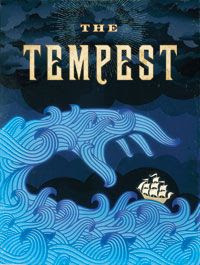
Let's Bust a Recap : The Tempest

February has come and gone and come again and that means I'm a full year overdue for everyone's favorite playwright, Willy Shakes. And consequently, that means it is also way past time for a new favorite blog post from yours truly. Because if there's any consistent feedback I've gotten since starting this blog, it's that you people are here for the Bard. So let me just apologize here and now for completely skipping the Shakespeare posts in 2023. Let's see if I can take a page from Prospero's book and conjure you up a good one today.

We open on a gnarly storm with a ship floundering at sea carrying Alonso the king of Naples and a bunch of his nobles. The ship is coming apart fast and the king and his son are literally begging God to spare them while the duke, Antonio, is busy cursing the ship's captain and crew for bringing them all to their deaths. As if they can control the weather. Or want to die anymore than anyone else on this ship. 

Like, seriously, calm down Antonio.

But as it turns out, this isn't any ordinary storm. The next scene takes us to a nearby island where Antonio's brother Prospero has been living for the last twelve years with his daughter Miranda. As it turns out, that creep Antonio usurped his brother's position as Duke of Milan and had the king banish him. Prospero is, naturally, a powerful sorcerer and has conjured up this storm to take revenge on all his enemies. He has enslaved the island's only inhabitant, Caliban, and also a spirit called Ariel to do his bidding. So, I mean really, Prospero isn't the greatest guy either. Maybe Antonio wasn't that far off-base in having him banished. Poor Miranda, though, am I right? Sis is just caught in the crosshairs of a battle of toxic masculinity. Bless her.

Anyway, the ship wrecks on the island according to plan, and, using his magic, Prospero splits up the survivors into groups on the island to carry out his vengeful plans. Oh and the captain and crew are put into a magical sleep until the end of the play because we can't be bothered with them. We have enough characters to keep track of as it is. 

First up, we have Ferdinand, the king's son who is stranded by himself so that Prospero can pick him up and manipulate him into an engagement with his fifteen year old daughter Miranda all the while lecturing them both about the value of chastity. Pretty rich coming from him. 

Then we have the court jester and the majordomo who run into Caliban and offer us our "comic relief" in the play by bumbling around the island together plotting their own little rebellion against Prospero. Like that's going to work out.

Next we have the group of lords including the traitorous king (Alonso), Prospero's backstabbing brother (Antonio), the king's brother (Sebastian), Gonzalo (an old counsellor who's just doing the best he can out here), and a couple of other lords who I didn't really care about. Basically, Antonio convinces Sebastian that they should try to kill Alonso so that Sebastian can become king. What good this is going to do them seeing as they are stranded on a desert island is anyone's guess, but the general idea is: everyone is plotting evil against everyone else. Except for poor old Gonzalo and the two young lovers Ferdinand and Miranda. 

Ariel comes and torments Alonso, Antonio, and Sebastian until they feel so guilty for their crimes against Prospero and each other that they all run off to wander around until we need them again in the play.

Act IV is basically Prospero instructing the island spirits to put on a masque celebrating the betrothal of Ferdinand and Miranda—while simultaneously continuing the lecture about staying chaste until the actual wedding—but it gets cut off when Prospero remembers that there are three dopes running around the island plotting to kill him. So there's that.

Prospero orders Ariel to bring the nobles to him so we can have our big showdown. Ariel, by the way, has been begging Prospero the whole play to set him free and Prospero once again promises that once Ariel does everything he wants him to do, he will finally set him free. (I had my doubts that Ariel would ever be free of Prospero, but don't worry: he actually is free by the end of the play.) So Ariel sets off to do Prospero's bidding. In the meantime, Caliban, Trinculo, and Stephano are chased into the swamp by goblins. 

Ariel shows back up with the nobles and Prospero promptly forgives them. What?! What have we even been doing here this whole time? They basically restore Prospero to his rightful position as Duke of Milan. Ariel fetches everyone else and Caliban basically tucks tail and promises to be good, Prospero sends Trinculo and Stephano away in shame, Ariel is charged with blessing them with good weather for the return trip home, and they all leave. Ariel is finally free of Prospero, and Miranda and Ferdinand go on planning their happily ever after. Prospero asks us, the audience, to free him by our applause and the play is over. 

The Tempest is probably one of the last plays Shakespeare wrote and it's kindof a mess, but it was fun nonetheless. I read it in a day. It's an easy one to read, but it wouldn't be the first comedy I'd direct you to if you're going to read Shakespeare. It falls in the class with some of his other late plays which don't fit neatly into either the comic or tragic categories so it just feels like there is a lot going on the whole time. If it were up to me, I'd take Miranda and Ferdinand out of it entirely and let all those crazy guys die on the island with their plotting and scheming. But that's Shakespeare for you. 

Next up is The Merchant of Venice which I'll probably read this weekend, and I promise I won't wait another year to post a recap of it!

Monday, February 12, 2024

Let's Bust a Recap : The Scarlet Pimpernel

Okay, so the very first book I drew out of the TBR Jar was actually a book that was on my 2023 book list but I didn't get around to reading it last year, and that is: The Scarlet Pimpernel by Baroness Orczy. What are the odds?! I don't have an exact count on how many slips of paper I put in my TBR Jar but let's just say about 1 in 500.

And I'm so glad because this is one of the books I was slightly bummed I didn't get to last year. So many of my real-life friends have recommended this 1905 classic to me, and I totally get it. It was a page-turner. 

The Scarlet Pimpernel was originally a play co-written by the Baroness Emma Magdalena Rozália Mária Jozefa Borbála Orczy de Orci and her husband Henry George Montagu MacLean Barstow—phew!—which opened in London's West End in 1903. The success of the play spurred on the success of the novel which allowed Emmuska and her husband to live out their lives in luxury. Emmuska (the name used by our authoress' friends and family meaning "little Emma") was born in Hungary and lived in Budapest, Brussels, and Paris before finally settling with her family in London when she was 14 years old. 

The Scarlet Pimpernel is set during the bloody French Revolution and centers on our titular hero who is a mysterious Englishman who, with his League of nineteen other brave men, cunningly sneaks in and out of France to rescue aristocrats from Madame la Guillotine and smuggle them into England. The novel also features our heroine Lady Marguerite Blakeney, a French actress and comedienne who has married Sir Percy and is the fashionable darling of British high society during all of this intrigue with the League of the Scarlet Pimpernel. She is put into an impossible position when a French agent demands that she help him learn the Scarlet Pimpernel's secret identity in exchange for the promise of her brother's safety. What results is an adventure of epic proportions and I loved every page of this daring, clever, romantic story. 

With this play/novel, Orczy established the "hero with a secret identity" in popular culture and her Scarlet Pimpernel quickly led to the rise of such famous characters as Zorro, the Shadow, Superman, Batman, and countless others, and the trope remains a popular one in serial fiction today. Even Stan Lee who read this novel as a boy, said the Scarlet Pimpernel was "the first character who could be called a superhero."

I would easily recommend The Scarlet Pimpernel to anyone who is looking to read more classic literature but isn't sure where to start. This novel clocks in at under 250 pages, it keeps you turning them, and the language isn't too difficult to get into. Which makes sense given that English was not Orczy's native tongue. The prose is simple, even repetitive at times, and easy to read. I said it once already and I'll say it again: I loved this book, and I'm so glad it cropped up out of the TBR Jar this year. 

What's your favorite classic?

Monday, February 5, 2024

Let's Bust a Recap : Tom Lake

Tom Lake is a brand new release from seasoned author Ann Patchett. It just came out this past August, and it's going to be a tricky one for me to review so let me go ahead and issue a spoiler warning right here and now, because my opinion of this novel turned on one point towards the end of the book, and there's no way for me to write this review without discussing that one sticking point. 

So first of all, one of my longest and truest friends chose this book for our book club after she listened to the audiobook version narrated by Meryl Streep and loved it. I fully expected to love it too, and I did. Until I didn't. And then I really didn't. 

But before I get too far ahead of myself: Tom Lake is set during the spring of 2020, and our main character Lara's three grown daughters have all returned home to their cherry farm in Michigan in the wake of the COVID-19 pandemic and lockdown. As mother and daughters work on harvesting the cherries together, her girls coax her to tell them the story of her summer romance with famous actor Peter Duke when she was in a summer stock production of Thornton Wilder's Our Town at Tom Lake. The entire novel pivots back and forth between Lara's young life and the present day as she relates it to her daughters while they work. 

Here's the thing: I loved Lara telling this story to her daughters. I was living for every scene where the four of them were together. I was in stitches every time one of the girls tried to correct their mother about her own life story. I teared up at Lara's tenderness with them as they tried to make sense of this hard world we live in. As for Lara's story: meh. I could take it or leave it. She made a lot of terrible choices, but we all do. While I didn't agree with the worldview any of the characters seemed to hold, I could enjoy the story because I don't have to agree with everyone else's worldviews or have them agree with mine. 

But then, in a twenty-one chapter book, we came to chapter twenty and the entire novel was completely ruined for me. In this particular chapter, Lara has finished telling her story to her daughters, but she privately reminisces on one other event in her life that she has never shared with anyone—not even her husband—and never intends to share with anyone. Except for us, the unfortunate readers. While the entire chapter was extremely off-putting and—there's really no other way to say it—disgusting, I could have forgiven its inclusion in the book had it not culminated in Lara having an abortion. When I got to this chapter and it ended with this tiny paragraph that all seemed so out of place in this story, I felt duped. I felt like the entire purpose of Tom Lake was for the author to respond to the overturning of Roe v. Wade in the U.S. and I had just read this entire novel to get slapped with the author's political agenda. 

And I was not happy about it. I will say that it led to some really great discussion in our book club, but I cannot recommend this book to anyone unless you're the type of person who can actually skip a chapter of a book with no curiosity. (And if that's you: how?) I realize I just said in this very review that we don't all have to agree on everything, and I stand by that, but for me personally, abortion without any thoughtful exploration or commentary is an absolute dealbreaker and it soured me on Tom Lake and Ann Patchett which is triply unfortunate as I own two of her other books that I haven't gotten around to reading yet. (Bel Canto and The Dutch House, for any interested parties.) I may still read those one day, but if I do I'll go in with a certain amount of wariness I wouldn't have had before reading Tom Lake.  

All said, Tom Lake was a miss for me, and I can't forgive Ann Patchett for chapter twenty. 

Do you have any absolute dealbreakers that will ruin a book for you? 

Monday, January 29, 2024

Let's Bust a Recap : The Wingfeather Saga

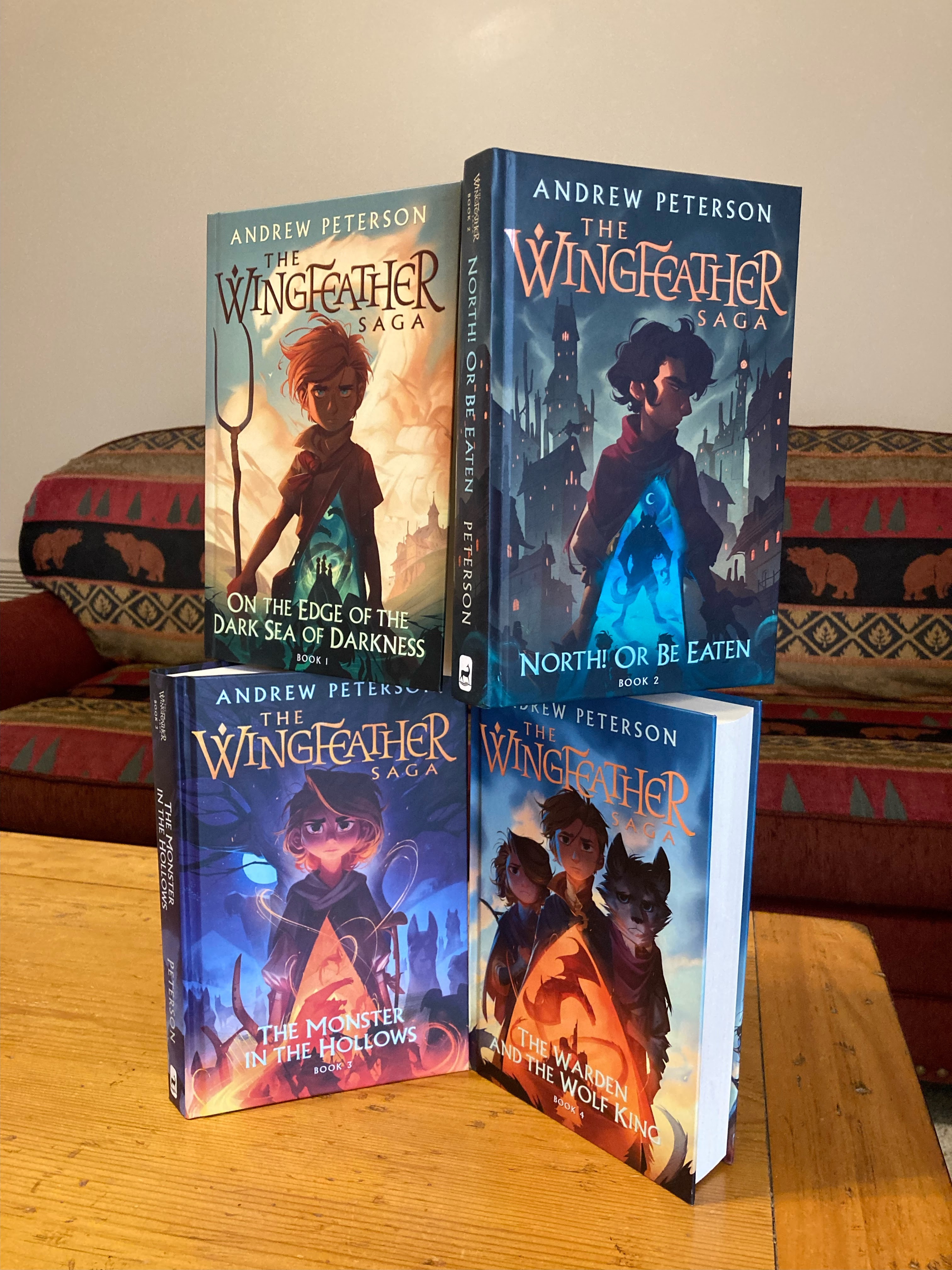
So at the beginning of the month, I gave a little series update detailing books in series I'm reading that can stand alone. But today, we're going to talk about the other kind, the kind you can't stop reading until you get to the end. Cody and I read this quartet of books aloud together last year, and we both give it an enthusiastic two thumbs up. 

The Wingfeather Saga by singer-songwriter Andrew Peterson consists of four books: On the Edge of the Dark Sea of Darkness published in 2008, North! Or Be Eaten published in 2009, The Monster in the Hollows published in 2011, and The Warden and the Wolf King published in 2014. The books chronicle the adventures and transformations of the Igiby family in the fantasy world of Aerwiar as they discover secrets of their family history, flee the evil Fangs of Dang who are occupying their country, seek their place and identity in the world, and make a stand against the mysterious ruler Gnag the Nameless. The principal characters are the three Igiby siblings—Janner, Tink, and Leeli—but the series is peppered with other lovable personalities like Podo Helmer, Peet the Sock-Man, Sara Cobbler, the Florid Sword, Maraly Weaver, and Oskar N. Reteep to name a few. 

On the Edge of the Dark Sea of Darkness, the first book in the series, starts off very whimsical and playful, introducing the world of Aerwiar and the Igiby family with lots of footnotes giving you quite a bit of history. (And don't miss those footnotes throughout all four books—they're a riot!) As the books progress and Peterson narrows in on the crux of the plot, however, each book matures until, by the end, I would classify this story as a new All-Time Favorite. I loved discovering this beautiful story along with Cody, and it is one I will come back to. 

We had several friends continue to recommend this series to us, until one of them finally just bought them for us (thanks Greg!) which was the final nudge we needed to actually pick them up and start reading. The Wingfeather Saga has been compared to The Chronicles of Narnia which, I'll be honest, was a bit off-putting to me. In my opinion, The Chronicles of Narnia are in a class of their own and my friends were not doing Wingfeather any favors in my eyes by trying to put them in that class. To be entirely transparent with you: I still think Narnia is in its own class, but I would put Wingfeather in the same class with The Lord of the Rings and Harry Potter. Fantastic in every sense of the word. 

For the sake of my friend Sheree over at Keeping Up With the Penguins, I do just have to warn you that there is a devastating dog death in this series, and Cody and I majorly stalled when we hit it. When I tell you I bawled my eyes out and berated every friend that had recommended Wingfeather to me, I tell you the truth. But ultimately, The Wingfeather Saga proved its worth, and my dad is reading the first book now on my wholehearted recommendation. 

All the stars for Andrew Peterson and his magnificent Wingfeather Saga. We loved it.

Monday, January 22, 2024

Let's Bust a Recap : Oh My Stars

Sometime before Christmas back in 2022, I was browsing a secondhand bookshop and came across this cute little number. When I peeked inside it and read the opening lines of the book, I was sold.

"And it came to pass in those days, that a decree went out from my mother that I would be playing the Virgin Mary in the Dollar General drive-through Nativity whether I liked it or not. Never mind the fact that my name was not Mary, that I was not a teen, and, most importantly, not a virgin. Still, decrees from my mother were similar to those from Caesar Augustus: both had to be obeyed."

I figured I'd bring it home and read it during the Christmas season, but then the World Cup started and pretty much all reading was forgotten. But last month, after I finished up Miracles by C.S. Lewis, I decided to pull this one off the shelf and ended up finishing it the day after Christmas. This 2018 offering from Sally Kilpatrick follows your basic Christmas Hallmark movie storyline—big city doctor comes back to his small hometown and falls in love with the town's young widow after the two of them find an abandoned baby in the drive-through Nativity's manger while they're portraying Mary and Joseph together. 

Hannah! Spoilers! I know, I know, but seriously? You can see every "plot twist" coming from a mile away in this book, and you are very aware of where Kilpatrick is taking this story from the first chapter.

Even having said that, Oh My Stars was a much more enjoyable reading experience than my last Hallmark book fiasco. The characters were much better drawn, I liked the alternating viewpoints between our male lead Gabe and our female lead Ivy, and, although the ending of this story might not have been entirely realistic, it worked for me. I appreciated the way Kilpatrick created flawed but likable characters and the way she developed the whole story (even though it was totally predictable). Her writing isn't great, her storytelling leaves something to be desired, but she had the bones of a good idea and I was with her on the journey. 

On a personal note regarding a pet peeve of mine: the editor has some explaining to do. This book was riddled with common spelling and grammatical errors on nearly every page which definitely detracted from my reading experience. But I don't blame Sally Kilpatrick for that. 

All said, this was a fun book to pick up during the holiday season, and I wouldn't not recommend it, but I would probably steer you to something better if you asked for my opinion. 

Do you like reading holiday-themed books during the holidays?

Monday, January 15, 2024

Let’s Bust a Recap : Miracles

Y'all. For the life of me, I tried to make this picture live so you could see the steam curling up out of that mug, but I can not do it. Your girl is stuck in the 20th century, and 97% of the time, I'm happy to stay there, but why couldn't this picture just do the little loopy thing it does on my phone and look all cute and cozy and steamy? 

It's fine. We're over it and we're moving on. 

Miracles by C.S. Lewis was originally published in 1947 and revised in 1960, and the book covers the probability of whether Christian miracles recorded in the Bible really happened. While Lewis does talk about a lot of the principal New Testament miracles in this book, the bulk of his argument stems from the question of whether miracles are even logically possible from a philosophical point of view. Once establishing that, he then covers actual recorded miracles in the last three chapters. 

And it's all brilliant. Even though a good two-thirds of this book is spent in defining terms and clarifying the difference between a "naturalist" and a "supernaturalist", every word is worth its weight in gold. I'm sure I'm getting to sound like a broken record when it comes to Lewis, but I'm just always so dumbfounded by how smart he was. I'm certainly not the only one. English theatre critic and writer and one of Lewis' contemporaries Kenneth Tynan expressed his admiration for Lewis' genius saying, "If I were ever to stray into the Christian camp, it would be because of Lewis' arguments as expressed in books like Miracles." I can't think of much higher praise than that. Whether or not you agree with Lewis' beliefs, you have to respect the logic of his arguments. He is one of the most thorough thinkers and writers I've ever had the privilege of reading. He always follows a thought all the way through and argues it from every possible viewpoint. I always feel smarter and dumber after I've read something he's written. It's a gift. 

There are also two appendices at the end of this book, and the second one—"On 'Special Providences'"—is worth the price of the whole book. In it, Lewis details the value of prayer and this dovetailed so nicely with A Praying Life by Paul Miller which I also read last year. If you happen to be browsing a bookstore and you come across a copy of Miracles, flip to the back and just read Appendix B. You won't be sorry.

I hope C.S. Lewis pops out of the TBR Jar at some point this year. I think I threw his Space Trilogy in there, but it's hard to remember what all I put in that thing. Are there any authors you read that somehow manage to make you feel smarter and dumber all at once?